
Why Does Concrete Spall? Causes and Repairs
Why does concrete spall? Learn the causes, warning signs, repair options, and prevention steps for Austin driveways, patios, and walkways for Austin homes.
A driveway does not usually fail all at once. It starts with a small flake near an edge, a shallow pit in the patio surface, or a section of concrete that sounds hollow underfoot. Then more material breaks loose. Homeowners often ask, why does concrete spall when the slab was poured to last for decades? The short answer is that the concrete surface or cover layer has lost its bond and is breaking away. The longer answer matters because the right repair depends on what caused the damage in the first place.
Spalling can be cosmetic at the start, but it should not be ignored. On a driveway, walkway, porch, retaining wall, or pool deck, exposed aggregate and crumbling edges allow more water into the concrete. If reinforcing steel is involved, the repair can become more extensive quickly.
What Concrete Spalling Looks Like
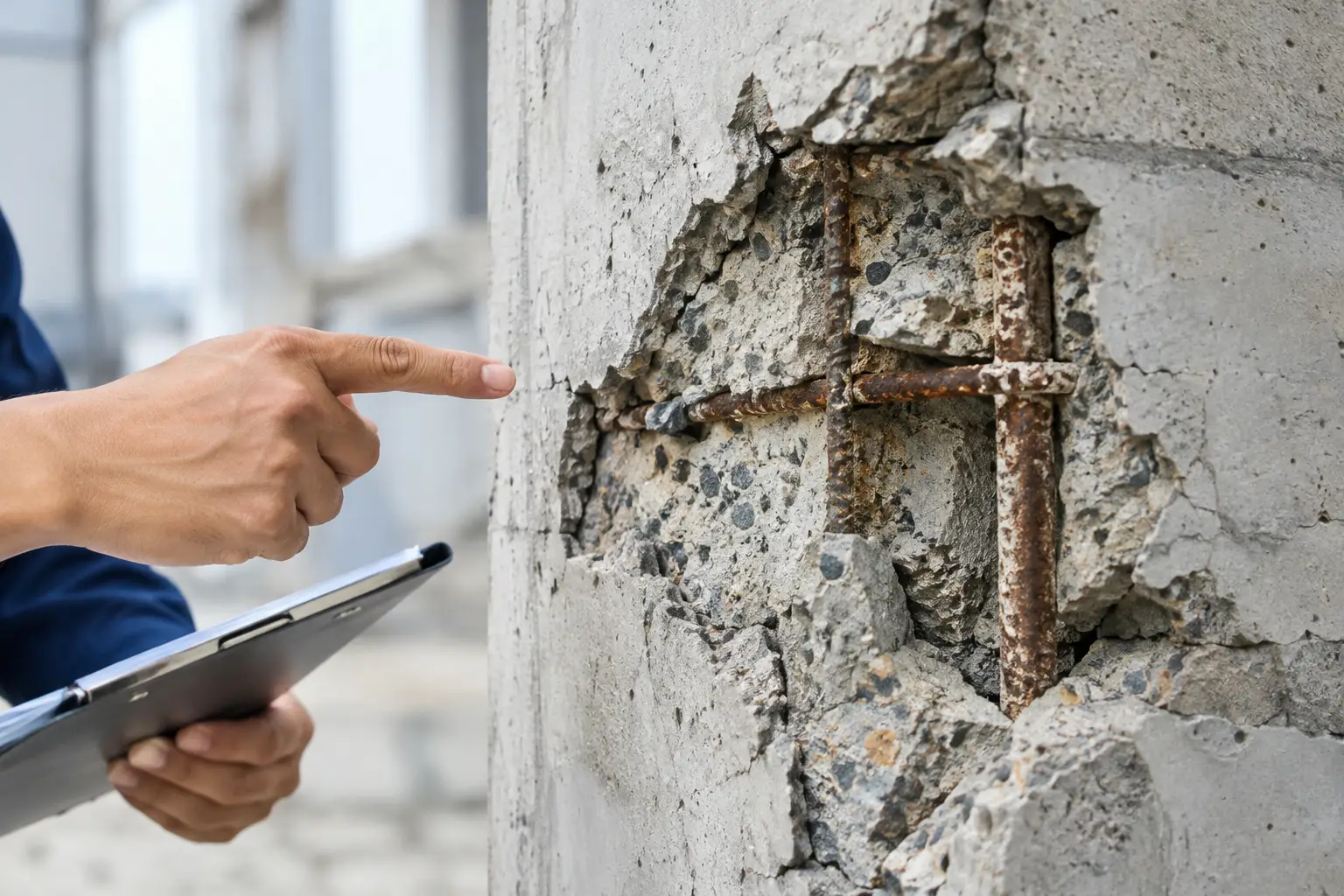
Concrete spalling is the chipping, flaking, peeling, or breaking away of the finished concrete surface. It can look like shallow scaling across a broad area, round pop-outs, crumbled corners, or deeper holes that expose aggregate or steel reinforcement.
Spalling is different from a hairline crack. A crack is a break line through the slab. Spalling is lost material. The two often appear together because cracks let moisture reach deeper into the concrete, but a slab can spall without having major visible cracks.
For Austin-area properties, spalling commonly shows up on driveway edges, front walks, patio corners, steps, and areas where roof runoff repeatedly hits the slab. Those locations take more water, more traffic, and more stress than protected sections of concrete.
Why Does Concrete Spall? The Main Causes
Concrete spalls when pressure, moisture, weak surface concrete, or movement overcomes the bond holding the material together. More than one condition may be at work, especially on older exterior slabs.
Moisture gets into the concrete
Concrete is hard, but it is not waterproof. It contains small pores that can absorb water. When water enters through cracks, unsealed joints, or a weak finish, it carries minerals and can keep the slab damp from the inside out.
In Central Texas, frequent wet-dry cycles are often a bigger concern than severe winter freezing. Heavy rain, irrigation overspray, poor drainage, and water flowing off a roof can saturate a section of concrete repeatedly. As the slab dries, it can shrink slightly. Repeated moisture movement puts stress on the surface and weakens already vulnerable areas.
Freezing weather can still make a weak slab worse. Water trapped near the surface expands when it freezes, pushing on the concrete from within. Austin does not experience the sustained freeze-thaw exposure seen in colder climates, but a hard freeze after a wet period can expose defects that were already developing.
Reinforcing steel rusts and expands
When steel rebar or wire mesh is too close to the surface, moisture and oxygen can reach it more easily. Steel rust occupies more volume than clean steel. As it expands, it pushes outward against the surrounding concrete until the concrete cracks and pops off.
This type of spalling is more serious than light surface scaling. You may see a long crack following the line of the reinforcement, rust staining, or exposed steel inside the damaged area. A patch placed over active rust without properly cleaning and treating the steel is likely to fail again.
The original mix or finish was weak
Some spalling begins on pour day. Adding too much water to a concrete mix makes it easier to place, but it can reduce final strength and increase shrinkage. Overworking the surface can also bring too much water and cement paste to the top, creating a thin layer that looks smooth at first but lacks durability.
Finishing concrete while bleed water is still on the surface can trap excess water beneath the top layer. That weak layer may later delaminate, meaning it separates from the stronger concrete below. Improper curing has a similar result. Concrete needs controlled moisture while it gains strength. If it dries too fast in Texas heat and sun, the surface may not develop the durability it should have.
Soil movement and slab stress create openings
Austin soils can be challenging. Expansive clay soils swell when wet and shrink when dry, moving underneath patios, sidewalks, and driveways. A slab that is not adequately prepared or supported can settle, lift, crack, or put extra force on its edges.
Movement does not always cause spalling directly. Instead, it opens cracks and joints that let water into the concrete. It can also create uneven spots that catch tires, foot traffic, lawn equipment, or runoff. Those stressed areas tend to chip first.
Salt and chemical exposure break down the surface
Deicing salts are not used often in Austin, but they can still contribute to damage after winter events. Fertilizers, pool chemicals, vehicle fluids, and harsh cleaners may also stain or weaken concrete when spills are left in place. Salt exposure is especially hard on concrete that already has a porous or poorly cured surface.
Using the wrong deicer is a preventable problem. Products containing ammonium sulfate or ammonium nitrate can damage concrete. Sand or a concrete-safe traction material is generally the safer choice for occasional icy conditions.
How to Tell Whether Spalling Needs Repair
Small, shallow surface flaking may be repairable with proper preparation and a compatible concrete repair material. Deep spalls, exposed reinforcement, widespread scaling, or movement-related cracking call for a closer inspection before patching.
Look at the pattern. Damage limited to a few edges may point to impact, poor drainage, or weak finishing. Damage that follows a line with rust stains may indicate reinforcing steel corrosion. Broad areas of peeling across the slab can suggest surface finishing or curing problems. If the slab is cracked, rocking, sinking, or heaving, the underlying base and soil conditions need attention too.
A quick test is to tap around the damaged spot with a hammer handle. Sound concrete gives a solid response. Delaminated areas often sound hollow. This does not replace a professional assessment, but it can show that visible damage is only part of the affected area.
Repair Options Depend on the Cause
The repair must reach sound concrete. Covering loose material with a thin layer of mortar or resurfacer may improve appearance for a short time, but it will not hold if the base is weak or moisture is still causing damage.
For a localized shallow spall, the damaged concrete is removed back to firm material. The area is cleaned, shaped to support the patch, and repaired with a material designed for exterior concrete. Proper surface preparation is the difference between a durable patch and one that breaks loose after the next season.
When steel is exposed, loose concrete around the bar must be removed. The steel needs to be cleaned and evaluated for section loss before it is treated and covered with a suitable repair product. If corrosion is extensive, a patch alone may not be enough.
When spalling is widespread or the slab has significant settlement, replacement may be the better value. Resurfacing can work on a structurally sound slab with mainly cosmetic surface damage. It is not a fix for active movement, poor drainage, or deteriorating reinforcement. Replacing a failed section also gives the contractor a chance to correct base preparation, slope, drainage, joint layout, and reinforcement placement.
Preventing Concrete Spalling in Austin
The most effective prevention starts with water control. Keep gutters and downspouts from dumping water next to driveways and patios. Maintain a slope that moves runoff away from the house and slab. Adjust irrigation heads so they do not spray concrete every day, especially along expansion joints and edges.
Seal cracks before they become water paths, and keep control joints clear so the slab can move where it is designed to move. A quality breathable sealer can help reduce water absorption on appropriate exterior concrete, but it should be applied to clean, dry, sound material. Sealer will not stabilize a slab that is already breaking apart.
For new work, durable results come from proper subgrade preparation, the right concrete mix, correctly placed reinforcement, planned joints, drainage, and curing. There is no single upgrade that replaces good installation. A well-built patio or driveway is a system, from the soil below it to the finish on top.
If a few flakes have turned into crumbling edges, rust stains, or a widening damaged area, address it before the next round of rain and heat works deeper into the slab. A clear diagnosis now can preserve the concrete you have and help you make a repair decision that holds up in Texas conditions.