
Backyard Drainage Solutions Guide for Austin
Use this backyard drainage solutions guide to spot runoff problems, choose the right fix, and protect Austin lawns, patios, and foundations year-round.
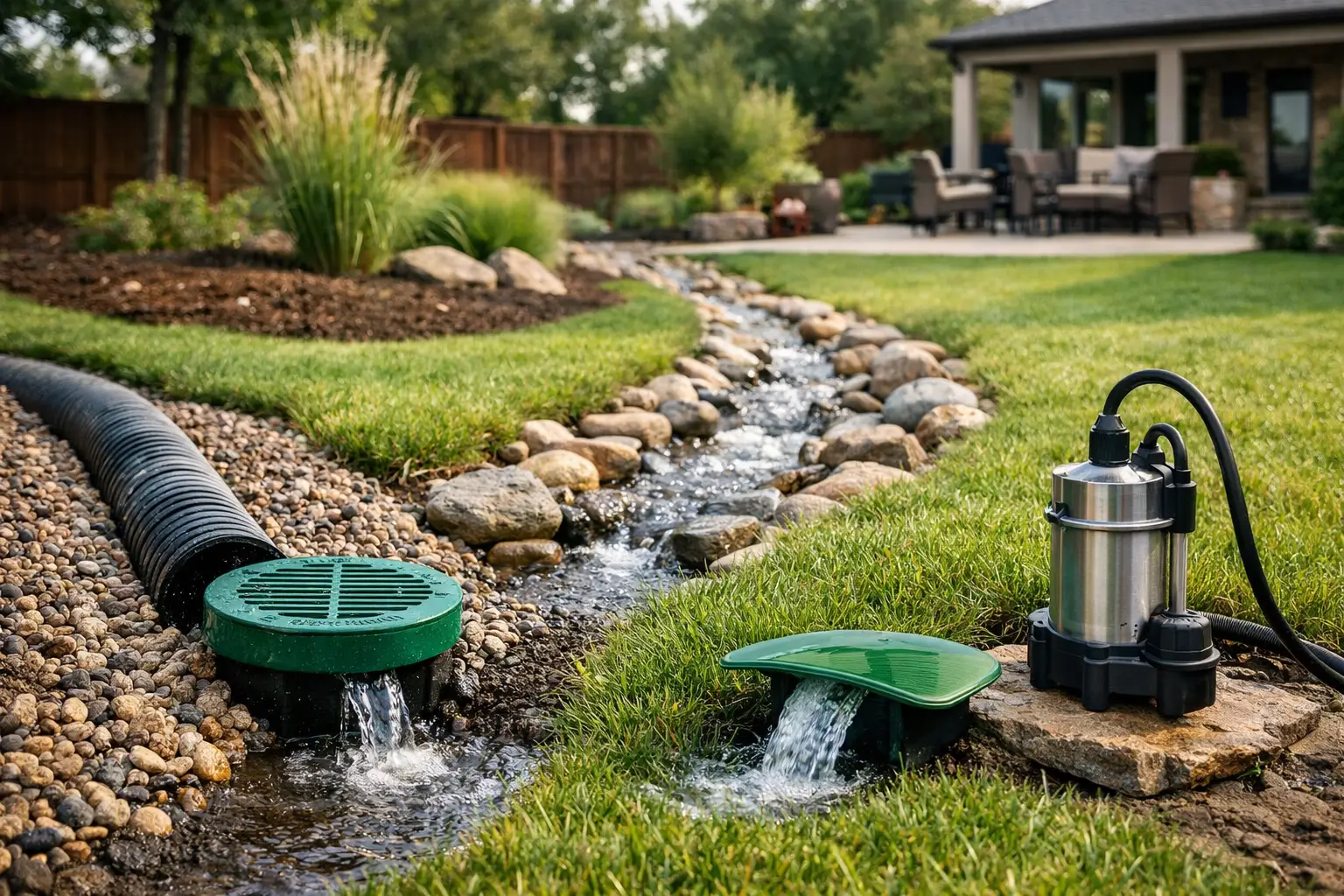
A wet strip along the fence, a patio that stays slick after rain, or water collecting beside the slab is not just an eyesore. It is a sign that runoff is not moving where it should. This backyard drainage solutions guide explains how Austin homeowners can identify the source, select a practical fix, and protect the parts of the property that cost the most to repair.
Austin yards deal with hard rain, compacted clay soil, limestone, uneven grades, and long dry stretches that can leave soil hard and slow to absorb water. A drainage plan has to work in a real storm, not just look tidy on a dry day.
Start by Finding Where the Water Begins
The low spot is not always the actual problem. Water may collect near a patio or foundation because a roof valley dumps water there, a neighboring grade directs runoff across the lot, or a landscaped bed has created a dam along the edge of the yard.
Walk the property during rainfall if it is safe, then inspect it again after the rain stops. Look for water paths, washed-out mulch, exposed roots, standing water, muddy traffic areas, and stains on concrete. Pay close attention to downspouts, fence lines, driveway edges, patio corners, and the space between your home and any retaining wall.
A simple test can help. Run a hose for several minutes near the suspected area and watch where the water travels. This will not duplicate a major Texas storm, but it can show whether the surface grade is carrying water away or trapping it.
The main goal is simple: surface water should move away from the home, away from concrete slabs where possible, and toward a safe discharge area. That area might be a lower portion of the yard, a properly designed swale, a drainage inlet, or another approved outlet. Sending water to a neighbor's property is not a solution and can create a larger problem.
Match the Drainage Fix to the Problem
There is no single drain system that fits every backyard. The right approach depends on the volume of water, the size of the affected area, the slope of the property, existing concrete, and where the water can legally and safely discharge.
Regrading for Broad, Shallow Water Problems
If water spreads across a wide area or sits against the house, regrading is often the most effective place to start. This means reshaping the soil so it has a consistent fall away from the structure and toward a designated drainage path.
Regrading works well when the issue is primarily poor surface slope. It is also a good time to correct planting beds that are too high against the siding or slab. In many yards, a few inches of adjusted grade can prevent recurring water problems without adding a complicated drain system.
The trade-off is that grading may affect sod, irrigation heads, edging, trees, and existing landscape beds. It needs to be planned as part of the full yard, especially when a patio, walkway, or driveway creates a fixed elevation that cannot be easily changed.
Swales for Moving Runoff Across the Yard
A swale is a shallow, shaped channel that guides water across the surface. It can be grass-lined for a natural appearance or integrated into a landscape design with stone, plants, and defined edges.
Swales are useful when a property has room to move water gradually. They are generally better for broad runoff than a narrow trench would be, and they can preserve a more natural look than visible drain grates. A well-built swale should have enough slope to move water without becoming an erosion channel.
For Austin properties with clay-heavy soil, the design matters. A swale that is too flat may hold water. One that is too steep can cut through soil and wash mulch into the yard. The objective is controlled flow, not a ditch that becomes a maintenance issue after every storm.
French Drains for Saturated Soil
A French drain is a gravel-filled trench containing perforated pipe. It collects water moving through saturated soil and directs it toward an outlet. It is often used along fence lines, near soggy lawn areas, or behind retaining walls where subsurface moisture needs a path out.
French drains are not the best answer for every standing-water problem. If the surface of the yard is flat and water has nowhere to go, a buried pipe alone will not solve the grade issue. The pipe still needs proper slope and a workable discharge point.
Installation quality matters. The trench needs the correct depth and pitch, the pipe should be protected from soil intrusion, and the outlet must remain clear. A poorly installed French drain can clog, settle, or simply move water to another weak area of the yard.
Channel Drains Around Patios and Concrete
Channel drains are long, narrow surface drains with grates. They are commonly installed where a patio meets a house, at the edge of a driveway, across a gate opening, or near a pool deck. They catch fast-moving surface water before it crosses concrete or reaches the structure.
This option is especially useful when new concrete is being installed. Drainage can be built into the project from the start, with slopes and drain locations coordinated before the pour. Retrofitting a channel drain into existing concrete is possible, but it requires careful cutting, excavation, and restoration.
A channel drain needs regular cleaning. Leaves, mulch, and sediment can block the grate, so it is not a set-it-and-forget-it feature. Still, for concentrated runoff near hardscape, it can be one of the cleanest and most dependable solutions.
Catch Basins and Solid Drain Pipe
Catch basins collect water at a low point and connect to solid pipe that carries it away. They work well under downspouts, at the bottom of a sloped driveway, or in corners where runoff naturally concentrates.
Unlike a French drain, this setup is designed mainly for surface water entering through a grate. It is a practical choice when you know exactly where water gathers and have a clear route to move it elsewhere. Basin size, pipe diameter, and pipe slope should match the expected water volume. An undersized system can overflow during the same heavy rain it was meant to handle.
Do Not Ignore Downspouts
Roof runoff can overwhelm a small section of yard quickly. A downspout that ends beside the foundation can create erosion, saturated soil, and water pressure near the slab even when the rest of the yard grades correctly.
Extensions can move water farther from the home, but the water still needs a destination. In some cases, a buried solid pipe leading to a safe outlet is cleaner and more reliable than a surface extension running across the lawn. The route must be planned around utilities, tree roots, sidewalks, and future landscape work.
If several downspouts feed into one system, confirm that the pipe and outlet can handle the combined flow. Heavy Central Texas rain can expose undersized drainage work fast.
Plan Drainage Before New Concrete or Landscaping
Drainage should be part of the layout before building a patio, walkway, retaining wall, or new landscape bed. Concrete is durable, but it can block existing water paths if the slope and surrounding grade are not considered. The result may be water pushed toward a house, trapped along a fence, or directed into a neighbor's yard.
For a new patio, establish the finished elevation first, then plan the slope, drain placement, and tie-in to the surrounding yard. For landscaping, avoid piling soil or mulch high against the foundation. Select plants that can handle the moisture conditions in each area instead of forcing a water-sensitive plant into a consistently wet spot.
Retaining walls require added attention because they hold back soil and can collect groundwater. Depending on the wall height, location, and soil conditions, drainage stone, pipe, outlets, and waterproofing may all be part of a sound build.
Watch for Problems That Need Professional Evaluation
Some drainage work is straightforward, but certain signs call for a closer assessment. Water entering the home, repeated pooling near the foundation, soil washing out from beneath concrete, cracks that are growing, or a retaining wall that is leaning should not be handled with a quick layer of gravel.
Also be cautious when drainage crosses property lines or connects to a curb, street, easement, or municipal system. Local requirements can affect what is allowed. A proper plan considers both the immediate yard problem and where the water will go during a major storm.
Texan Strong Builds can coordinate concrete, grading, drainage features, and landscaping as one outdoor project, which helps prevent one improvement from creating a problem for another.
Maintain the System After Installation
Every drainage solution needs basic upkeep. Clear leaves from grates and basins, remove sediment after heavy storms, keep outlets open, and check for settled soil around drain lines. Inspect swales for erosion and replace washed-out mulch before it blocks water flow.
After the next hard rain, walk the yard again. The best time to verify a drainage repair is when the system is working under real conditions. Water should have a defined path, concrete should drain cleanly, and the area near the foundation should not remain saturated long after the storm passes.
A dry, usable backyard starts with giving water a place to go. Address the flow before the next patio, landscape upgrade, or storm turns a manageable issue into damaged concrete, dead turf, or a costly foundation concern.