
What Austin Homeowners Should Do About Concrete Cracks
Concrete cracks can signal normal curing or costly movement. Learn what Austin homeowners should watch for, repair, and prevent outdoors.
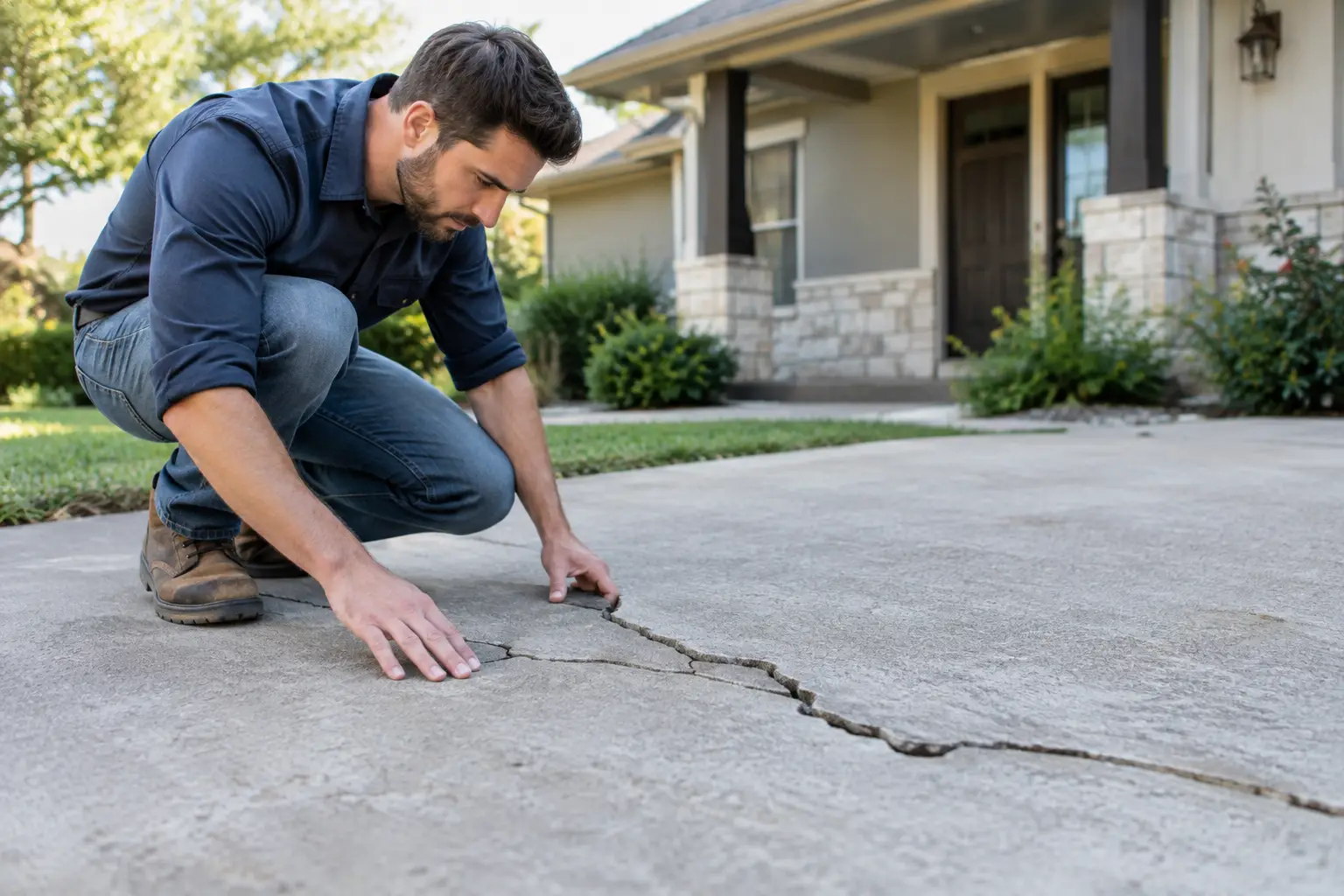
A hairline crack across a patio may be a normal part of concrete curing. A widening crack that leaves one side higher than the other is a different problem. For Austin property owners, concrete cracks deserve a close look because heat, heavy rain, expansive clay soil, tree roots, and drainage issues can all put pressure on slabs over time.
The right response depends on the crack's size, location, direction, and whether the concrete is moving. Cosmetic cracking can often be repaired and sealed. Movement-related damage may require correcting the soil, drainage, base, or slab support before any surface repair will hold.
What Causes Concrete Cracks in Austin?
Concrete is strong under compression, but it has limited flexibility. As a slab dries and cures, it naturally shrinks. Controlled joints are installed to give that shrinkage a planned place to occur. When a crack forms away from a joint, it can still be minor, but it tells you the slab has released stress somewhere else.
Central Texas adds conditions that make this more complicated. Long dry stretches can pull moisture from clay-heavy soils. When rain returns, that soil can swell again. Repeated expansion and contraction beneath a driveway, walkway, or patio can cause sections of concrete to settle, lift, or crack.
Poor water management is another common cause. Downspouts that empty beside a slab, negative grading that directs water toward the house, leaking irrigation lines, and runoff from a roof can soften or wash out supporting soil. A slab built on an inadequate base may also crack under normal vehicle loads or regular foot traffic.
Tree roots can contribute, especially near older shade trees. Roots do not always force concrete upward directly. More often, they change soil moisture around the slab, while larger roots may create localized pressure. Heavy vehicles, overloaded dumpster placement, and undersized concrete for its intended use can also create cracking in driveways and parking areas.
When Concrete Cracks Are Usually Minor
Small, thin cracks that stay level on both sides are often cosmetic. These are common in patios, sidewalks, and residential driveways. If the crack is narrow, dry, and not growing, cleaning it out and applying a quality flexible crack filler or sealant may protect it from water and debris.
A crack that follows a straight line near a control joint may simply mean the joint did its job. It is still worth keeping the joint sealed where appropriate, especially in areas exposed to runoff. Water entering open joints and cracks can weaken the base beneath the slab over time.
Minor does not mean ignore it. A small opening can admit water, dirt, weeds, and ants. In Austin's climate, water beneath a slab is rarely something to overlook. Check the area after a hard rain and watch whether water collects along the crack or drains toward the foundation.
Signs Your Concrete Crack Needs Professional Attention
The concern rises when cracking comes with movement. A vertical difference between the two sides of a crack creates a trip hazard and may point to settlement, lifting, or soil movement. Cracks wider than roughly one-quarter inch, cracks that continue to open, and cracks spreading in several directions are also worth evaluating.
Pay close attention when a crack appears near your home, garage, retaining wall, or pool deck. Concrete around these areas often works alongside drainage systems and finished grades that protect the structure. A driveway crack may be a stand-alone slab issue, but a crack near the foundation should be considered alongside gutter discharge, grading, plumbing leaks, and overall drainage.
Watch for these conditions during a routine walk around the property:
- One side of the crack sits noticeably higher than the other.
- The crack is widening, crumbling at the edges, or producing loose pieces.
- Water ponds on the slab or runs toward the house after rain.
- Multiple cracks form a web pattern across the surface.
- A driveway slab has sunken near the garage, curb, or drainage path.
Surface web cracking, often called crazing, can result from finishing or curing issues. It may be mostly cosmetic, but widespread flaking or scaling is different. When the top layer is breaking apart, a simple crack filler will not restore the surface or solve the cause.
Repair Options Depend on the Type of Damage
There is no one repair that fits every concrete crack. For a stable hairline crack, routing or cleaning the crack and applying a compatible sealant can be a practical maintenance step. The goal is to keep moisture and debris out while allowing small seasonal movement.
For a slab that has settled but remains structurally sound, slab lifting may be an option in some situations. This approach raises a low section by filling voids beneath it. It can reduce trip hazards and improve drainage without replacing the entire slab. It is not the right choice when the concrete is badly broken, the base is unstable, or the slab has extensive deterioration.
Removal and replacement is often the better long-term decision for severely cracked driveways, patios with multiple height changes, or slabs that were poured too thin for the load they carry. A proper replacement should address the reason the old slab failed. That may mean improved excavation, a compacted base, correct thickness, reinforcement where appropriate, control joint placement, and drainage improvements.
Patching alone is usually a short-term answer when the concrete is moving. A patch can look clean on day one, but it may crack again if water continues to collect under the slab or shifting soil remains unaddressed. Spending less on a surface-only repair can cost more if the same area needs to be opened and rebuilt later.
Preventing New Concrete Cracks
No exterior slab is guaranteed to stay perfectly crack-free forever. Good construction and routine maintenance can greatly reduce the risk of serious damage. The first priority is water control. Gutters should discharge away from slabs and foundations, and yard grading should move surface water away from the home rather than trapping it beside concrete.
Keep expansion and control joints clear of packed dirt, mulch, and weeds. These joints allow planned movement, but they cannot work well if they are blocked or left open to collect water. Avoid using deicing chemicals or harsh products not intended for concrete surfaces. While Austin rarely faces severe freeze conditions, surface damage can still result from unsuitable cleaners and repeated chemical exposure.
If you are planning a new patio, walkway, or driveway extension, think about the surrounding landscape before concrete is poured. Drainage paths, irrigation zones, mature trees, future planting beds, and gate access all affect the finished project. Concrete and landscaping should work together, not compete for space and water.
Texan Strong Builds approaches exterior projects with that full-property view. A patio or walkway needs a solid base and sound drainage, but it should also fit the grade, planting areas, and how people actually use the yard.
A Practical Way to Inspect Your Slabs
Walk your driveway, sidewalks, and patio twice a year, ideally after a wet period and after a long dry stretch. Take dated photos of cracks that concern you, using a coin or tape measure for scale. This gives you a useful record if the opening changes over several months.
Check where water goes during a storm. The most useful information often appears when rain is actively moving across the property: overflowing gutters, puddles along a patio edge, runoff crossing a driveway, or water standing next to the foundation. Correcting those conditions can protect both your concrete and the rest of your exterior improvements.
Do not wait for a small trip hazard to become a broken slab or an avoidable drainage repair. A clear assessment of the crack and the ground around it helps you choose a repair that lasts, keeps the property safer, and supports the value of your Austin home.