
How Long Concrete Cures Outside
Learn how long concrete cures outside, what affects cure time, and when you can walk, drive, or build on outdoor concrete in Texas weather.
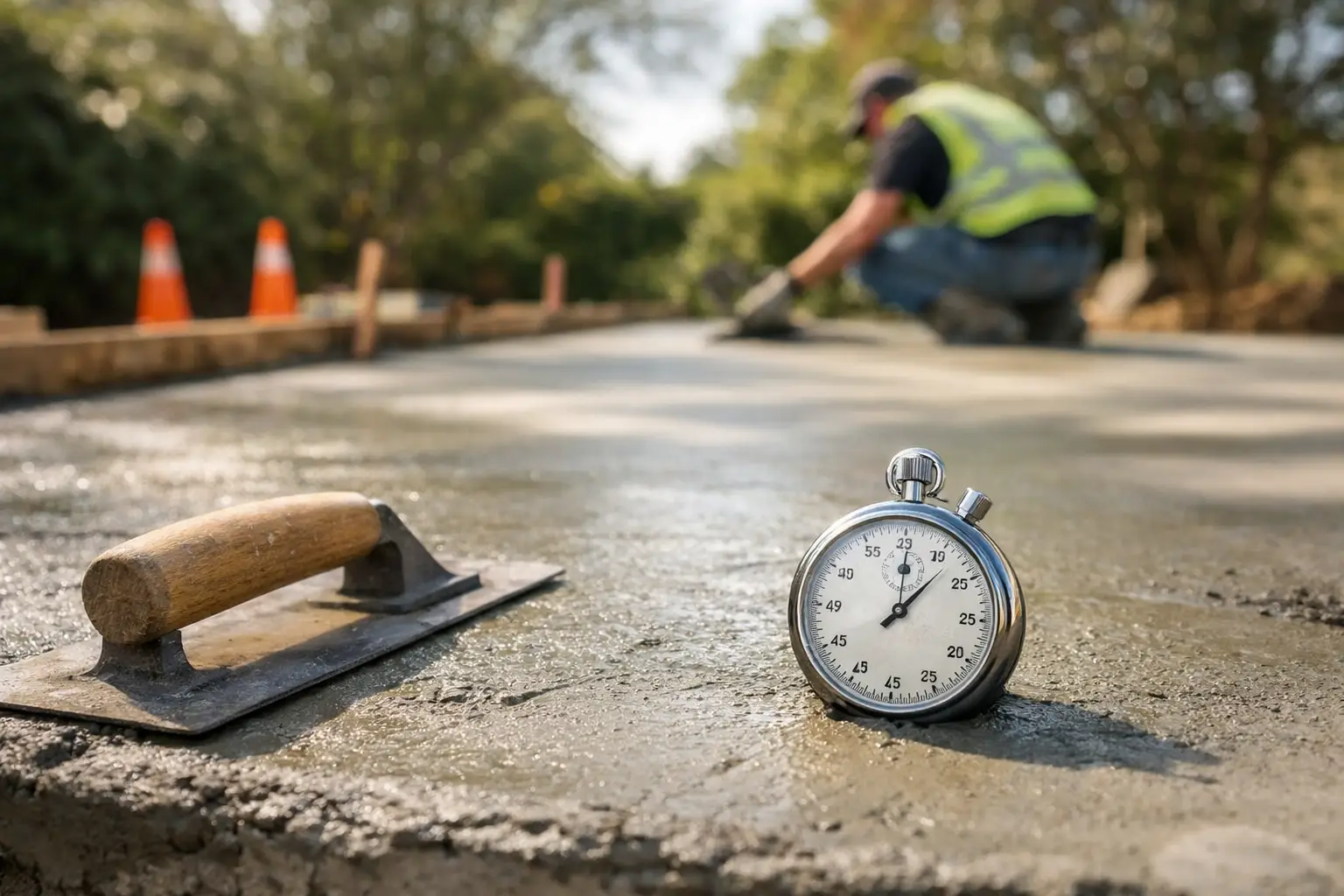
A slab can look firm by the next day and still be far from fully cured. That is where a lot of property owners get tripped up. If you are asking how long concrete cures outside, the short answer is about 28 days for full cure, but the real answer depends on weather, slab thickness, mix design, and how the surface is protected during those first critical days.
For homeowners and property managers in Austin, that matters. Central Texas heat can dry the surface fast, but fast drying is not the same as proper curing. Good concrete work is not just about the pour. It is about giving that slab, walkway, patio, or driveway the conditions it needs to gain strength without cracking, scaling, or curing unevenly.
How long concrete cures outside in real conditions
Concrete starts hardening within hours after placement, but curing is a longer process. In most outdoor residential projects, concrete will set enough for light foot traffic in 24 to 48 hours. You can usually move forward with heavier use after several days, but full design strength is generally reached around day 28.
That 28-day benchmark is the industry standard because concrete gains strength through hydration, not simply by drying out. Cement reacts with water over time. As long as that reaction continues under the right conditions, the concrete keeps gaining strength. The first week is especially important because a large share of the final strength develops during those early days.
If you want a practical breakdown, here is what most outdoor concrete timelines look like:
- 24 to 48 hours: light foot traffic is often possible
- 7 days: concrete may reach much of its early usable strength
- 28 days: full cure is typically reached for standard mixes
Those numbers are useful, but they are not automatic. Outdoor conditions can speed up or slow down the process, and pushing use too early can shorten the life of the slab.
Curing vs drying: not the same thing
This is one of the biggest points of confusion on outdoor concrete jobs. A surface can feel dry and still be curing. Drying is moisture leaving the slab. Curing is the chemical process that builds strength.
That difference matters because hot, windy Texas weather can pull moisture from the surface too quickly. When that happens, the top layer may dry before the concrete has cured properly. The result can be surface cracking, dusting, weaker finish strength, and a slab that does not hold up as well over time.
For outside concrete, controlled moisture retention during the first several days is often more important than people realize. That is why contractors may use curing compounds, plastic sheeting, or regular moisture control methods depending on the project.
What affects how long concrete cures outside
Outdoor concrete does not cure on a fixed timer. Several factors affect the timeline, and some of them can work against each other.
Temperature
Warm weather generally helps concrete cure, but extreme heat is a problem. In Austin summers, a slab can lose surface moisture too fast, especially in direct sun. That can lead to shrinkage cracks and weak top-layer curing if the concrete is not managed correctly.
Cold weather slows hydration. If temperatures drop too low, curing can stall. Freezing conditions are especially hard on fresh concrete because water inside the mix can expand before the slab has enough strength to resist damage.
Humidity and wind
Low humidity and high wind increase evaporation. Even on a mild day, a steady breeze can pull moisture from fresh concrete faster than expected. In Central Texas, dry air combined with sun and wind can create tough curing conditions, especially on open driveways and patios.
Mix design
Not all concrete mixes behave the same. Water content, additives, cement type, and strength targets all affect set time and cure time. A contractor may use a mix designed for faster strength gain, but that does not mean the slab is ready for full use overnight.
Slab thickness
Thicker concrete sections hold moisture differently than thinner ones. A patio and a driveway may both be concrete, but they often have different structural demands and curing behavior. Thicker pours can retain internal moisture longer, while thin surfaces may be more vulnerable to rapid surface drying.
Surface protection
Concrete that is covered, misted, or treated with a curing method usually performs better than concrete left exposed with no protection. Outside, this can be the difference between a durable slab and one that starts showing avoidable issues early.
When can you walk, park, or place furniture on it?
This is usually the question behind how long concrete cures outside. Most people are not waiting for a lab result. They want to know when the space can be used.
For foot traffic, 24 to 48 hours is common if conditions are favorable. That said, heavy foot traffic, pets, dragging equipment, or moving sharp objects across the surface too early can still mark or damage fresh concrete.
For patio furniture, grills, planters, and similar weight, waiting at least 7 days is a safer rule on many residential pours. Some loads can be introduced sooner, but it depends on the slab, weather, and mix.
For vehicles, the timeline is longer. A standard driveway should usually have at least 7 days before passenger vehicles are allowed, and many contractors prefer closer to 10 days or more for added margin. Full strength still continues building out to 28 days. Heavy trucks, dumpsters, and work trailers may require even more caution.
If the slab supports posts, walls, or other structural loads, timing needs to match engineering and site conditions, not guesswork. That is where contractor guidance matters.
How Texas weather changes the curing process
Austin-area weather brings a specific set of curing challenges. Heat is the obvious one, but it is not the only factor. Sun exposure, warm ground temperatures, and sudden shifts from dry heat to storm conditions can all affect a fresh pour.
In summer, early morning pours are often preferred because they reduce stress from peak afternoon heat. Even then, the slab may need active curing support to prevent moisture loss. In spring and fall, conditions are often more manageable, but wind can still be an issue.
Rain is another factor people worry about. A light rain after the surface has set is one thing. Heavy rain on freshly placed concrete before final finishing or early cure protection is another. Too much water on the surface can interfere with the finish and weaken the top layer if timing is bad.
This is why outdoor concrete scheduling is not just about the calendar. It is about choosing the right day, the right mix, and the right curing method for the site.
Signs concrete is curing poorly
You do not always see curing problems right away, but some early warning signs are worth watching. Surface cracking, flaking, scaling, dusting, and uneven color can all point to moisture loss or poor curing conditions.
Hairline shrinkage cracks are not always a structural failure, but they can be a sign that the slab dried too fast. Surface softness or powdering can also show that the top did not gain strength the way it should have.
Some appearance changes are cosmetic and some affect long-term durability. The hard part for property owners is knowing the difference. If an outside slab starts showing unusual surface issues early, it is worth having it evaluated before heavier use or additional finishes are added.
How contractors help concrete cure correctly outside
Good results come from planning, not luck. On an outdoor job, a contractor should be thinking about weather timing, subgrade prep, joint placement, mix selection, finishing method, and curing protection as one system.
That matters because curing problems often start before the concrete is even poured. If the base is not prepared well, if joints are delayed, or if finishing runs too long under harsh sun, the slab may be working against itself from the start.
A trade-professional approach also means giving the owner realistic use timelines. Nobody wants to hear wait longer than expected, but using a slab too early is one of the fastest ways to create preventable damage.
For Austin property owners, that practical guidance matters as much as the pour itself. Texan Strong Builds works in the same weather conditions local slabs have to live in, and that local jobsite experience makes a difference when timing and durability are on the line.
The bottom line on how long concrete cures outside
If you want the simple version, outside concrete is usually safe for light foot traffic in 24 to 48 hours, often ready for limited heavier use in about a week, and generally fully cured at 28 days. But the real answer depends on weather, load, and how well the slab is protected during the first several days.
The best move is to treat fresh concrete with patience, especially in Texas heat. A few extra days of caution upfront can help your patio, walkway, or driveway hold up better for years after the forms are gone.