
How an Outdoor Living Contractor Plans Austin Yards
Choose an outdoor living contractor in Austin for patios, walkways, drainage, and landscaping built for Texas heat, rain, and daily use. Made to last.
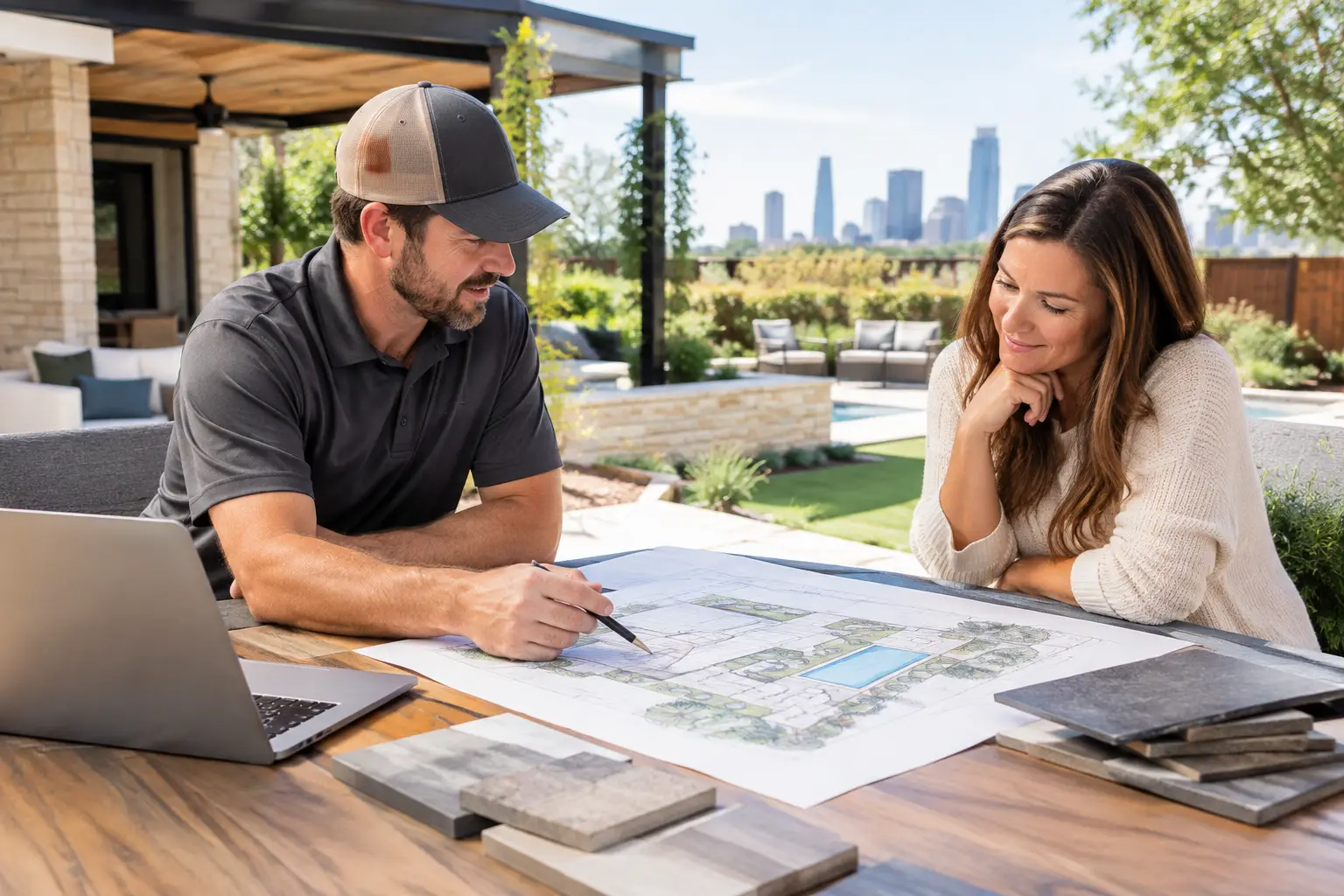
A backyard can look fine from the kitchen window and still fail where it counts. Water may collect against the slab, a narrow path may turn muddy after every storm, or a patio may be too small to use when family and friends are over. An outdoor living contractor turns those disconnected problems into one workable plan, built around how the property is actually used.
For Austin homeowners, that plan has to account for hard summer heat, sudden heavy rain, rocky ground, grade changes, and landscaping that needs to hold up without constant replacement. The best outdoor projects do more than add a new surface or a few plants. They make the property easier to use, easier to maintain, and better prepared for Texas weather.
Start With How the Yard Needs to Work
A successful outdoor space starts with function, not a photo gallery. Before choosing concrete finishes, planting beds, or patio furniture, consider what needs to happen in the space. A homeowner may need a larger area for grilling and outdoor meals. A rental owner may need a durable walkway that reduces trip hazards and keeps tenants out of mud. A property manager may need low-maintenance landscaping around a common area that still looks orderly year-round.
Those needs affect the entire scope. A patio for occasional seating has different requirements than one supporting a grill station, dining table, shade structure, and regular gatherings. A simple garden path may need to become a properly graded concrete walkway if it is the main route from the driveway to the backyard.
The layout should also account for access. Where will people enter? Where does water naturally move during a downpour? Is equipment access available for concrete work? Can the new surface connect cleanly to existing steps, fences, gates, and drainage routes? These are field conditions, not small details to figure out after work begins.
What an Outdoor Living Contractor Should Coordinate
Outdoor construction often gets split between several vendors: one crew for concrete, another for landscaping, and sometimes another for drainage or site preparation. That approach can work, but it can also create gaps. One contractor may finish a patio without addressing the grade around it. A landscaping crew may install beds that interfere with drainage or make future repairs harder.
An outdoor living contractor who understands both hardscape and landscape work can coordinate the project as a complete exterior improvement. That does not mean every yard needs a full rebuild. It means the concrete, grading, drainage, planting areas, and access points should work together.
Concrete creates the working surface
Concrete is often the backbone of an outdoor project. It provides a stable, clean surface for patios, walkways, seating areas, equipment pads, and driveway extensions. Proper preparation matters as much as the finished appearance. The subgrade needs attention, the layout must allow for drainage, and the right thickness and reinforcement should match the intended use.
For example, a pedestrian walkway and a vehicle parking extension are not the same job. They carry different loads and require different planning. The same is true for a patio built next to a house. Water should move away from structures, not sit along the edge of the slab or drain toward the foundation.
Concrete also gives homeowners options without overcomplicating the project. Broom finishes offer practical traction. Decorative finishes can add visual interest. Clean edges and purposeful joints help the installation look organized while allowing the concrete to perform as temperatures change.
Landscaping finishes the space and supports drainage
Landscaping is not just the final layer added after concrete is poured. It helps define the outdoor area, soften hard edges, improve curb appeal, and direct how people move through the property. Well-placed beds can frame a patio. Gravel or mulch zones can reduce bare soil and maintenance. Trees and shrubs can add privacy or shade where the site allows.
In Austin, plant selection should be practical. A landscape that looks good only with constant watering and replacement is rarely a strong long-term investment. Native and adapted plants, efficient irrigation where needed, and appropriate spacing can reduce maintenance while keeping the property attractive through hot, dry stretches.
Grade is equally important. Landscaping should not trap runoff near the home, cover weep holes, or bury the lower edges of siding and fences. A contractor should look at how soil, edging, mulch, and hard surfaces affect water movement before installation begins.
Plan for Austin Weather Before Building
Texas heat puts stress on outdoor materials and on the people using the space. A west-facing patio may be bright and usable in the morning but uncomfortable by late afternoon without shade. That may influence where a seating area belongs, whether a pergola makes sense, or where trees should be preserved or planted.
Heavy rain creates another set of concerns. Central Texas storms can expose weak drainage fast. Puddling on a patio, washout along a walkway, and runoff against a foundation are signs that the project needs better grading or drainage planning. In some cases, a modest adjustment to slope solves the issue. In others, the site may need drainage features, gravel zones, or a more substantial approach.
There are trade-offs. Large paved areas are durable and low-maintenance, but they can increase runoff and hold heat. More planted area can cool the yard and improve appearance, but it requires thoughtful irrigation, mulch, and upkeep. The right balance depends on the property, the budget, and how much maintenance the owner wants to take on.
Questions to Ask Before Hiring an Outdoor Living Contractor
The contractor should be able to explain the work in plain language. You should know what is being built, what preparation is included, how drainage will be handled, and where the project begins and ends. A vague quote may leave too much room for assumptions once the job is underway.
Ask whether the contractor has experience with the specific work you need, especially if the project combines concrete and landscaping. Request clear details on materials, surface dimensions, demolition or removal, base preparation, grading, cleanup, and anticipated timing. If permits, utility marking, or neighborhood approvals may apply, ask who is responsible for addressing them. Requirements vary by location and project type, so it is better to identify them early.
It is also reasonable to ask about changes. Outdoor work can uncover buried debris, unexpected grade issues, root conflicts, or conditions that were not visible during an initial walk-through. A professional contractor should communicate the issue, explain the options, and document any change in cost or scope before moving forward.
Build in Phases When the Full Project Is Not Ready
Not every property needs a large, all-at-once renovation. A phased plan can be the right move when budget or timing is limited. The key is to build the first phase so it supports the next one rather than creating expensive rework later.
A homeowner might begin with drainage corrections and a concrete patio, then add planting beds, lighting, or a shade structure later. Another may install a walkway and basic landscape cleanup first, then expand the entertaining area after seeing how the yard functions. The initial layout should leave room for those future additions.
This is where coordinated planning pays off. If a future grill area will need a pad, access route, or utility location, that should be considered before the first concrete pour. If planting beds will border a new patio, the finished elevation and drainage path should already be established.
Durable Work Comes From Clear Scope and Site Preparation
The visible result matters, but the work below and around it is what determines whether an exterior upgrade holds up. Proper excavation, compaction, base work, slope, reinforcement, and finishing practices all affect concrete performance. Good landscape installation also depends on site preparation, soil conditions, plant placement, and a realistic maintenance plan.
Texan Strong Builds approaches outdoor projects with that practical mindset: build useful surfaces, address the conditions around them, and create a finished space that fits the property. The goal is not to force every yard into the same design. It is to deliver work that looks right, performs well, and makes daily use of the property easier.
Before committing to a patio, walkway, or full backyard update, walk the yard after rain, note where people naturally travel, and identify the areas that cause the most frustration. Those observations give a contractor the information needed to build an outdoor space that earns its place on the property.