
12 Best Plants for Texas Yards That Hold Up
Find the best plants for Texas yards, from heat-tough shrubs to native perennials, with practical tips for Austin soil, sun, drainage, and watering.
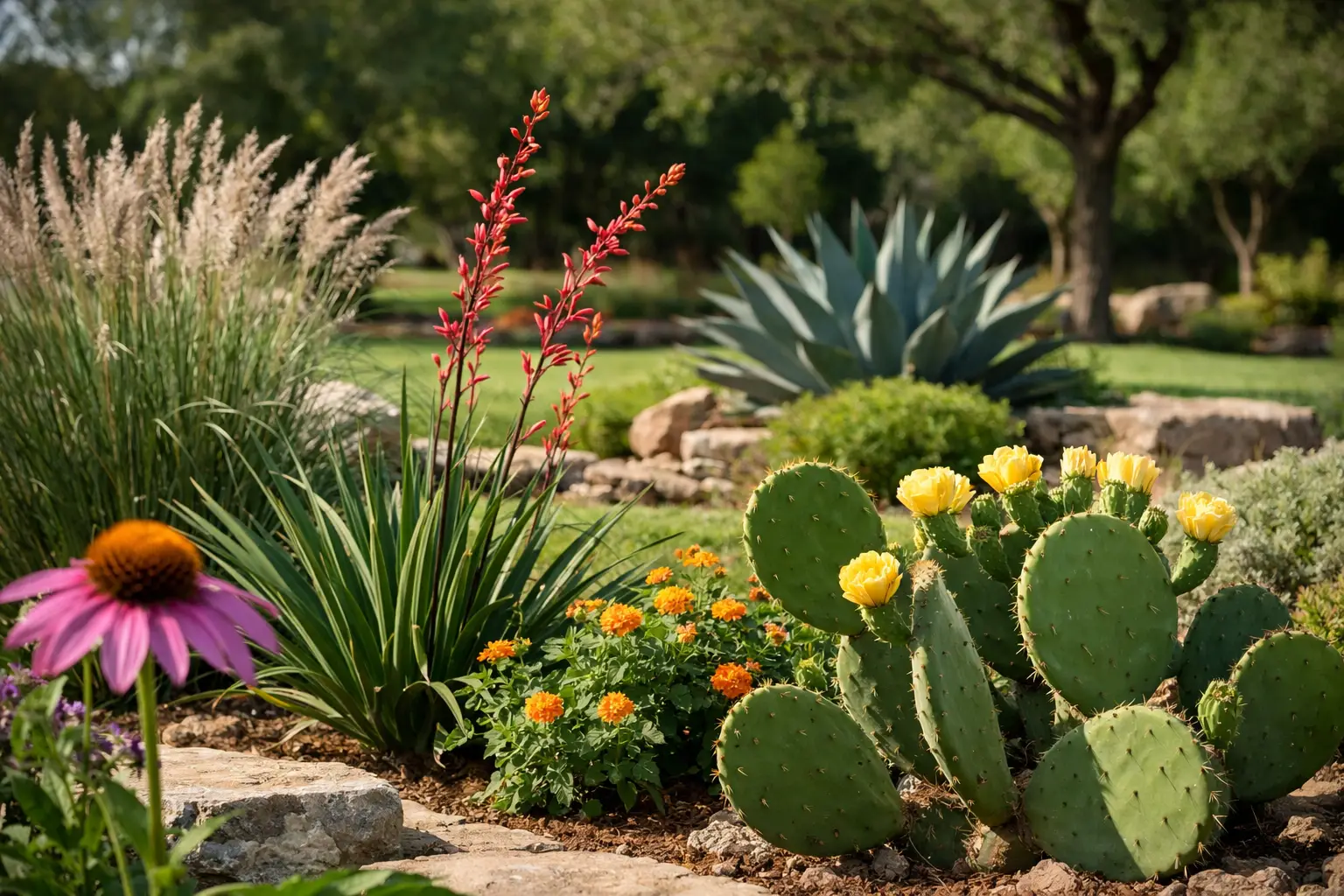
A Texas yard can look good in April and still fail by August. The difference is usually plant selection, drainage, and placement. The best plants for Texas yards are not simply attractive at the nursery. They need to handle hard sun, sudden rain, alkaline soil, dry stretches, and the reflected heat that comes off concrete patios, driveways, and walkways.
For Austin-area properties, a durable landscape starts with plants that fit the site. A shaded yard with deep soil calls for different choices than a west-facing front bed next to a driveway. Choosing the right plants up front reduces replacement costs, watering demands, and weekend maintenance.
What Texas Plants Need to Handle
Central Texas landscapes deal with more than heat. Many Austin yards have shallow, rocky soil or dense clay that holds water after storms and turns hard during dry weather. Full-sun areas can receive eight or more hours of direct exposure, while masonry and concrete surfaces intensify temperatures around planting beds.
Deer pressure is another practical concern, particularly near greenbelts and less-developed areas. No plant is completely deer-proof when food is scarce, but aromatic, coarse, or leathery-leaved selections are generally less appealing than tender flowering plants.
Before planting, identify where water naturally moves across the property. Plants that tolerate drought may still fail if their roots stay wet after a heavy rain. Beds should be graded to drain away from the house, and any low spot should be addressed before adding shrubs or groundcover.
Best Plants for Texas Yards in Full Sun
These plants earn their place in Texas landscapes because they tolerate heat without needing constant attention. Most establish best when planted in fall or early spring, then watered consistently through their first hot season.
Texas sage
Texas sage is one of the most reliable shrubs for exposed Austin landscapes. Its silver-gray foliage reflects sunlight, and its purple blooms often appear after humid weather or rain. It works well along property lines, in front-yard foundation beds, and beside driveways where heat-tolerant structure is needed.
Give Texas sage full sun and fast drainage. Overwatering is the main reason it declines. Avoid placing it in a heavily irrigated bed with thirsty turf or tropical-looking annuals.
Red yucca
Red yucca provides a clean, architectural shape without the sharp, aggressive look many homeowners expect from a yucca. Its narrow evergreen leaves form a tidy clump, while tall stems carry coral-pink flowers from late spring into summer.
This is a strong choice near patios, walkways, mailbox beds, and pool decks. It tolerates reflected heat and poor soil well, but it needs room for its flower spikes and should not be crowded by spreading shrubs.
Esperanza
Esperanza, also called yellow bells, brings bright yellow flowers through much of the warm season. It grows quickly, handles full sun, and gives a landscape a more colorful look than many drought-tolerant shrubs. In a hard winter, it may freeze back to the ground, but it often returns from the roots in Central Texas.
Use esperanza where seasonal color matters and a loose, natural shape is acceptable. It is not the right plant for a formal hedge, since pruning it into a tight box removes much of its character.
Lantana
Lantana is a practical option for hot, sunny beds where color is needed with limited irrigation. It flowers for a long season and comes in yellow, orange, pink, red, purple, and mixed varieties. Trailing types work well over retaining walls or at the edge of raised beds, while mounding varieties fill open spaces.
Lantana can die back after freezes and return in spring. It also needs occasional trimming to stay compact. For homeowners who want consistent blooms without daily watering, that trade-off is usually worthwhile.
Autumn sage
Autumn sage is smaller than Texas sage and offers red, pink, purple, white, or coral flowers. It is a good fit for the front edge of a sunny bed, especially where hummingbirds and pollinators are welcome. Its aromatic foliage also gives it better odds in deer-prone areas.
It performs best with good air circulation and light pruning after bloom cycles. Do not bury the crown under heavy mulch or keep the soil constantly wet.
Shrubs and Small Trees That Add Lasting Structure
Flowers make a bed feel finished, but shrubs and trees carry the landscape through every season. They establish the height, screening, shade, and visual order that keep a yard from looking scattered.
Yaupon holly
Yaupon holly is one of the most useful native evergreens for Texas properties. It can be maintained as a clipped hedge, allowed to grow naturally as a screening shrub, or selected in a tree form for a small ornamental tree. Its dense foliage handles sun, part shade, drought, and a range of soil conditions.
For tighter areas, choose a compact cultivar and plan for mature width. Planting a hedge too close to a fence, driveway, or concrete walk creates pruning problems later.
Texas mountain laurel
Texas mountain laurel is a standout small tree or large shrub for rocky, well-drained Austin sites. In spring, it produces fragrant purple flower clusters that resemble grape blossoms. Its evergreen foliage gives the yard structure when many other plants are dormant.
It is slow-growing, which is a benefit for homeowners who do not want constant pruning. The trade-off is patience. Buy the healthiest specimen you can afford, give it drainage, and let it develop over time.
Cedar elm
For larger yards, cedar elm is a tough shade-tree option that is well suited to Central Texas. It tolerates heat, clay soils, and periodic drought better than many commonly planted shade trees. Its smaller leaves also make fall cleanup more manageable than with some large-leaved species.
A tree is a long-term construction decision. Keep it far enough from the home, roofline, overhead lines, plumbing, and future concrete work. A properly located tree adds shade and value. A poorly located one creates ongoing maintenance and hardscape conflicts.
Grasses and Perennials for a Finished Look
Ornamental grasses and low perennials soften the edges of patios and walkways without requiring a high-maintenance flower bed. They also create contrast against concrete, stone, gravel, and mulch.
Gulf muhly grass is a strong choice for sunny areas. Its green clumps stay neat through much of the year, followed by pink-purple flower plumes in fall. Mexican feather grass has a lighter, softer appearance but can reseed, so it is best used thoughtfully rather than planted everywhere.
Blackfoot daisy is a low, mounding native perennial with small white flowers and a long bloom period. It works especially well in dry, rocky beds. Damianita offers yellow flowers and fragrant foliage, while lantana and autumn sage bring stronger color at different heights. Mixing several of these plants creates a bed with more seasonal interest than relying on one repeated species.
Match Plants to the Hardscape, Not Just the Bed
Landscaping works better when it is planned with the patio, walkway, driveway, retaining wall, or drainage route in mind. A large shrub may look fine on planting day but eventually block a path, push into a fence, or hide a low landscape wall. Plant mature-size specimens with enough clearance to keep access areas functional.
Near concrete, choose plants that can take heat and avoid species with aggressive surface roots. Red yucca, Texas sage, autumn sage, lantana, and muhly grass are all useful around patios and walks because they stay relatively manageable. Trees should be placed well away from slabs and planned utility routes.
Use mulch to protect soil moisture and reduce weeds, but keep it a few inches away from plant stems and tree trunks. In rock-heavy designs, remember that decorative gravel stores heat. It can work well with drought-tolerant plants, but new plantings will still need dependable irrigation while their roots establish.
A Better Way to Build an Austin Planting Plan
Start with the permanent elements: drainage, trees, screening needs, patios, and walkways. Then select shrubs for structure, followed by perennials and grasses for color and texture. This order prevents a common mistake: installing attractive plants first, then tearing them out when a new walkway, expanded patio, or grading correction is needed.
Group plants by water needs instead of mixing drought-tolerant species with plants that need regular moisture. This makes irrigation simpler and protects plants such as Texas sage from being overwatered. For a new landscape, expect to hand-water or closely monitor irrigation for the first growing season, even with native and adapted selections.
The goal is not a yard that looks good only after a fresh installation. It is a landscape that holds its shape through Texas heat, uses water wisely, and leaves room for the way you actually use your outdoor space. A well-planned combination of durable plants, sound drainage, and properly placed hardscape will keep working long after the first blooms fade.