
How to Grade Backyard Properly for Drainage
Learn how to grade backyard properly for reliable drainage, stable patios, and a healthier lawn in Austin's heavy rain and hard Texas soil conditions.
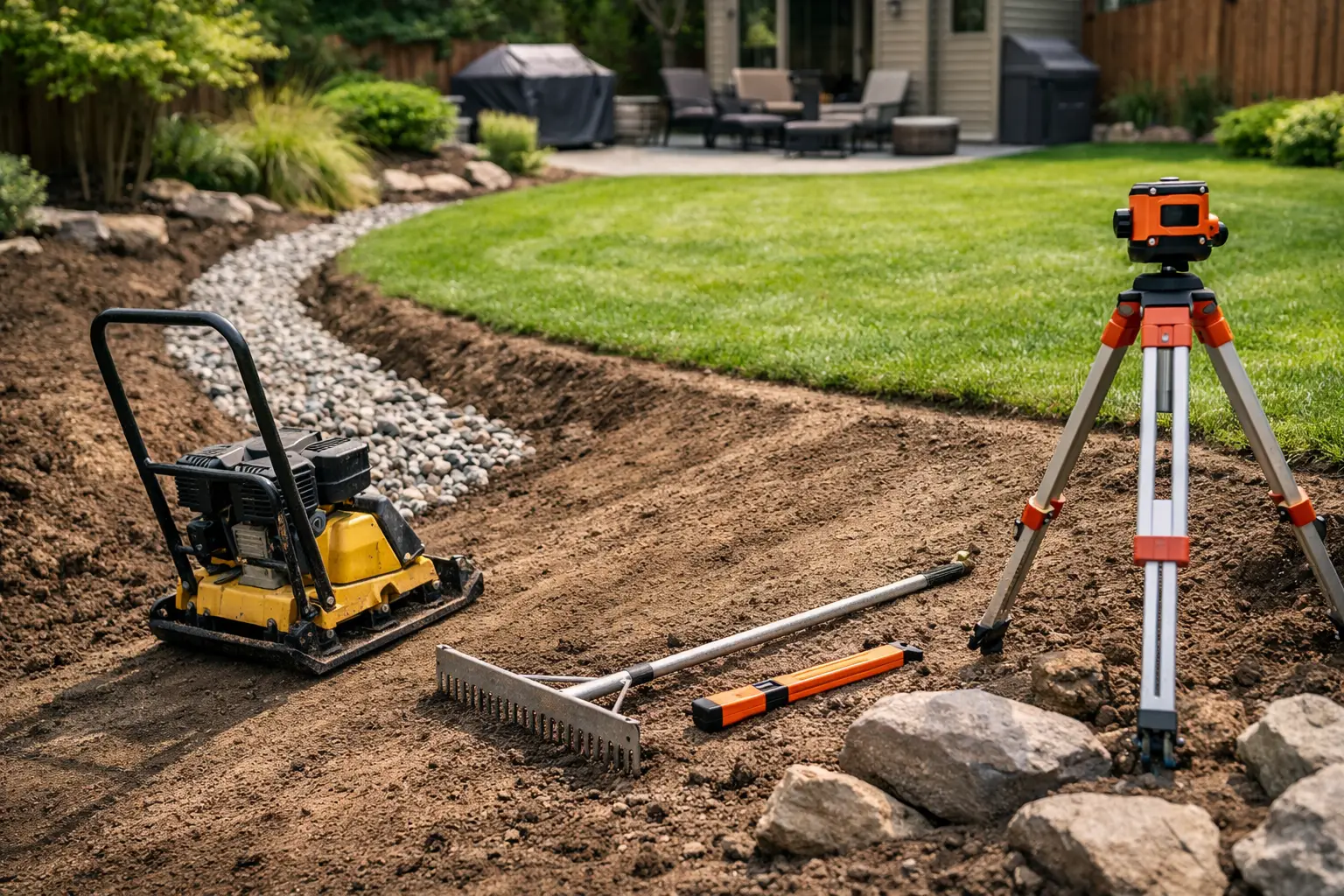
A backyard can look level and still send water straight toward the house. That is the problem homeowners are trying to solve when they ask how to grade backyard properly. Good grading is not about making every part of the yard flat. It is about creating a controlled slope that moves rainwater away from foundations, concrete, and usable outdoor areas.
In Austin, grading mistakes show up fast. Heavy rain can overwhelm shallow low spots, while hard, compacted clay soil holds water long after a storm. Poor drainage can leave a lawn muddy, wash mulch into walkways, undermine a patio edge, or keep moisture against a slab foundation. The right plan protects the property first, then makes the yard more useful and easier to maintain.
Start With the Drainage Plan
Before bringing in soil or renting equipment, identify where water currently goes. Walk the property during or shortly after a hard rain if possible. Look for puddles, soft ground, water marks along the foundation, erosion channels, and downspouts that discharge too close to the home.
The main rule is simple: surface water should move away from the structure. A common target is a fall of at least 6 inches over the first 10 feet away from the foundation. That equals roughly a 5 percent slope. In tighter side yards or around existing hardscape, the exact solution may differ, but the principle does not. Water needs a clear route away from the house without being directed into a neighbor's property.
Choose the final drainage destination before you start moving dirt. Depending on the lot, that may be a lower area of the yard, a swale, a drainage inlet, a properly designed dry creek bed, or an approved drainage route. Do not simply build up soil around the house and hope water finds its way out. Raised soil without a planned outlet can create a new low spot farther out in the yard.
How to Grade a Backyard Properly
Proper grading starts with measurements, not guesswork. Use a string level, laser level, or builder's level to compare elevations from the house to the yard. A laser level is the fastest way to get accurate information on a larger lot, especially when planning a patio, retaining edge, or drainage swale.
Set a reference point near the foundation, then measure the existing elevation at regular intervals moving outward. Mark the locations with stakes and note where the ground rises, falls, or stays flat. This shows whether the project needs a light finish grade or major reshaping.
Next, mark the desired grade. For example, if the ground needs to drop 6 inches over 10 feet, mark that lower elevation on a stake at the 10-foot point. Run a string between stakes and use it as a visual guide while adding or removing soil. Check the slope repeatedly. A yard can look smooth while still containing shallow dips that trap water.
For small corrections, a landscape rake, shovel, wheelbarrow, and hand tamper may be enough. Larger changes typically require a skid steer, compact tractor, or professional grading crew. Equipment saves time, but it can also compact Austin-area clay and make drainage worse if the subgrade is not loosened and shaped correctly afterward.
Protect the Foundation Grade
Keep finish soil below the home's siding, weep screed, and any required clearance points. This matters on brick veneer, stucco, and exterior wall systems where soil placed too high can trap moisture or hide pests. Never solve a drainage issue by burying exterior wall details.
If the lot slopes toward the home, the correction may require cutting down the high area rather than adding soil against the foundation. In some cases, a swale or drain system is needed because there is not enough space to establish the recommended slope naturally. The best approach depends on lot size, existing concrete, fence lines, utilities, and where runoff can legally discharge.
Build Broad Slopes, Not Sharp Channels
Most residential yards drain best with broad, gradual slopes. A gentle plane is easier to mow, safer to walk on, and less likely to erode. Sharp trenches and narrow channels may move water quickly, but they can become maintenance problems unless they are intentionally built as a lined drain, rock channel, or landscape feature.
A shallow swale is often effective for yards with a persistent wet section. It is a broad, low channel that guides runoff across the property without looking like a ditch. The sides should be gradual, and the swale should continue to a defined outlet. A swale that ends in the middle of the lawn is just another place for water to collect.
Use the Right Soil in the Right Layer
Do not use topsoil as structural fill for major grade changes. It is loose, organic, and prone to settling. For deeper areas, start with suitable fill dirt placed in thin lifts and compacted as needed. Then add a layer of quality topsoil at the surface where grass, plants, or sod will grow.
Compaction is a trade-off. Soil needs enough compaction to prevent settlement, especially near patios, walkways, and drainage structures. But soil compacted too tightly will shed water across the surface and make it difficult for roots to establish. The goal is a stable base under hardscape and a workable, well-finished growing layer in planted areas.
Austin soils can vary substantially from one neighborhood to the next. Expansive clay can swell when wet and shrink during dry periods, which is one reason patios and walkways need proper base preparation and drainage. If your grading project is tied to new concrete, coordinate both scopes before any work begins. Changing the yard elevation after a patio is poured can create drainage issues along the slab edge.
Account for Patios, Walkways, and Downspouts
Every hard surface should be part of the grading plan. Patios, driveways, and walkways need a slight slope so water does not stand on the concrete or run toward the home. The surface slope and the surrounding landscape grade must work together.
A patio that drains correctly can still create a problem if its runoff lands in a flat planting bed beside the house. Likewise, a low lawn area may remain wet because several downspouts discharge into it. Extend downspouts or route them to a managed drainage area when needed. Do not let roof runoff dump at the foundation or directly onto a freshly graded slope where it can wash soil away.
When connecting drainage around concrete, avoid improvised fixes that trap water against slab edges. This is where professional planning pays off. Concrete, base material, soil elevations, and drainage routes all need to be set in the right order.
Finish Grade, Then Test It
After rough grading is complete, remove rocks, construction debris, and large clods from the surface. Add topsoil where needed and rake the yard to its final shape. The finish grade should be smooth enough for sod or seed, but it should still maintain the planned slope all the way to the drainage outlet.
Before installing sod, mulch, or decorative rock, test the work with a garden hose. Run water near key areas: beside the house, around patio corners, below downspouts, and through any swale. Watch where it slows down or pools. Correcting a low spot now is far easier than tearing up new sod later.
For a basic backyard grading project, have these items ready:
- Stakes, string line, and a string or laser level
- Shovels, landscape rakes, wheelbarrow, and a hand tamper
- Suitable fill dirt for low areas and topsoil for finish grading
- Erosion control materials such as straw, sod, mulch, or erosion blanket
- Drainage materials if the plan includes a swale, catch basin, or underground line
Know When Grading Needs a Contractor
Hand grading works well for minor lawn repairs and small low spots. Bring in a qualified contractor when water reaches the foundation, the yard needs major elevation changes, concrete is being installed, or drainage crosses several parts of the property. Those projects can involve utility locations, soil compaction, erosion control, and drainage rules that are not visible from the surface.
A well-graded backyard should disappear into the background. Rain falls, water moves where it is supposed to go, the patio stays usable, and the lawn recovers without a muddy section near the house. If the grade is uncertain, address it before installing new landscaping or concrete - the ground beneath the project determines how well everything above it performs.