
Flagstone Versus Concrete Walkways in Austin
Compare flagstone versus concrete walkways for Austin homes, including cost, drainage, maintenance, heat, and curb appeal, before you build a new path.
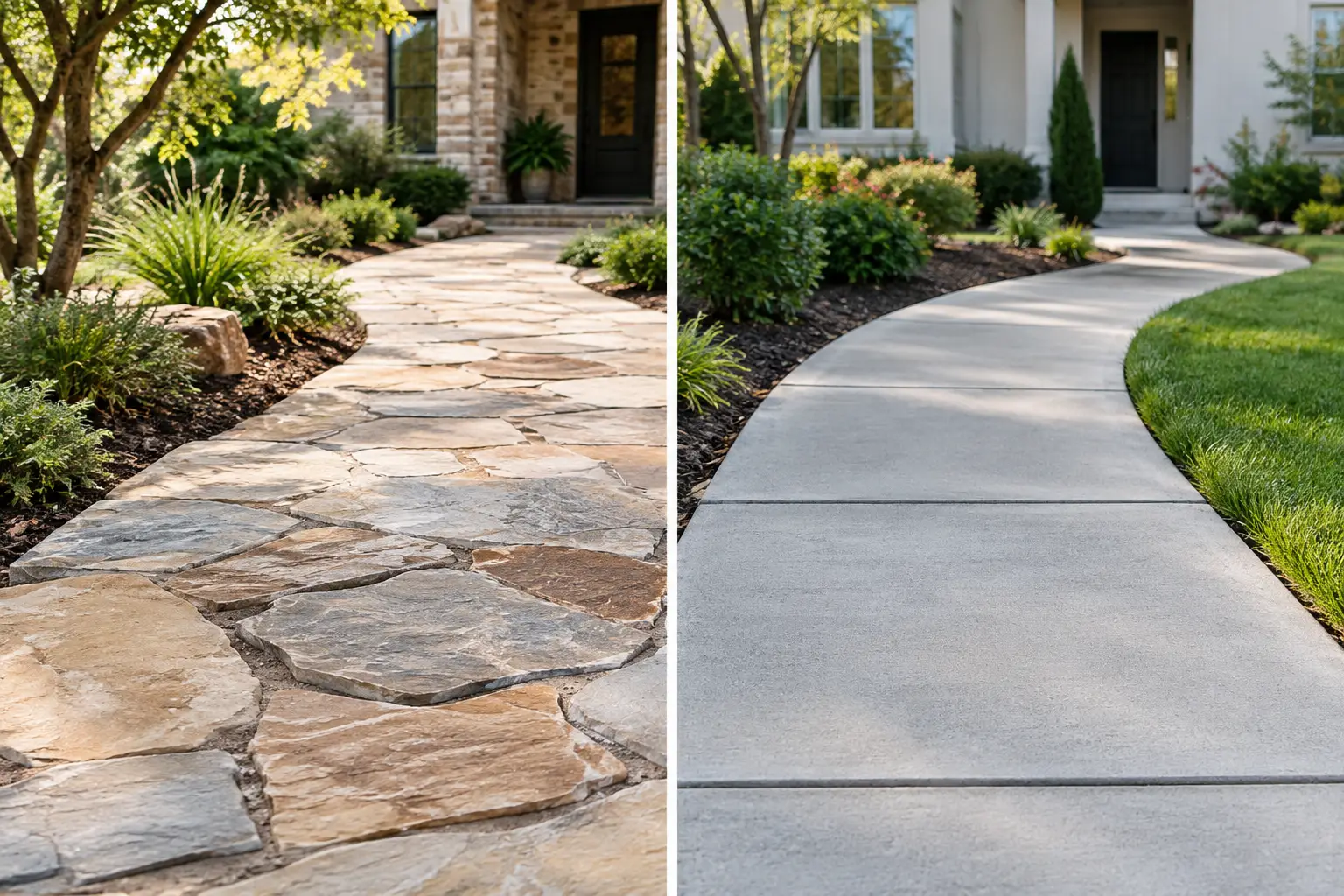
A walkway has to do more than connect the driveway to the front door. In Central Texas, it must handle intense sun, sudden downpours, shifting soil, irrigation overspray, and regular foot traffic. When comparing flagstone versus concrete walkways, Austin homeowners are usually weighing appearance against budget, but long-term performance deserves just as much attention.
Both materials can make a strong, useful path when installed on a properly prepared base. The better choice depends on where the walkway sits, how it will be used, the style of the property, and how much maintenance the owner is willing to take on.
Flagstone Versus Concrete Walkways: The Main Difference
Flagstone creates a natural, varied surface made from individual stone pieces. It works especially well around native landscaping, garden beds, pools, and homes with Hill Country or traditional Texas character. No two pieces look exactly alike, so the finished path has texture and visual movement that poured concrete does not naturally provide.
Concrete creates a more uniform, structured walkway. It can be broom-finished for traction, given a clean edge, colored, stamped, or formed into curves. For a front entry, side-yard access path, or route that needs a consistent walking surface, concrete is often the more practical option.
The real distinction is not simply natural stone versus poured material. Flagstone is a system of individual pieces and joints. Concrete is a continuous slab with planned control joints. That difference affects drainage, repair work, movement, cost, and the way each surface ages.
Upfront Cost and Installation Work
A basic concrete walkway is generally less expensive per square foot than a flagstone walkway, particularly when the project covers a large, straightforward area. Concrete can be placed efficiently once excavation, grading, forms, reinforcement where needed, and base preparation are complete. Its predictable installation process makes it a solid value for long runs from a gate to a backyard, a driveway connection, or a front walk replacement.
Flagstone usually requires more labor. Each stone must be selected, fitted, leveled, and set with joints that look intentional while remaining stable underfoot. The material itself can also vary widely in price based on thickness, cut, color, and availability. Large irregular pieces may look simple, but getting them to sit properly is skilled work.
That does not mean concrete is always the cheaper project. Curved forms, custom coloring, decorative borders, exposed aggregate, demolition, difficult access, or major drainage corrections can raise the price of concrete quickly. A small flagstone path with wider planted joints may be a reasonable investment when the goal is to complement a landscaped area rather than create a formal entry route.
Austin Soil and Drainage Can Decide the Project
Austin-area properties often have shallow limestone, rocky ground, expansive clay, or a combination of all three. These conditions can move under changing moisture levels. A walkway that looks good on the day it is finished can settle, tilt, crack, or separate if the base and drainage plan are treated as an afterthought.
Concrete needs a compacted, stable base and properly placed control joints to manage normal cracking. Concrete will crack eventually to some degree. Good installation helps direct those cracks into planned joint lines and reduces the risk of uneven sections. The walkway should also be sloped so water moves away from the home, not toward the foundation.
Flagstone can handle minor movement differently because individual pieces are not locked into one large slab. If a stone settles, it may be possible to reset that area rather than replace an entire section. However, flagstone is not immune to poor preparation. Stones installed over loose soil or an inadequate base can rock, sink, and create trip hazards. Mortared flagstone also needs sound support, since a rigid mortar bed can crack when the ground shifts.
For either material, drainage should be planned before installation. Downspout discharge, roof runoff, irrigation patterns, and low spots in the yard all matter. Water pooling along a walkway can undermine the base, stain surfaces, encourage algae, and create slippery conditions.
Appearance and Curb Appeal
Flagstone has the advantage when a homeowner wants a path that feels tied to the landscape. Buff, tan, gray, and rust-colored stone can work naturally with limestone walls, native grasses, agaves, oak shade, and xeriscape planting. A flagstone path can be formal with tight joints or more relaxed with gravel, decomposed granite, or groundcover between stones.
Concrete has more design range than many homeowners expect. A clean gray walkway suits modern homes and rental properties where durability and easy upkeep matter most. A colored or textured finish can add warmth without creating the maintenance demands of a heavily decorative surface. Concrete can also be edged with stone, bordered by steel landscape edging, or paired with planting beds to avoid a plain, oversized slab look.
For resale and rental appeal, the best choice is usually the one that matches the house and the rest of the hardscape. A natural flagstone entry can look out of place next to a sharply modern concrete patio. In the same way, a plain concrete strip may not support the look of a carefully upgraded garden or front landscape. The walkway should feel like part of the property, not a separate patch of material.
Heat, Traction, and Everyday Use
Both flagstone and concrete get hot in Austin summers. Lighter colors generally stay more comfortable underfoot than dark colors, although no hardscape material remains cool in direct afternoon sun. Shade from trees or a planned planting scheme can make a bigger difference than material alone.
For traction, a broom-finished concrete surface is a dependable choice. It provides grip without being difficult to sweep or roll equipment across. Avoid overly smooth finishes around entries, pool areas, or slopes where wet shoes and rain can create a slip risk.
Flagstone offers natural texture, but its surface can be uneven depending on the stone selection and installation style. That can be attractive in a garden path, yet it may not be ideal for residents with mobility concerns, strollers, wheeled trash bins, or frequent deliveries. Large, flat stones with tight, level joints improve walkability, but they require careful layout and installation.
Maintenance and Repairs Over Time
Concrete maintenance is straightforward. Keep the walkway clear of soil and leaf buildup, wash it as needed, and seal it when the selected finish calls for protection. Small cracks can often be repaired or filled, though color-matching repairs on decorative concrete may remain visible. Major slab movement can require removal and replacement of a section.
Flagstone needs routine attention at the joints. Loose gravel, sand, or decomposed granite may need replenishing. Mortar joints can crack or deteriorate over time, especially where water sits or the ground moves. Organic debris should be removed from shaded areas so moisture does not encourage staining or slippery growth.
One advantage of dry-laid flagstone is localized repair. A contractor can lift and reset individual stones if a section settles. One advantage of concrete is the ease of cleaning and the lack of open joints where weeds can establish themselves. Neither material is maintenance-free, but each has a different kind of upkeep.
Which Walkway Fits Your Property?
Choose concrete when the path needs to be wide, smooth, durable, and cost-conscious. It is often the better fit for primary front walks, side-yard access, service routes, rental properties, and areas where mobility and consistent footing are priorities. It also works well when a new walkway needs to tie directly into an existing concrete driveway or patio.
Choose flagstone when landscape character is a priority and the walkway is part of the outdoor experience. It is well suited for garden routes, transitions between patios and yard areas, pool surroundings, and entry paths where a natural Texas look matters. Plan for a quality base, proper drainage, and a layout that keeps the surface level enough for daily use.
Some properties benefit from using both. A concrete main walkway can provide a stable route from the street or driveway, while flagstone branches into a garden, outdoor seating area, or side landscape. This approach can control cost without giving up the texture and curb appeal stone brings to selected areas.
Build the Base Before Choosing the Finish
The material is visible, but the excavation, grading, base, compaction, and drainage work determine whether a walkway stays dependable. Before choosing stone color or concrete finish, look at runoff routes, tree roots, slope, existing hardscape elevations, and how the path will be used year-round.
A well-planned walkway should make daily movement around the property easier and keep water moving where it belongs. For Austin homeowners, that practical groundwork is what turns a good-looking path into an exterior improvement that holds up through heat, rain, and changing seasons.