
Concrete Sidewalk Repair Guide for Austin Homes
Use this concrete sidewalk repair guide to spot trip hazards, choose the right fix, and plan durable work for Austin's heat, soil, and rain conditions.
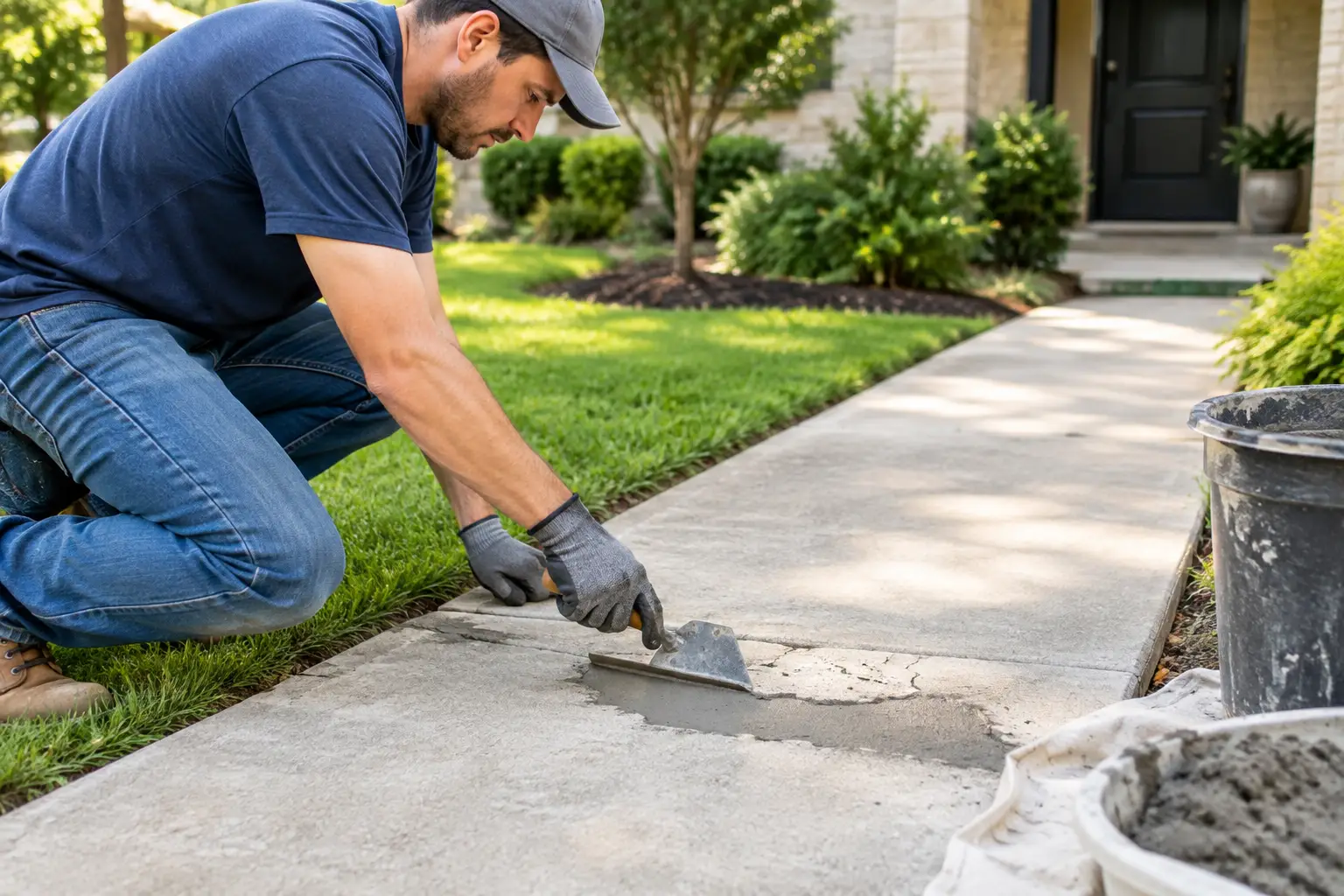
A cracked sidewalk is more than a curb-appeal problem. It can become a trip hazard, collect water, damage lawn equipment, and signal movement below the concrete. This concrete sidewalk repair guide helps Austin homeowners and property managers determine what can be repaired, what needs replacement, and what should be handled by a qualified concrete contractor.
Austin concrete takes a beating from intense heat, heavy rain, expansive clay soils, tree roots, and occasional freeze-thaw cycles. The right repair depends on why the slab failed in the first place. Filling a crack may improve appearance for a while, but it will not correct poor drainage, unstable soil, or a lifting root system.
Start by Identifying the Type of Sidewalk Damage
Before buying patch material or scheduling a repair, inspect the sidewalk closely. Walk the full path and look at joints, edges, nearby trees, downspouts, and surrounding grade. Damage patterns usually point to the underlying issue.
Hairline cracks are narrow surface cracks that do not create separation or height changes. These are common as concrete cures and ages. They may be cosmetic, but sealing them can keep water from working deeper into the slab.
Wider cracks, especially those wider than about 1/4 inch, deserve more attention. If one side of the crack is higher than the other, the slab has moved. That movement may come from soil settlement, tree roots, erosion, or water runoff beneath the concrete.
Spalling is another common issue. This is when the concrete surface flakes, chips, or breaks away. It can result from poor finishing, weak concrete, moisture exposure, deicing chemicals, or years of wear. Small spalled areas can often be patched. Broad surface failure usually points toward replacement.
A lifted or sunken sidewalk section is the most urgent condition to address. A vertical difference between slabs creates a clear tripping risk. For rental properties and commercial-adjacent homes, this can also become a liability issue. Mark the hazard, limit foot traffic if possible, and plan the repair before the problem gets worse.
Concrete Sidewalk Repair Guide: Match the Fix to the Problem
There is no single repair method that works for every sidewalk. A durable result starts with choosing a repair that addresses both the visible damage and the cause behind it.
Sealing Small, Stable Cracks
For narrow cracks with no vertical movement, a flexible concrete crack sealant is often the practical choice. Clean out loose debris, dirt, and vegetation first. The crack needs to be dry enough for the product to bond properly.
Flexible sealants are better than rigid patch products for small cracks because concrete expands and contracts in Texas weather. The sealant can move slightly with the slab rather than breaking loose immediately. Keep expectations realistic: a sealed crack is maintenance, not a structural reset. It may remain visible, and it may need attention again over time.
Patching Chips and Surface Damage
Small chips, shallow holes, and limited spalling can be repaired with a polymer-modified concrete patch material. Preparation determines whether the patch lasts. Remove all loose or weak concrete until you reach solid material, clean the area thoroughly, and follow the manufacturer’s mixing and curing instructions.
Do not feather a patch down to a paper-thin edge. Thin edges tend to break off under foot traffic. A proper patch needs enough depth and a clean, sound surface to bond.
Patching works best when the surrounding slab is still solid and level. If the surface is breaking down across most of the panel, a patch can turn into a short-term cosmetic fix that leaves you paying twice.
Leveling a Sunken Slab
When a sidewalk panel has settled but remains largely intact, slab lifting may be an option. Depending on site conditions, a contractor may use polyurethane foam injection or a cement-based lifting material to raise the slab toward its original elevation.
This approach can be faster and less disruptive than full replacement. It may preserve nearby landscaping and avoid removing an otherwise sound section of concrete. However, it is not the right answer when the slab is badly cracked, the base has washed out extensively, or drainage problems are still active.
The goal is not simply to make the surface look level on repair day. The base beneath the concrete must be stable enough to support it after lifting.
Grinding a Minor Height Difference
Grinding can reduce a small raised edge between slabs. It is generally best for minor offsets where the concrete itself is stable and the goal is to remove a trip point.
Grinding does not fix the cause of movement. If tree roots continue to lift the panel or soil conditions continue to shift, the height difference can return. It is a targeted correction, not a full repair strategy.
Replacing Broken or Heaved Panels
Full replacement is often the best long-term move when a panel is heavily cracked, broken into multiple pieces, severely heaved, or deteriorating across a large area. The old concrete is removed, the subgrade is evaluated, and a properly prepared base is installed before new concrete is poured.
Replacement costs more upfront than filling cracks, but it gives the contractor access to the issue below the slab. That matters when the real problem is poor compaction, standing water, root pressure, or an improperly supported edge.
For connected walkways, replacement also allows the new section to match slope, joint layout, finish, and surrounding landscaping. A repair should improve the path, not create a new drainage problem at the next joint.
Address Water and Soil Before Pouring New Concrete
In Central Texas, soil movement and water management are major parts of concrete performance. Expansive clay can swell when wet and shrink during dry periods. That movement puts stress on sidewalks, patios, driveways, and other flatwork.
Look for roof runoff that drains beside the walkway, low spots that hold water, irrigation heads that constantly soak one area, or soil washing away from slab edges. A downspout that empties directly next to a sidewalk can undermine the base over time. Redirecting runoff or improving the grade may be just as important as the concrete repair itself.
New sidewalk concrete should slope away from the home and direct water toward an appropriate drainage area. The exact slope depends on the site, but water should not pond on the walkway or flow back toward the foundation.
Tree roots need the same level of attention. Cutting major roots without a plan can harm the tree or create future movement elsewhere. In some cases, rerouting a section of walkway, adjusting the layout, or coordinating root work with an arborist is smarter than repeatedly repairing the same lifted slab.
When a DIY Repair Makes Sense
Homeowners can often handle simple crack sealing and small cosmetic patches if the slab is level, stable, and otherwise in good condition. These jobs require careful cleaning, proper materials, and patience during curing, but they do not usually require specialized equipment.
DIY work becomes risky when there is vertical displacement, major cracking, widespread spalling, drainage failure, or uncertain ownership. Sidewalks near a street may fall within a public right-of-way, even when they run along the front of a private property. Before removing or replacing a sidewalk in that area, verify local requirements and responsibility.
A professional evaluation is also worthwhile if the damaged walkway connects to a driveway, porch, steps, retaining edge, or landscaped grade. Concrete, drainage, and landscaping often affect one another. Treating them as separate problems can lead to avoidable rework.
What to Expect From a Professional Sidewalk Repair
A solid concrete repair process starts with site evaluation, not a quick price based on a photo. The contractor should assess slab condition, measure movement, identify water flow, check access, and consider surrounding landscaping.
For replacement work, the process generally includes saw cutting or demolition, removal of failed concrete, base preparation, form setting, reinforcement where appropriate, pouring, finishing, joint placement, and curing. The work area should be left with clean transitions to adjacent concrete and landscaping.
Ask practical questions before approving the work. What caused the damage? Is leveling realistic, or is replacement the better value? How will runoff be handled? Will nearby grass, beds, irrigation, or tree roots need protection? Clear answers are a better sign than a contractor promising that every crack has a cheap, permanent fix.
Maintain the Sidewalk After Repair
Concrete needs basic attention after it is repaired or replaced. Keep joints clear of soil and invasive grass, watch for standing water after storms, and avoid placing excessive loads on residential walkways. If you see a new crack or a slab beginning to move, address it early before a minor repair becomes demolition work.
For Austin properties, the best sidewalk repair is the one that accounts for the whole site: the concrete, the soil, the water path, and the landscaping around it. Texan Strong Builds approaches exterior work with that practical view, because a smooth new sidewalk only stays that way when the ground beneath it and the drainage around it are doing their job.