
Best Backyard Privacy Landscaping for Austin Homes
Find the best backyard privacy landscaping for Austin homes, with durable plants, screens, walls, and layout tips built for heat, drought, and shade, too.
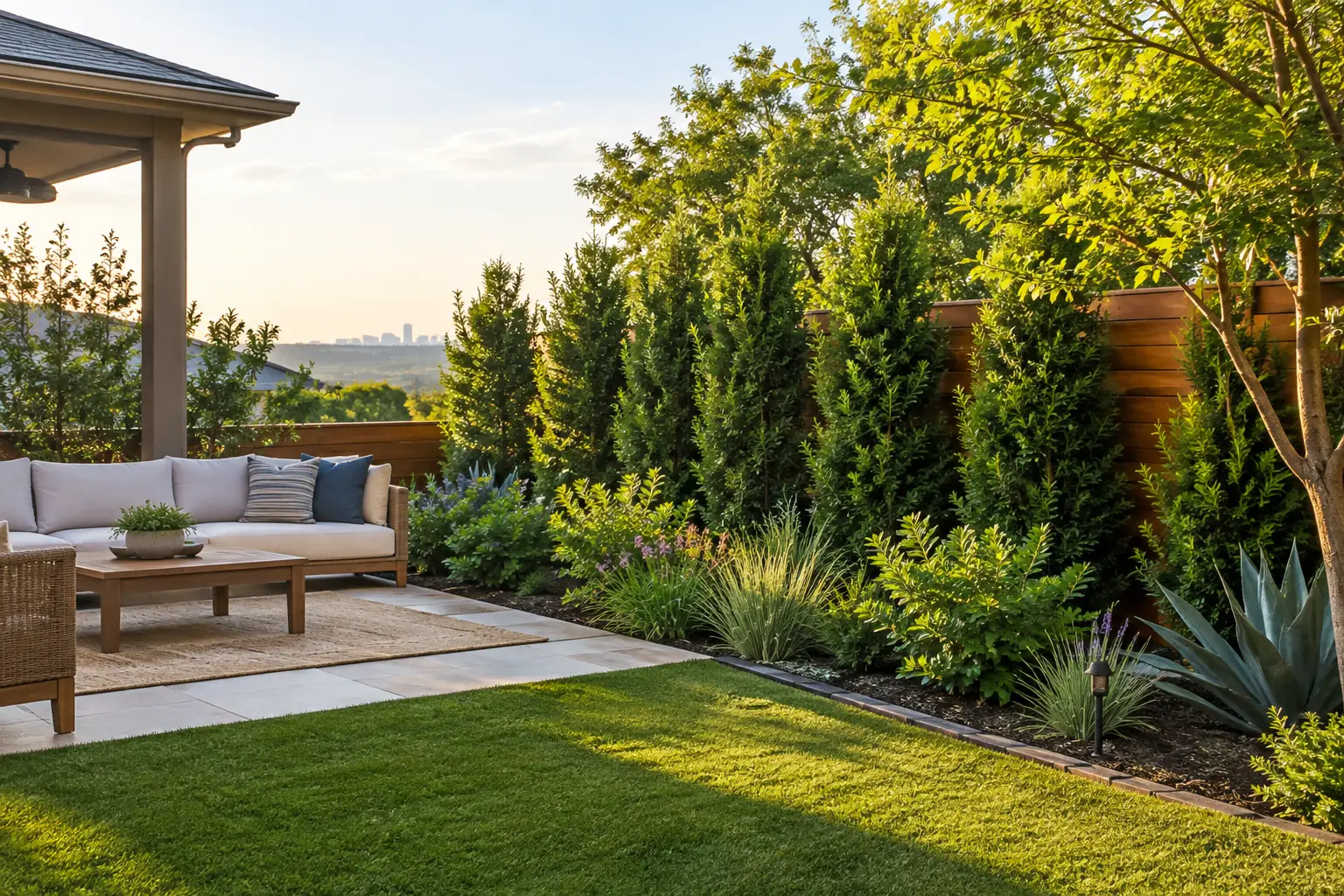
A backyard can feel exposed even when the fence is intact. Second-story windows, nearby patios, open side yards, and lots that back up to busy streets can all take away from how you use your outdoor space. The best backyard privacy landscaping does more than block a view. It creates a comfortable, usable yard that stands up to Austin heat, uneven rainfall, and the day-to-day demands of a real property.
For most Austin homeowners, the right answer is not one tall row of plants. Privacy works best when it is planned in layers: a solid boundary where needed, planting that softens and fills gaps, and hardscape that defines where people actually sit, cook, or gather. That approach looks better and usually holds up better over time.
Start With the View You Need to Block
Before choosing plants or building a screen, stand in the area you want to use. Look outward from the patio, pool deck, seating area, and back door. The privacy issue may be a neighbor’s elevated window, a narrow side-yard view, traffic behind the property, or a full view across a low fence.
This matters because every problem calls for a different height and placement. If the issue is a second-story window, a six-foot fence alone will not solve it. A planted screen or a raised privacy feature near the patio may be more effective than trying to cover the entire property line. If a neighbor’s ground-level patio is the problem, a fence extension, hedge, or strategically placed tree can do the job without making the whole yard feel closed in.
Also check setbacks, utility lines, drainage paths, and homeowner association rules before construction begins. Mature plant size matters just as much as the size at installation. A screen planted too close to a fence, foundation, or pool deck can create maintenance and repair problems later.
Use Fences and Walls Where Privacy Must Be Immediate
Plants take time. When a property needs immediate screening, a well-built fence, masonry wall, or purpose-built privacy panel provides the backbone of the project. In many Austin backyards, this structure handles the low-level view while landscaping improves height, appearance, and sound control.
A standard wood privacy fence remains a practical option, but it should be built with Texas weather in mind. Posts, framing, drainage around the fence line, and the condition of the existing grade all affect how long it lasts. A fence that sits in standing water or follows a poorly drained slope can lean, rot, or develop gaps well before it should.
For patios and outdoor kitchens, a shorter decorative wall or screen can be more useful than enclosing the entire yard. Concrete or stone seat walls, stucco privacy walls, and slatted panels can shield a dining area from direct sightlines while keeping airflow through the space. This is often the better choice for smaller yards where a tall, solid barrier would feel heavy.
Hardscape work and privacy planning should happen together. A patio placed directly against an exposed fence line can still feel public. Shifting the patio, adding a planter wall, or creating a raised planting bed can make a major difference without adding unnecessary square footage.
Best Backyard Privacy Landscaping Plants for Austin
The best plants depend on sun exposure, soil, irrigation, and how quickly you need coverage. Austin properties often deal with shallow rocky soil, intense western sun, and periods of drought followed by heavy rain. Choose plants that can handle those conditions instead of forcing high-water greenery into a difficult location.
Evergreen Screening for Year-Round Coverage
Evergreen shrubs and trees offer the most consistent privacy. They are useful along fences, behind patios, and at property corners where a gap stays visible all year.
Wax myrtle is a strong local choice for a natural-looking screen. It grows quickly in the right conditions, tolerates many Texas soils, and can be maintained as a hedge or allowed to develop into a taller informal screen. It is not the cleanest choice for a tightly clipped, formal landscape, but it works well for homeowners who want coverage without a rigid look.
Yaupon holly is another dependable option. It handles heat and drought well once established and can be shaped into a hedge or used as a small tree. Its dense growth makes it useful when you need a more controlled appearance near a patio, walkway, or front-to-back side yard.
Texas mountain laurel grows more slowly but brings a durable, distinctly regional character. It is a better fit for patient homeowners who want a permanent landscape feature rather than fast coverage. Because its growth rate is modest, it is often used with other plants or a fence rather than as the only privacy solution.
Bamboo and Fast-Growing Screens: Know the Trade-Off
Clumping bamboo can create a strong vertical screen in a limited footprint, especially near a patio or along a narrow side yard. It can be effective when the goal is height without taking over a large planting bed. However, it still needs regular water during establishment, room for root growth, and ongoing maintenance.
Running bamboo is not a casual planting decision. It can spread aggressively and become a neighbor dispute as well as a landscape problem. If bamboo is part of the plan, select a clumping variety and give it proper containment and spacing. Fast growth is useful only when it stays where it belongs.
Trees for High Sightlines
When the privacy issue comes from above, small ornamental trees and multi-trunk trees can interrupt direct views without creating a solid wall around the yard. Desert willow, olive trees where appropriate, and certain native or adapted trees can provide filtered screening and shade.
Tree canopies are not the same as a solid hedge. They work best for softening elevated views, creating shade over a seating area, and making a backyard feel more private overall. They are less reliable for blocking a direct ground-level sightline from a neighboring deck or window.
Build Privacy in Layers, Not a Single Line
A single row of identical shrubs along the fence is common, but it can look flat and leave the yard vulnerable if one plant fails. A layered layout gives better coverage and more depth. Use a structural element closest to the property line, taller screening plants behind or beside key viewing areas, and lower shrubs or ornamental grasses in front.
For example, an Austin patio may use a wood fence as the baseline, a cluster of yaupon hollies near the most exposed corner, and drought-tolerant grasses or flowering shrubs along the patio edge. The fence handles immediate privacy. The plants break up the hard surface, add height where it matters, and make the space feel intentional.
Layering also helps with wind and heat. Solid walls can trap heat in a small courtyard, while a mix of screens and planting can offer privacy without completely stopping air movement. That balance matters during a Central Texas summer.
Do Not Ignore Drainage and Irrigation
Privacy landscaping fails when water management is treated as an afterthought. New planting beds can redirect runoff toward a patio, fence, or foundation if the grade is not addressed. Raised beds can be useful, but they need proper drainage and a clear plan for where water goes during a heavy storm.
Irrigation should match the plant material and the site. Newly installed trees and shrubs need consistent watering until their roots establish, even if they are drought-tolerant varieties. After establishment, watering can be adjusted based on season, soil, and rainfall. Overwatering can be just as damaging as neglect, particularly in dense clay or compacted ground.
Mulch helps retain moisture, reduce weeds, and protect roots from extreme temperature swings. Keep it pulled back from trunks and stems so moisture does not stay pressed against the plant base.
Privacy Features That Improve How You Use the Yard
A privacy project should support the function of the space, not just the view. A screened patio can become an outdoor dining area. A planter wall can define a pool deck. A side-yard screen can make room for a quiet seating area, pet run, or concealed storage zone.
This is where combining concrete and landscaping work can simplify the build. Instead of adding plants around an existing layout that never worked well, plan the patio, walkways, drainage, walls, and planting zones as one project. Texan Strong Builds helps Austin-area property owners approach outdoor upgrades with that kind of practical coordination.
Avoid adding privacy features that create maintenance headaches. Vines may cover a fence quickly, but some can damage wood, hold moisture against surfaces, or require constant pruning. Tall hedges can look good at installation but become difficult to manage if they block gates, crowd equipment access, or grow into utility areas.
A Better Way to Plan Your Privacy Project
Start by deciding which area needs privacy first. Most homeowners get the best result by focusing on the main outdoor living zone rather than trying to screen every inch of the lot. Then choose what must be built now and what can grow in over time.
A solid fence or screen may solve the immediate concern, while well-chosen trees and shrubs make the yard more comfortable over the next few seasons. Good privacy landscaping should feel like part of the property, not a barrier added in a rush. When the layout, drainage, hardscape, and planting work together, the backyard becomes a place you will actually want to use on a Saturday afternoon.