
Top Outdoor Living Improvements for Austin Homes
See which top outdoor living improvements add usable space, handle Austin heat, and improve your property's long-term function every season.
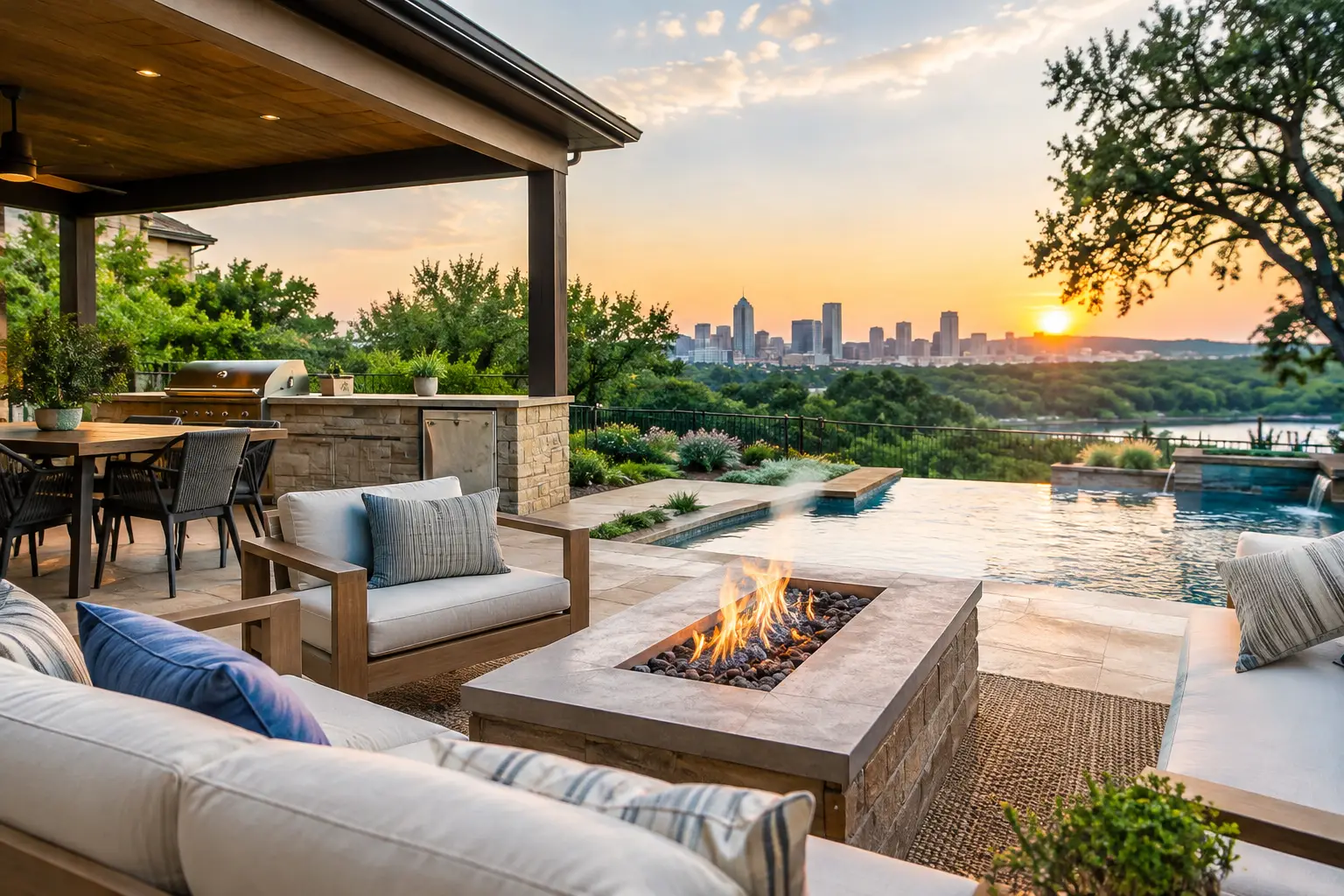
A backyard that looks good for two weeks after installation is not enough. Austin homeowners need outdoor spaces that handle summer heat, sudden downpours, dry spells, foot traffic, and the occasional heavy gathering. The best top outdoor living improvements do more than add curb appeal. They make the property easier to use, easier to maintain, and better prepared for Texas weather.
The right project depends on how you use the space. A homeowner who hosts family cookouts has different needs than a rental property owner trying to reduce maintenance calls. Still, durable concrete work, practical drainage, defined walkways, and climate-appropriate landscaping consistently deliver value across Central Texas properties.
Top Outdoor Living Improvements That Earn Their Keep
1. Build a concrete patio sized for real use
A patio is often the foundation of an outdoor living area. It creates a clean, stable surface for furniture, grills, dining sets, fire pits, and everyday foot traffic. It also gives homeowners a defined place to spend time outside instead of trying to make uneven grass or bare soil work for every occasion.
Size matters. A small slab may fit a table, but it can feel crowded once chairs are pulled out or guests arrive. Planning for circulation around furniture makes the patio more usable from day one. For many homes, extending an undersized patio is a more practical investment than adding decorative features to a space that still cannot comfortably serve its purpose.
Concrete is a strong fit for Austin because it stands up to heat, requires less maintenance than many wood surfaces, and can be finished to match the home. A basic broom finish provides dependable traction. Decorative borders, colored concrete, or stamped finishes can add visual interest, but the slab preparation, reinforcement, slope, and joint placement matter more than surface appearance.
2. Add shade before adding more furniture
Texas sun can make a well-built patio unusable during the hottest part of the day. Shade is what turns a concrete pad into a place people actually use from late spring through early fall.
A covered patio, pergola, shade structure, or strategically placed trees can reduce direct exposure and make outdoor dining more comfortable. The best choice depends on the lot, the home's orientation, the available budget, and how much weather protection is needed. A pergola can provide an open, attractive structure, but it will not block rain or afternoon sun as completely as a solid roof cover.
Before installing a structure, consider how it will work with drainage, lighting, ceiling fans, and the patio layout below it. Retrofitting those elements later can add cost and limit options. Planning the hardscape and shade together usually produces a cleaner result.
3. Fix drainage while improving the yard
Drainage is not the most glamorous outdoor upgrade, but it is one of the most valuable. Standing water, washed-out mulch, muddy walkways, and soil erosion can quickly undermine an otherwise attractive landscape. Water that drains toward the house can create much bigger problems.
Every patio, walkway, and landscape installation should account for water movement. Concrete needs the right slope to direct runoff away from structures. Grading may need adjustment in low areas. Depending on the property, a drainage solution could include swales, catch basins, channel drains, or carefully placed rock and planting beds that help guide water where it belongs.
Austin soils can vary significantly from one neighborhood to the next, and clay-heavy ground can expand and contract with changing moisture levels. That does not mean outdoor projects should be avoided. It means the base preparation, drainage plan, and installation details need to be handled correctly. A contractor should look at the full site rather than treating a patio or walkway as an isolated slab.
4. Install defined walkways and access paths
A walkway solves a simple problem: people need a reliable route through the property. Without one, they cut through grass, track mud indoors, wear down planting areas, and create ruts that become worse after rain.
Concrete walkways are especially useful between driveways, gates, patios, side yards, trash areas, pools, and accessory structures. They make the property easier to navigate for family members, guests, tenants, and service crews. On investment properties, a clear path can reduce damage to landscaping and help keep common-use areas looking maintained.
The best walkway is not always perfectly straight. A direct route makes sense where function is the priority, such as a side-yard path to a gate. In a front or backyard landscape, a gently routed path can work better with planting beds and create a more finished appearance. Either way, proper width, drainage, and a stable base are what make the improvement last.
5. Replace high-maintenance areas with practical landscaping
Landscaping should support the way the property is used. A large lawn may look appealing on a listing photo, but it can require substantial water, mowing, edging, and repair during Austin's hot, dry stretches. Reworking underused turf into planting beds, gravel areas, or defined outdoor zones can reduce upkeep while improving the overall layout.
Climate-appropriate plants are a practical choice. Native and drought-tolerant options generally need less intervention after they are established, although no plant is completely maintenance-free. Proper spacing, soil preparation, mulch depth, and irrigation placement still matter.
Landscape beds work especially well when they soften the edges of concrete patios, walkways, and driveways. They can frame an outdoor seating area, screen an unattractive view, create privacy near a fence, or guide foot traffic away from sensitive areas. Avoid packing every open space with plants. Leaving room for access, drainage, and future maintenance keeps the yard functional.
6. Upgrade the driveway or parking area
Outdoor living is not limited to the backyard. A cracked, narrow, or poorly drained driveway affects daily use of the property and can weaken first impressions before anyone reaches the front door. For homeowners, an expanded parking area can reduce congestion. For rental and managed properties, durable access and parking surfaces can help prevent recurring maintenance issues.
Concrete driveways and parking pads are built for heavier loads than patios, so the installation approach needs to match the use. Thickness, reinforcement, base preparation, expansion joints, and drainage should be planned for vehicles rather than treated like a standard walkway project.
A driveway replacement is also an opportunity to improve how the front landscape functions. Defined planting beds, clean edging, and a better path to the entry can make the approach to the home look organized without creating extra maintenance work.
Planning Outdoor Improvements in the Right Order
The most common project mistake is installing decorative elements before addressing the base work. A new fire pit, furniture set, or fresh plants will not solve uneven ground, poor drainage, cracked concrete, or missing access routes.
Start with the property conditions that affect everything else: grading, drainage, concrete condition, and traffic flow. Then plan the main hardscape, such as patios, walkways, and driveways. Shade structures, planting areas, lighting, and furniture can follow once the major surfaces and water-management needs are settled.
This order can also help control costs. A phased project is often a smart choice when the full vision exceeds the immediate budget. The key is to design the first phase so it does not need to be torn out when the next phase begins. For example, a patio can be poured with future shade-post locations and lighting needs in mind.
Choose Improvements for Your Property, Not a Trend
Popular outdoor features are not automatically good investments. A large outdoor kitchen may make sense for a homeowner who entertains often, but it can be excessive for a small rental yard where a durable patio and simple landscape refresh would deliver more benefit. Artificial turf may reduce mowing in some areas, but it can become extremely hot in direct Texas sun and still requires proper base preparation and drainage.
Focus on improvements that solve a clear problem. Create usable space where there is none. Improve access where traffic damages the yard. Move water away from the house. Replace failing concrete. Add landscaping that complements the hardscape instead of competing with it.
For Austin-area property owners, the strongest outdoor upgrades are built from the ground up. Texan Strong Builds can help turn that plan into concrete, landscaping, and outdoor spaces made for real Texas use.