
Property Drainage Improvement Guide for Austin Homes
Use this property drainage improvement guide to spot runoff problems, protect foundations, and plan practical fixes for Austin-area homes, patios, lots.
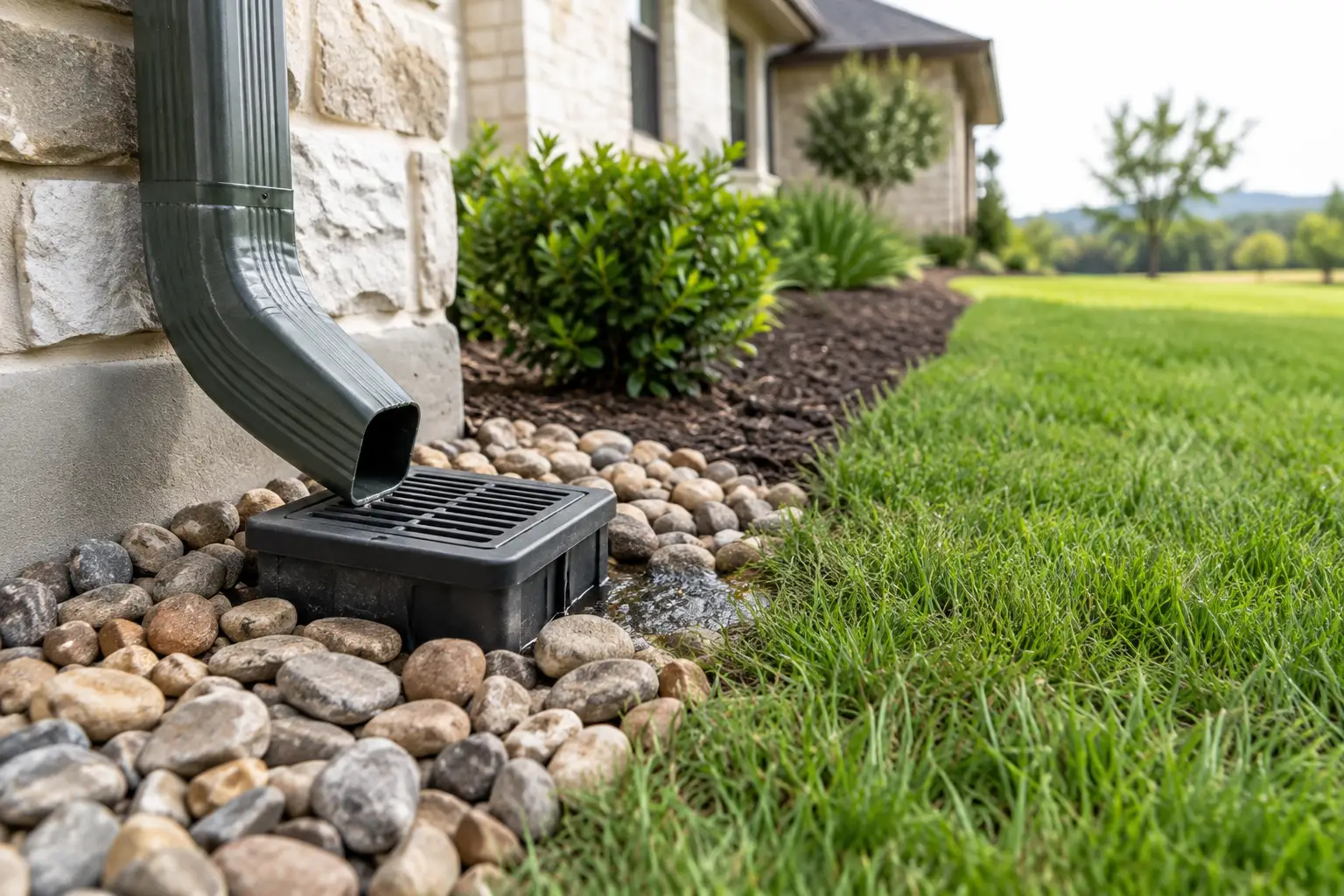
A drainage problem rarely starts with a flooded yard. It often starts with a muddy strip beside the foundation, a patio that stays damp long after a storm, or mulch washing out of a flower bed. In Central Texas, heavy rain can turn a small grading issue into standing water, soil erosion, concrete movement, and unwanted runoff near the house. This property drainage improvement guide explains how Austin-area property owners can identify the source of the problem and choose a fix that holds up.
Start With Where the Water Actually Goes
Before adding gravel, drains, or new landscaping, watch the property during a steady rain or shortly afterward. The goal is not simply to find the lowest spot. You need to see where water begins, how it travels, and where it stops.
Check roof valleys, downspouts, driveway edges, patio corners, walkways, landscape beds, and the ground around the foundation. A downspout that empties beside a slab can create a serious issue even when the rest of the yard looks properly graded. Likewise, a low patio edge may trap runoff against the home rather than directing it into the yard.
Look for signs such as pooling that lasts more than a day, soft soil near concrete, exposed roots, washed-out mulch, cracks that continue to widen, or water marks along the bottom of exterior walls. These signs do not always mean there is foundation damage, but they do show that water is not being managed properly.
Austin properties also vary widely by neighborhood. Some lots sit on dense clay soils that hold water near the surface. Others have rocky or caliche-heavy ground that makes excavation and absorption difficult. The right drainage plan depends on the slope, soil, hardscape layout, roof drainage, and available discharge area.
Property Drainage Improvement Guide: Fix the Cause First
The most durable drainage work follows a simple rule: move water away from structures and give it a clear path to a suitable outlet. Covering a wet area with decorative rock may improve appearance, but it will not correct a grading or runoff problem underneath.
Correct the Grade Around the Foundation
The soil around a home should generally slope away from the foundation. If landscape beds have been built up over time, or if soil has settled near the house, water may flow back toward the slab. Regrading can restore a controlled fall away from the building and reduce the amount of water held at the perimeter.
This work needs a measured approach. Raising soil too high against siding, brick weep holes, or exterior finishes can create moisture and pest concerns. The objective is proper slope without blocking drainage features or creating contact where it should not exist.
For many homes, the solution is a combination of regrading and reshaping landscape beds. Low areas can be filled and compacted correctly, while beds can be edged and planted in a way that supports water movement instead of trapping it.
Extend Downspouts to a Planned Outlet
Roof runoff concentrates a large amount of water in a short time. A standard downspout dumping at the foundation is one of the most common drainage problems on residential properties.
Extensions can carry water farther into the yard, but surface extensions are not always the best long-term answer. They can become obstacles for mowing, shift during storms, or direct water toward a neighboring lot. Buried solid pipe is often cleaner and more durable when it is installed with the right slope and a clear outlet.
The outlet matters as much as the pipe. Water should not be redirected where it floods a sidewalk, undermines a driveway, damages a fence line, or creates a problem for a neighbor. Depending on the property, discharge may be directed to a lower landscape area, a drainage swale, or another approved drainage route. Local requirements and site conditions should be reviewed before routing concentrated runoff off the property.
Use Swales for Broad Yard Runoff
A swale is a shallow, shaped channel that guides surface water across a yard. It is often a practical answer for larger areas where water sheets across turf or collects along a fence line.
Unlike a trench drain, a swale can look like part of the landscape. It may be grass-lined, rock-lined, or planted with materials suited to periodic moisture. The key is consistent grade. A swale that is too flat becomes another puddle. One that is too steep can erode quickly during Austin's hard rain events.
Swales work especially well when there is enough yard space to carry water naturally away from the home. On tight lots, a more contained system may be needed.
Install French Drains Only Where They Make Sense
French drains are useful when water is moving through the soil or repeatedly saturating a specific area. They typically use perforated pipe surrounded by drainage gravel and wrapped in filter fabric. Water enters the system through the gravel, then travels through the pipe to an outlet.
They are not a cure-all. If the main issue is roof runoff or surface water rushing across a patio, a French drain alone may clog, overload, or fail to collect water fast enough. In those cases, surface grading, downspout piping, or a channel drain may be the better first move.
Proper installation is what separates a working French drain from a buried trench full of rock. The trench needs the right slope, clean drainage aggregate, protected pipe, and an accessible discharge point. Without an outlet, the system has nowhere to send collected water.
Add Channel Drains at Patios and Driveways
Concrete patios, pool decks, driveways, and walkways create hard surfaces that shed water quickly. When these surfaces slope toward a garage, door threshold, outdoor living area, or foundation wall, a channel drain may be necessary.
A channel drain sits at the low point of the concrete and intercepts runoff before it reaches the area you need to protect. It can be tied into a solid drainage pipe and routed to an appropriate outlet. This is often the right solution when rebuilding or extending concrete because drainage can be designed into the project rather than added later.
There is a trade-off. Retrofitting a drain into existing concrete can require saw cutting, excavation, and patching. If the slab is already damaged or poorly sloped, replacement or targeted concrete correction may deliver a better result than trying to force a drain into a failing layout.
Protect Concrete While Improving Water Flow
Water and concrete need to be planned together. Runoff that flows beneath a driveway edge, patio, or walkway can wash away supporting soil. Over time, voids may lead to settlement, cracking, and uneven surfaces.
When installing new concrete, plan the finished elevation, slope, expansion joints, and surrounding grades before the pour. A patio should shed water away from the house, but not so aggressively that it sends runoff into a neighbor's property or erodes the lawn. Landscape transitions matter too. Gravel borders, edging, and planting beds should not become dams that hold water against the slab.
If existing concrete has settled, the drainage issue may be both a cause and a result. Correcting the surface water path should be part of any repair plan. Otherwise, a new patch or replacement section may face the same conditions that caused the damage in the first place.
Avoid Common Drainage Shortcuts
Some drainage fixes look productive but do little to solve the actual issue. Adding more topsoil without establishing a proper grade may raise the problem area but leave water trapped elsewhere. Filling a low spot with loose gravel can create a muddy basin beneath the rock. Installing a drain without a discharge route simply stores water underground.
Be careful with landscape fabric as well. It can help separate soil from decorative rock in certain applications, but it is not a drainage system. Over time, sediment can clog the fabric and reduce water movement. Material selection should match the purpose of the area, whether that is erosion control, surface collection, or subsurface drainage.
A good plan also accounts for maintenance. Drain grates need to be cleared of leaves and mulch. Downspout outlets should remain open. Rock-lined swales may need occasional cleanup after major storms. Any system that cannot be accessed or maintained is more likely to fail when it is needed most.
When to Bring in a Contractor
A professional assessment is worthwhile when water reaches the foundation, enters a garage or interior space, repeatedly damages concrete, or crosses multiple parts of the property. The same applies when a project involves major regrading, buried drainage lines, new patios, retaining features, or runoff near a property boundary.
For Austin homeowners, combining drainage planning with concrete and landscape work can prevent competing fixes. A new patio, for example, should not be installed before the yard grade, downspouts, and drainage route are understood. Texan Strong Builds approaches exterior improvements with those connected site conditions in mind, so the finished space is built for both use and water management.
The best drainage improvement is usually not the most complicated one. It is the one that gives rainwater a reliable path away from the house, protects the hardscape, and fits the way the property is actually used. Walk your lot after the next hard rain, take note of where water starts and stops, and use that evidence to plan the right repair.