
How to Stop Soil Erosion Around Your Austin Home
Learn how to stop soil erosion around an Austin home with practical grading, drainage, planting, and hardscape solutions built for Central Texas storms.
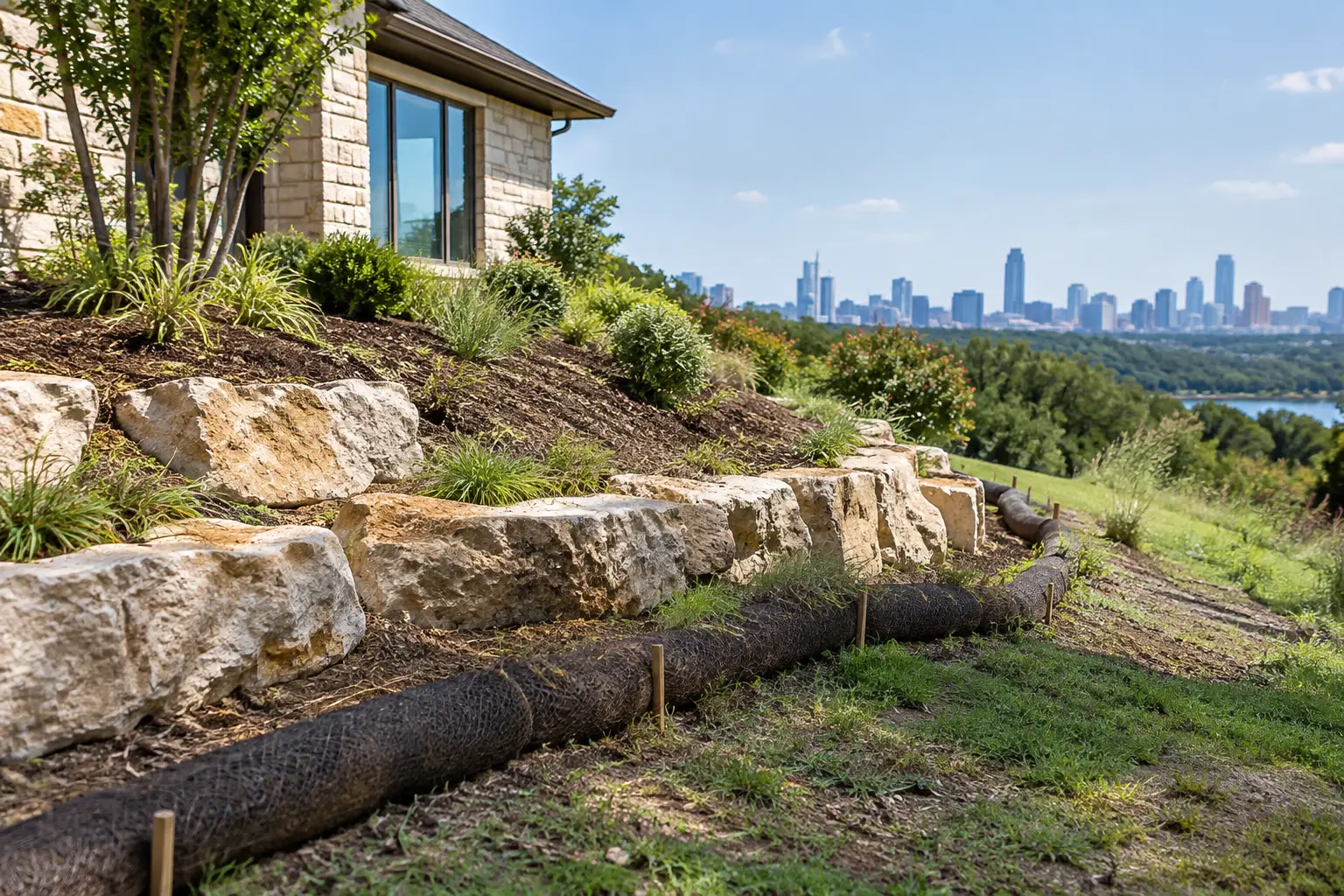
A hard Central Texas rain can move more soil in one afternoon than a homeowner expects. Water running off a roof, driveway, or sloped backyard picks up speed fast, cutting channels through mulch, exposing roots, and carrying dirt toward fences, patios, and neighboring lots. Knowing how to stop soil erosion starts with controlling where water goes, then reinforcing the ground that needs to stay put.
For Austin-area properties, erosion is rarely just a landscaping issue. Left alone, it can undermine concrete edges, wash out planting beds, create standing-water problems, and turn a usable yard into a muddy maintenance headache. The right fix depends on the slope, soil type, drainage pattern, and the amount of water moving through the area.
Find the Source of the Erosion First
Do not start by dumping in topsoil or adding more mulch. Those materials may improve the appearance for a short time, but they will wash away again if the water source is not addressed.
Walk the property during or immediately after a heavy rain. Look for roof runoff pouring beside the foundation, water crossing a driveway, bare channels on a hill, or puddles forming where the yard should drain. Also check the grade around patios, walkways, retaining walls, and fence lines. A low spot can collect runoff from several directions.
In Austin, dense clay soils make this more complicated. Dry clay can become hard and compacted, causing rainfall to run across the surface instead of soaking in. Then, during wet periods, the same soil can hold water and remain soft longer than expected. A drainage plan has to account for both conditions.
How to Stop Soil Erosion With Proper Grading
Grading is the foundation of most long-term erosion repairs. The goal is simple: shape the land so water flows away from the home and through a controlled path rather than cutting its own path through the yard.
A mild slope away from the foundation helps protect both the structure and the landscape. On a larger lot, the grade may need to direct water toward a swale, drainage area, curb, or approved outlet. A swale is a broad, shallow channel that carries water gradually. Unlike a deep ditch, it can blend into the yard and be planted or finished with stone.
Grading works best when it is planned with the whole property in mind. Raising one low section without considering the outlet can push water toward a patio, a neighbor's fence, or another problem area. This is especially relevant when installing new concrete. A driveway extension, patio, or walkway changes how rainfall moves across the lot, so the surrounding grade and drainage details need to be part of the project.
For minor surface erosion, regrading and compacting the soil may be enough. For a steep backyard or an area receiving concentrated runoff, grading usually needs to be paired with drainage and stabilization measures.
Control Roof and Hardscape Runoff
Roof runoff is one of the most common causes of washouts near Austin homes. A gutter downspout can release a large volume of water in one concentrated spot. If it empties directly onto bare ground, mulch, or a sloped bed, erosion is almost guaranteed during a strong storm.
Extend downspouts to a suitable discharge point, using a solid or buried drain line where needed. The outlet should release water where it can spread out safely, not at the top of another slope or against a fence. In some yards, a catch basin and drain line are a cleaner option than allowing water to cross the lawn.
Concrete surfaces need the same attention. Patios, walkways, pool decks, and driveways should be sloped to shed water without sending it toward the foundation. Where surface water has to cross a paved area, a channel drain may be appropriate. These details are not decorative extras. They prevent water from working under slabs, washing out soil at edges, and creating slippery areas after rain.
Avoid directing all runoff into a small rock-filled hole. A dry creek bed, French drain, or drainage basin can help, but only when it is sized for the volume of water it receives and has a practical outlet. A drain with nowhere to drain will eventually back up.
Stabilize Slopes Before They Get Worse
A slope with exposed soil is vulnerable, particularly after vegetation has been removed or construction work has disturbed the ground. The steeper the slope and the faster the water moves, the more reinforcement it may need.
Plant coverage is often the first line of defense. Native and adapted grasses, groundcovers, shrubs, and small trees help hold the soil together with their root systems. They also slow rainfall before it strikes bare ground. For new planting areas, erosion-control blankets or biodegradable mats can keep soil in place while plants establish.
Mulch helps on gentle slopes, but use it carefully. Lightweight shredded mulch can float or wash downhill in a storm. On sloped beds, a heavier mulch, gravel border, edging, or a combination of plants and erosion-control fabric may perform better. Do not pile mulch against siding, tree trunks, or the base of the foundation.
For more serious slope movement, the solution may require terracing, boulders, retaining walls, or segmental wall systems. A retaining wall should not be treated as a stack of blocks holding back dirt. It needs proper base preparation, drainage stone, backfill, and a way for water to escape behind the wall. Without drainage, water pressure can cause a wall to lean, crack, or fail.
Use Stone and Hardscape in High-Flow Areas
Some parts of a property receive too much water for grass or mulch to survive. These areas need a surface that can handle repeated flow without looking like a repair patch.
A dry creek bed can guide runoff across the yard while creating a finished landscape feature. It typically uses larger stone at the edges and smaller rock through the channel, installed over prepared fabric and a shaped base. The channel needs enough width and depth to carry water during peak storms. A narrow strip of decorative river rock may look good but will not stop a heavy washout if the grade is wrong.
Stone splash pads beneath downspouts can reduce impact at the discharge point. Gravel strips along fence lines can help with minor drainage, provided they are not being used as a substitute for proper grading. Concrete curbing, walkways, and edging can also define beds and keep materials from migrating, but hardscape should support the drainage plan, not block it.
There is a trade-off with impermeable surfaces. More concrete can improve access, reduce muddy areas, and create usable outdoor space. It can also increase runoff if drainage is not designed correctly. That is why concrete and landscaping work should be coordinated from the start rather than handled as separate projects.
Repair Existing Washouts the Right Way
If erosion has already created a rut or hole, clean out loose material before filling it. Simply covering a washed-out area with loose dirt often leads to another failure at the next rain.
The repair may require rebuilding the grade in compacted layers, adding soil stabilization fabric, installing stone, or placing a drain line upstream. Then cover the area with sod, seed, plants, mulch, or another appropriate finish. The final surface should match the drainage plan, not fight it.
Keep an eye on repairs through the next several rain events. Small adjustments are normal. A downspout outlet may need to be extended farther, a swale may need a little more depth, or a low section may need additional compacted fill. Catching these issues early is less expensive than waiting for runoff to damage a slab, wall, or landscaped area.
When to Bring in a Contractor
A homeowner can handle small planting, mulching, and downspout improvements. Call a qualified contractor when erosion is near the foundation, undermining concrete, affecting a retaining wall, crossing property lines, or creating a deep channel after every storm. Those conditions often point to a grading or drainage problem that needs more than surface cleanup.
Texan Strong Builds helps Austin property owners coordinate concrete, grading, drainage-conscious hardscape, and landscape improvements as one practical outdoor project. That matters when the fix needs to protect the yard while also improving how the space looks and works.
The best erosion repair is one you stop noticing after the next heavy rain. Water should move where it is supposed to move, the soil should stay in place, and the yard should remain usable instead of becoming another weekend repair job.