
How to Level an Uneven Yard the Right Way
Learn how to level uneven yard areas in Austin, from finding drainage problems to adding soil, regrading safely, and knowing when to call a contractor.
A yard that looks slightly uneven can become a real problem after one Austin downpour. Low spots hold water, turf thins out, patios lose their clean edge, and runoff may start moving toward the house instead of away from it. If you are searching for how to level uneven yard areas, start by figuring out whether you have a surface problem, a drainage problem, or both.
Small dips in a lawn are often manageable with soil and basic grading. A yard with major slope changes, washouts, standing water, exposed roots, or settling near concrete needs a more deliberate plan. The goal is not to make every part of the property perfectly flat. The goal is to create stable, usable ground that sheds water where it should.
Find Out Why the Yard Is Uneven
Do not bring in fill dirt until you know what caused the uneven grade. Otherwise, you may cover the symptom and leave the real issue in place.
Walk the yard after rain and mark where water collects. Look for shallow depressions, eroded channels, soft ground, bare patches, and soil that has washed away from a fence, patio, driveway, or foundation. Check whether downspouts empty into the low area. In Central Texas, heavy rain can move soil quickly, especially on lots with compacted clay, thin topsoil, limestone rock, or a noticeable slope.
Uneven yards commonly develop from settling soil, old tree roots, poor drainage, construction work, removed landscaping, utility trenching, and erosion. If a low spot is directly beside a slab, driveway, retaining wall, or foundation, treat it carefully. Settling in those locations may point to drainage failures or base issues that should be addressed before cosmetic grading.
Check the Slope Around the House
Ground around the home should generally slope away from the foundation. A practical target is about 6 inches of fall over the first 10 feet, though the right grade depends on the lot, existing drainage route, and hardscape elevations.
Use stakes, string, and a line level to check the direction of the slope. A long straight board with a level can also help identify shallow low spots in open lawn. Pay attention to where the water will go after you raise an area. Pushing runoff away from the house is only useful if it has a safe path through the yard without flooding a neighbor's property or pooling against a fence.
Plan the Grade Before Moving Soil
Mark the high and low areas with paint, flags, or stakes. Then decide whether the project calls for topdressing, filling, regrading, drainage work, or a combination of those methods.
For shallow lawn depressions less than 1 to 2 inches deep, topdressing is often enough. For deeper holes, broader sunken areas, or a yard that drains the wrong way, you may need to remove sod, bring in compactable fill, establish a new grade, and replace the top layer with quality topsoil.
Do not use loose organic compost alone to fill a deep depression. Compost improves soil, but it breaks down and settles. For deeper repairs, use clean fill dirt or a suitable sandy loam in compacted lifts, then finish with topsoil that supports grass growth. In Austin-area yards, soil selection matters. Heavy clay can seal up and hold water, while overly sandy material may wash out without proper compaction and ground cover.
Before digging, identify irrigation lines, landscape lighting, drainage pipes, and utility routes. Call for utility marking when the work area could affect buried public lines. If you are changing drainage near a property line, adding a retaining wall, or moving a substantial amount of soil, verify local requirements before work starts.
How to Level Uneven Yard Areas Step by Step
For a small, isolated low spot in healthy turf, choose a dry period when the ground is workable but not hard as concrete. Mowing the lawn short first makes the finished level easier to see.
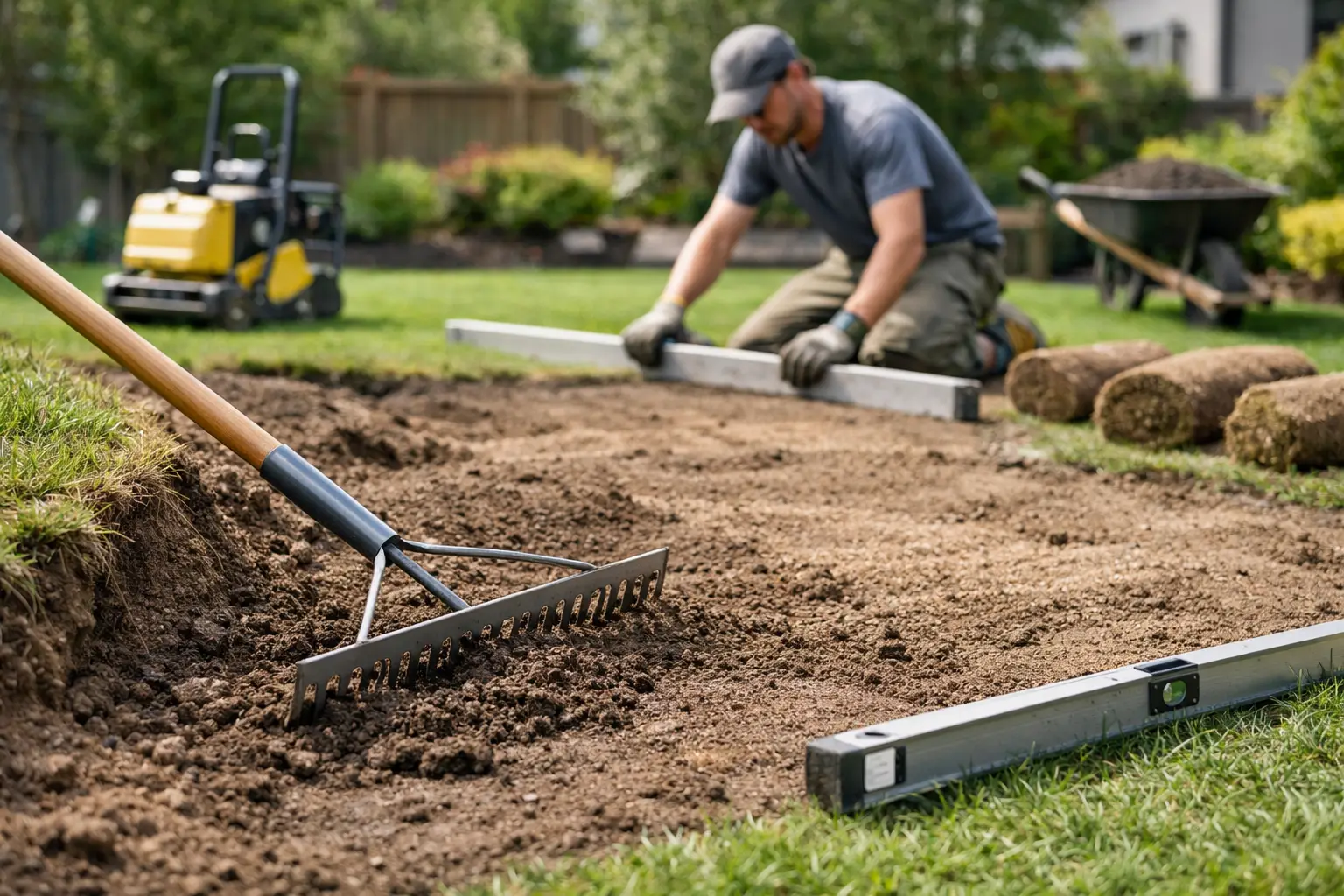
Cut back or carefully peel up the sod if the depression is deeper than about an inch. Set the sod aside in the shade and keep it lightly moist while you work. Fill the low area with the appropriate soil, adding no more than a few inches at a time. Tamp each layer with a hand tamper for a small repair or a plate compactor for larger areas. Light compaction matters because loose dirt will settle after the next hard rain.
Use a landscape rake to feather the new soil into the surrounding grade. Check your work with a long board and level rather than trusting your eye. The ground should transition gradually, without a visible hump around the repaired area.
Replace the sod, or spread grass seed if the season and grass type make seeding practical. For many Austin lawns, sod establishment is more predictable than seed, particularly when matching warm-season turf such as Bermuda, St. Augustine, or Zoysia. Water the repaired area enough to establish roots, but do not keep it saturated. Too much water can create another soft spot before the soil has settled.
For a broad area that needs several inches of correction, remove sod and grade the base with equipment rather than trying to build it up one wheelbarrow at a time. A skid steer, compact loader, or tractor can shape larger yards efficiently, but only in experienced hands. Equipment can damage irrigation, compact healthy root zones, and create drainage mistakes quickly if the operator is working without a grade plan.
Make Drainage Part of the Repair
Leveling and drainage are tied together. A smooth lawn that sends water toward the house is not a finished job.
If runoff is causing the low spot, correct the source first. That may mean extending a downspout, reshaping a swale, installing a catch basin, adding a French drain, or creating a defined drainage route. The best solution depends on the property. A French drain can help with subsurface water, but it will not solve every surface-grading problem. Likewise, a swale can move runoff effectively, but it needs enough fall and a proper outlet.
Avoid creating abrupt trenches across a lawn just to force water downhill. They are hard to mow, easy to erode, and often look unfinished. A shallow, broad swale can be more effective and easier to maintain when it is shaped correctly and planted with established turf or erosion-resistant ground cover.
Protect Concrete and Landscape Features
If you are leveling near a patio, walkway, driveway, or pool deck, do not bury the edge of the concrete or raise soil above its intended height. Soil placed too high can trap moisture, hide slab movement, interfere with drainage, and create pest access around the home.
Hardscape elevations should guide the landscape grade. Patios and walkways need a stable base and a planned drainage direction. If the concrete has already settled or water is collecting against it, adding soil around the edges may make the problem worse. The slab or base may need repair before surrounding landscaping is rebuilt.
When DIY Yard Leveling Is Enough - and When It Is Not
A homeowner can usually handle a few shallow lawn depressions, minor ruts, and simple topdressing work. The project becomes more complicated when the uneven area is large, the grade affects drainage, soil needs to be compacted in depth, or the work is close to concrete and foundations.
Bring in a qualified contractor when you see repeated standing water, erosion after storms, a yard sloping toward the house, deep settlement, failing retaining features, or drainage conflicts between neighboring lots. Professional grading is especially worthwhile before installing a new patio, walkway, driveway extension, or major landscape package. It is less expensive to establish the correct grade before concrete and planting go in than to tear out finished work later.
Texan Strong Builds helps Austin-area property owners coordinate grading, drainage considerations, concrete work, and landscape installation as one outdoor project. That approach keeps the soil grade, hardscape elevations, and finished appearance working together.
A level yard should feel simple once it is done: water moves away from the house, grass has a stable base, and outdoor areas sit cleanly on the property. Take the time to correct the cause of the uneven ground, not just the spot where the water happens to collect.