
How to Improve Backyard Drainage in Austin
Learn how to improve backyard drainage in Austin with practical grading, concrete, and landscape solutions that protect your home, yard, and outdoor space.
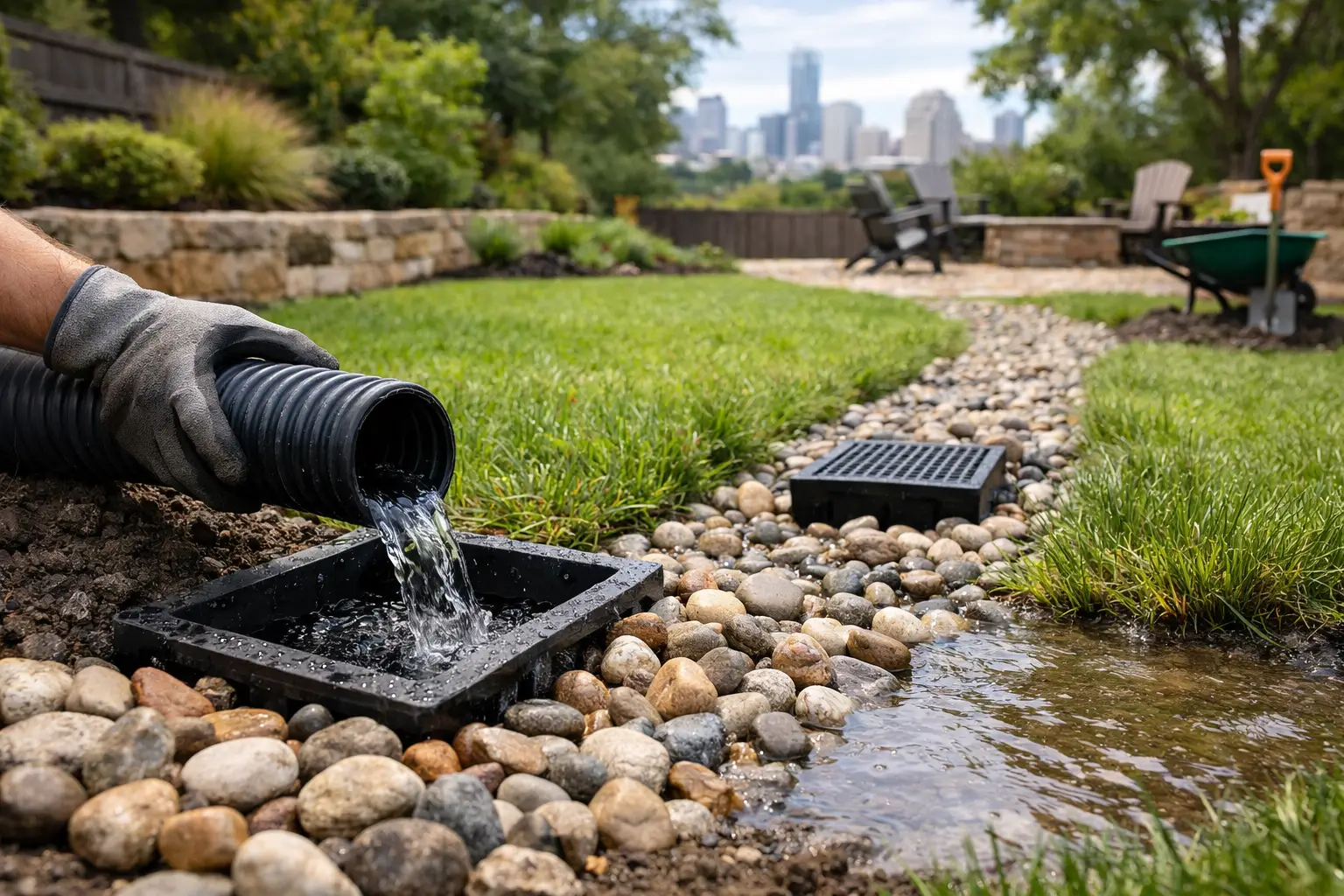
A backyard can look fine for most of the year, then turn into a mud pit after one hard Austin thunderstorm. Water standing near a patio, collecting against the house, or washing soil out of planting beds is not just an inconvenience. It can damage concrete, drown turf, invite mosquitoes, and create conditions that put your foundation at risk. Knowing how to improve backyard drainage starts with finding where water enters, where it gets trapped, and where it can safely go instead.
In Central Texas, drainage work needs to account for short, heavy rain events, dense clay soils, and lots that may have been changed by patios, additions, pools, or neighboring construction. The right fix is rarely just spreading a little topsoil over a low spot. Good drainage is a planned system of slope, collection, and discharge.
Start With the Water’s Actual Path
Before choosing a drain or regrading the yard, watch what happens during rain. If possible, walk the property while it is raining and again a few hours afterward. Look for water coming off the roof, flowing between homes, running down a driveway, or spilling from a neighbor’s higher lot.
Pay close attention to the area where the ground meets the foundation. Water should move away from the house, not sit against the slab or disappear below mulch next to exterior walls. Also inspect patio edges, fence lines, landscape beds, and the low side of the yard. Those areas often reveal whether water is being held back by a hardscape feature or simply has no clear exit.
A drainage problem can have more than one source. A low backyard may be caused by roof runoff, poor lot grading, and a flat patio all at once. Fixing only the visible puddle may improve the appearance without stopping the water that creates it.
Signs the Yard Needs More Than Routine Maintenance
A few wet spots after a major storm are normal. Repeated standing water and soil movement are not. These conditions usually call for a drainage assessment:
- Puddles remain for more than 24 to 48 hours after rain.
- Water collects within several feet of the foundation or garage.
- Grass dies in one low area while weeds and moss take over.
- Mulch, gravel, or soil washes across a patio, walkway, or driveway.
- Concrete slabs show new settlement, edge erosion, or water staining.
If the issue appears only after the heaviest storms, the system may be undersized rather than completely missing. That distinction matters when deciding whether to adjust grade, add collection drains, or do both.
Improve Backyard Drainage With Proper Grading
Grading is the foundation of most drainage solutions. The yard needs a controlled fall that directs surface water away from structures and toward a safe outlet. In many residential settings, the finished grade should slope away from the home for the first several feet. The exact slope depends on the lot, existing elevations, door thresholds, utility locations, and where runoff is allowed to discharge.
Austin’s clay-heavy soil makes this work more complicated. Clay can shed water quickly during a downpour, then hold moisture below the surface long after the rain stops. Adding a thin layer of soil over a soggy area often fails because it does not create a real drainage path. A proper regrade may require moving soil across a larger area, compacting fill in layers, and rebuilding the lawn or planting beds afterward.
The goal is not to send water toward a neighbor’s property. Water must stay within appropriate drainage paths and comply with local requirements. On tight lots, a contractor may need to use swales, drains, or catch basins instead of relying on a broad surface slope alone.
Use Swales for Broad, Natural Drainage
A swale is a shallow, graded channel that carries runoff across the yard without looking like a ditch. It can be grass-lined, planted, or finished with stone depending on the design. Swales work well when there is enough yard width to move water gradually toward a suitable outlet.
They are often a practical choice for side yards and large backyards where water moves across the property from a higher point. The key is consistent slope. A swale with a flat section becomes another place for water to collect, especially when leaves, grass clippings, or sediment build up.
Manage Roof Runoff First
Roof runoff delivers a surprising amount of water to a small area. When downspouts dump beside the foundation, they can saturate the soil and create erosion even if the rest of the yard is graded correctly. Start by making sure gutters are clean, secured, and sized for the roof area they serve.
Then extend downspouts far enough from the house to release water where the ground can handle it. In some yards, a surface extension is enough. In others, buried solid pipe is needed to carry roof water to a pop-up emitter, drainage area, or other approved outlet.
Do not connect every downspout to a perforated French drain and expect it to solve the problem. Roof water needs a clear route through solid pipe. A French drain is designed to collect water from saturated soil, not manage the concentrated flow coming off a roof during a storm. Combining the two without the right layout can overload the system and leave water near the house.
Choose the Right Drain for the Problem
Drainage products are not interchangeable. The best system depends on whether water is moving across the surface, trapped at a low point, or building up in the soil.
A French drain uses perforated pipe surrounded by washed gravel and filter fabric. It gathers water from the surrounding soil and carries it away. It is useful along wet fence lines, below soggy lawn areas, or behind retaining features where groundwater pressure is a concern. It is not the first choice for water running across a patio.
A channel drain is built into concrete or placed along the edge of a patio, pool deck, driveway, or walkway. It captures sheet flow before it reaches a door, slab edge, or low area. The drain must have enough fall to its outlet, and the grate needs regular cleaning. Installing a channel drain without planning the outlet simply moves the standing water from the yard into the drain body.
Catch basins are useful at defined low points where surface water concentrates. They collect debris and runoff before sending water through solid drain pipe. They need accessible grates so leaves and sediment can be removed. For larger yards, several basins may feed one properly sized line.
Dry wells can work where soil conditions allow water to percolate, but they are not a universal Austin solution. Dense clay may drain too slowly for a dry well to keep up with major rain. A soil evaluation and realistic runoff calculation are better than installing a deep gravel hole and hoping it solves a surface-water issue.
Plan Concrete and Landscaping Together
Patios, walkways, retaining borders, and driveways change how a yard sheds water. That is why drainage should be planned before new concrete is poured, not after water starts pooling against it. Concrete needs intentional slope away from the house and toward a drain, swale, or open landscape area that can receive runoff.
Even a well-built patio can create a problem if it blocks the yard’s only drainage route. In that case, the project may need a channel drain at the patio edge, a collection basin at the low point, or a reworked grade around the perimeter. The same applies to landscape edging and raised beds. Decorative features should not create small dams that trap water against the slab.
Planting choices can support drainage, but plants alone will not correct poor grade. Deep-rooted grasses and suitable native or adapted plants can help stabilize soil and reduce erosion in a swale. Gravel can protect high-flow areas, while mulch helps reduce splash erosion in beds. However, mulch piled high against the foundation holds moisture where it does not belong. Keep the area beside the house clear enough to inspect and maintain.
Avoid Common Drainage Shortcuts
The fastest-looking fix is often the one that has to be redone. Filling a low spot without checking surrounding elevations may push water toward the home or fence. Adding gravel to a muddy area can improve footing but does not remove water unless there is a drain path below it. Cutting a drain trench with no confirmed outlet creates an expensive underground puddle.
Be cautious about directing water onto adjacent property, under a fence, or toward a shared alley without knowing the rules and downstream conditions. Drainage work has to protect your property without creating a new problem for someone else.
Large trees, buried utilities, irrigation lines, and septic components also affect the plan. A trench route that looks simple on the surface may be impractical once those conditions are identified. Professional layout before excavation prevents damaged lines, ineffective slopes, and unnecessary disruption to the yard.
When to Bring in a Contractor
Homeowners can handle basic maintenance such as clearing gutters, extending a simple downspout, and keeping drain grates free of debris. But recurring water near a foundation, a patio that drains the wrong direction, erosion around concrete, or a yard that needs major regrading calls for experienced site work.
A qualified concrete and landscape contractor can evaluate elevations across the property, identify how existing hardscape affects runoff, and build a drainage plan around the actual conditions. That can include grading, swales, channel drains, catch basins, buried pipe, concrete adjustments, and landscape restoration as one coordinated project. Texan Strong Builds serves Austin-area property owners who need that work planned for durability, not patched one storm at a time.
A dry, usable backyard begins with giving water a dependable route. Address the source, create the proper slope, and make sure every drain has a real outlet. Done correctly, the result is a yard that holds up better through Texas rain and stays ready for the way you use it.