
Driveway Apron Replacement for Austin Homes
Plan driveway apron replacement in Austin with clear warning signs, material options, drainage considerations, and work built to last through Texas heat.
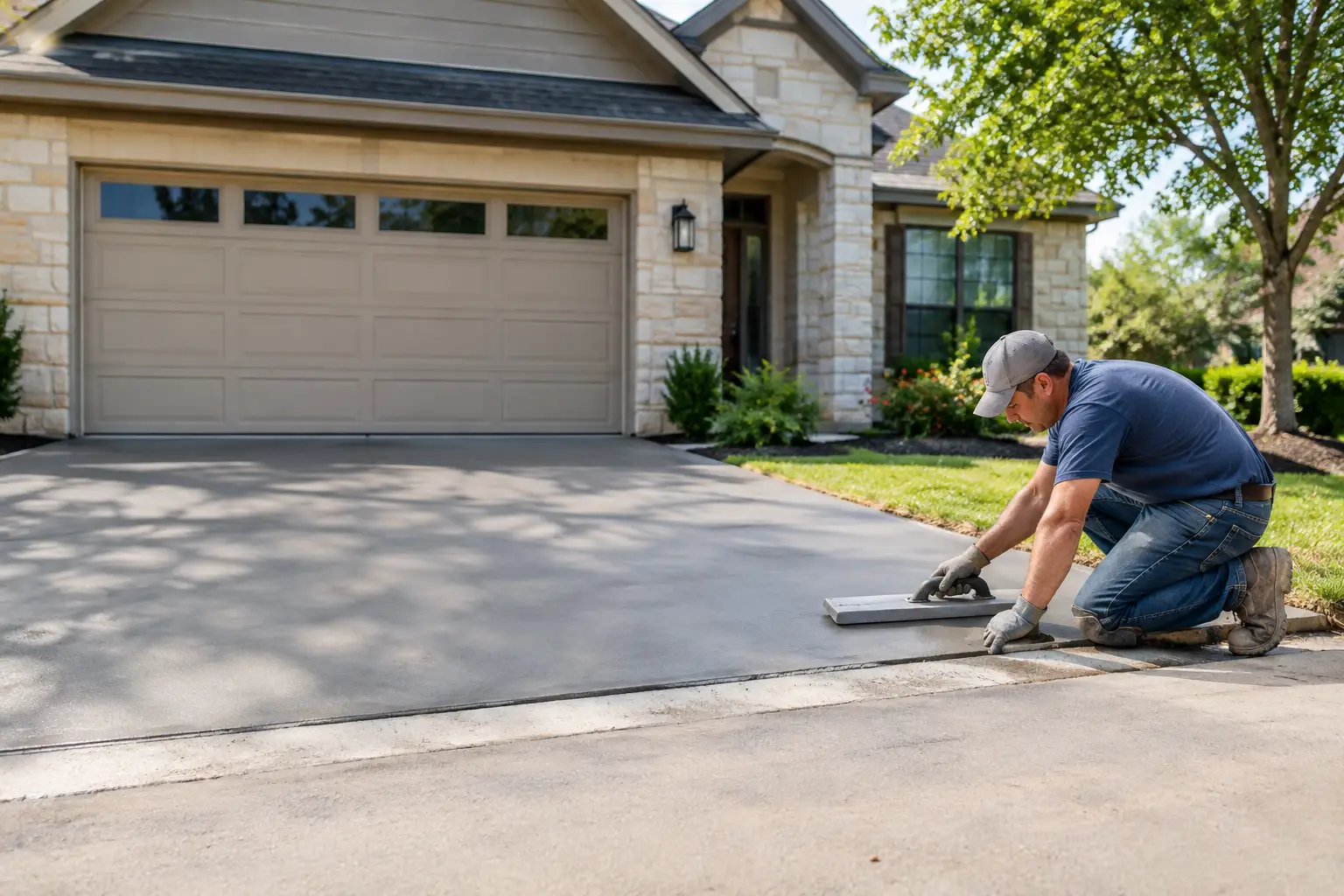
A failing driveway apron is more than a curb-appeal problem. That strip of concrete between your driveway and the street handles vehicle weight, stormwater, and the transition from public roadway to private property. When it cracks, settles, or breaks apart, driveway apron replacement can protect the rest of your driveway from damage and keep daily access to your Austin home safer and smoother.
For Austin homeowners, the job needs to be planned around more than a new concrete pour. Clay soils, intense summer heat, sudden rain, and local right-of-way requirements all affect the result. A properly built apron should carry vehicle traffic, direct water where it belongs, and tie cleanly into the existing drive without creating a trip edge or drainage low spot.
When Driveway Apron Replacement Makes Sense
Small surface cracks do not always mean the apron needs to come out. Concrete naturally develops hairline cracking over time, especially through hot, dry weather and soil movement. If the slab is still level, solid under vehicle traffic, and draining correctly, a repair or crack treatment may be enough.
Replacement becomes the better call when the damage involves movement, not just appearance. Deep cracks that separate slab sections, exposed or rusting reinforcement, broken corners, sinking near the curb, and crumbling concrete are all signs that the base or slab has failed. Water collecting at the street edge or flowing back toward the garage is another issue that should not be ignored.
Pay close attention to a noticeable bump where the driveway meets the apron. Repeated impact from vehicles can worsen a weak slab and transfer stress into the main driveway. On rental homes and managed properties, that rough transition also creates a preventable complaint for tenants, visitors, and service crews.
Why Austin Conditions Are Hard on Aprons
Austin-area soil expands when it takes on moisture and contracts during prolonged dry periods. That movement can cause one section of concrete to lift while another settles. An apron built on poorly prepared ground may crack early, even if the concrete itself was placed correctly.
Heat adds another layer of stress. Concrete gains strength as it cures, but fresh work needs proper moisture management and timing in Texas temperatures. A contractor should plan placement, finishing, jointing, and curing around weather conditions rather than rushing a pour during the hottest part of the day.
Heavy rain matters just as much. The apron is part of the water path at the front of the property. If its slope is wrong, runoff can pond at the curb, wash out supporting soil, or direct water toward the driveway and foundation. The right grade depends on the site, the street, and the existing drainage pattern. There is no one-size-fits-all slope that works for every Austin lot.
Public Right-of-Way and Permit Questions
The driveway apron often sits within or next to the public right-of-way, even though it serves a private home. That can affect permits, specifications, inspections, traffic control, and the type of work allowed near the curb. Requirements can vary by municipality, neighborhood, and whether the project changes the driveway width or curb line.
Before demolition starts, confirm who controls the area and what approvals are required. This is especially important if the work includes curb modifications, a new sidewalk connection, drainage changes, or an expanded driveway entrance. A good contractor accounts for those details early instead of discovering them after the old concrete is removed.
Utility locations also need to be identified before digging or saw cutting. Irrigation lines, landscape lighting, drainage pipes, and underground utility services can run close to the driveway edge. The lowest-cost quote is not a bargain if it overlooks work that has to be repaired later.
What a Proper Driveway Apron Replacement Includes
A durable apron starts below the concrete. The damaged slab should be removed cleanly without breaking sound portions of the existing driveway or disturbing the curb unnecessarily. Once the area is open, the crew can see whether soft soil, voids, washed-out material, or failed base contributed to the damage.
The subgrade needs to be shaped and compacted. Depending on site conditions, a compacted aggregate base may be needed to provide stable support and help maintain the intended grade. This step is easy to hide once concrete is placed, which is why it matters to work with a contractor who treats preparation as part of the build, not an optional extra.
Concrete thickness, reinforcement, and joint placement should match the expected vehicle use and local requirements. A light-use residential apron has different needs than an entrance that regularly carries loaded work trucks, trailers, or service vehicles. Reinforcement helps manage cracking, but it does not replace proper base work or correct slab thickness.
The apron must also be tied into the driveway with a clean transition. Control joints are placed to encourage concrete to crack in planned locations as it moves. Expansion material may be appropriate where new concrete meets fixed structures. The final finish should provide traction without being so rough that it traps dirt or makes snow-shovel use difficult for the occasional Central Texas winter event.
Matching Existing Concrete
New concrete will rarely match old concrete perfectly on day one. Existing slabs darken, stain, and weather over time, while fresh concrete has a lighter appearance. This is normal and should be discussed before work begins.
If appearance is a priority, the contractor can plan saw-cut lines and replacement boundaries that look intentional. Sometimes replacing a slightly larger section creates a cleaner result than patching a narrow, irregular strip. If the driveway is already heavily cracked or uneven beyond the apron, it may be smarter to evaluate the full approach rather than invest in a repair that will not solve the bigger problem.
Concrete or Another Material?
Concrete is the standard choice for most Austin driveway aprons because it handles vehicle traffic well, integrates with existing concrete driveways, and can be finished for a clean, practical look. It is generally the most direct solution when the goal is a durable street-to-driveway transition.
Pavers can be attractive, but they require a carefully built base and edge restraint to handle vehicle movement. They may be a fit for a custom hardscape plan, but they are not automatically the best answer for a simple failed apron. Asphalt is less common for concrete-driveway transitions and may not provide the same finished appearance or long-term edge stability.
The best material depends on the existing driveway, expected traffic, drainage needs, and the look of the property. For most homeowners, a well-built concrete apron is the sensible choice. For a full front-yard renovation, it can be coordinated with walkways, edging, drainage improvements, and landscaping so the entrance looks planned instead of pieced together.
Questions to Ask Before Hiring a Contractor
Ask what caused the existing apron to fail and how the new work will address that cause. “We will pour new concrete” is not a complete answer if the slab sank because of poor compaction or runoff erosion.
You should also ask how the contractor will protect the existing driveway, verify drainage, handle permits or right-of-way requirements, and manage access while the concrete cures. Fresh concrete needs time before vehicle traffic. The exact wait depends on the mix, weather, and project conditions, so follow the contractor’s direction instead of assuming it is ready the next day.
A clear proposal should identify the demolition area, base preparation, concrete scope, reinforcement if used, finish, joints, cleanup, and any work that is excluded. That clarity helps property owners compare proposals based on the actual work being performed, not just a bottom-line number.
Plan the Apron With the Rest of the Property
A driveway apron replacement is a good time to look at the front of the property as a whole. If water is cutting across a lawn, if the walk to the front door feels disconnected, or if beds along the drive are washing out, those issues may be related to the same grading and runoff pattern.
Texan Strong Builds approaches concrete and landscape work with that bigger picture in mind. A durable apron should function on its own, but it should also fit the driveway, drainage path, and front-yard layout around it.
Before the next heavy rain, walk to the street and look closely at the apron. Check for standing water, widening cracks, loose concrete, and changes in elevation. Catching a failing transition early gives you more control over the repair and a better chance of protecting the driveway behind it.