
Concrete Driveway vs Asphalt: What Works in Austin?
Concrete driveway vs asphalt in Austin: compare cost, heat, lifespan, repairs, drainage, and curb appeal before choosing the right surface for your home.
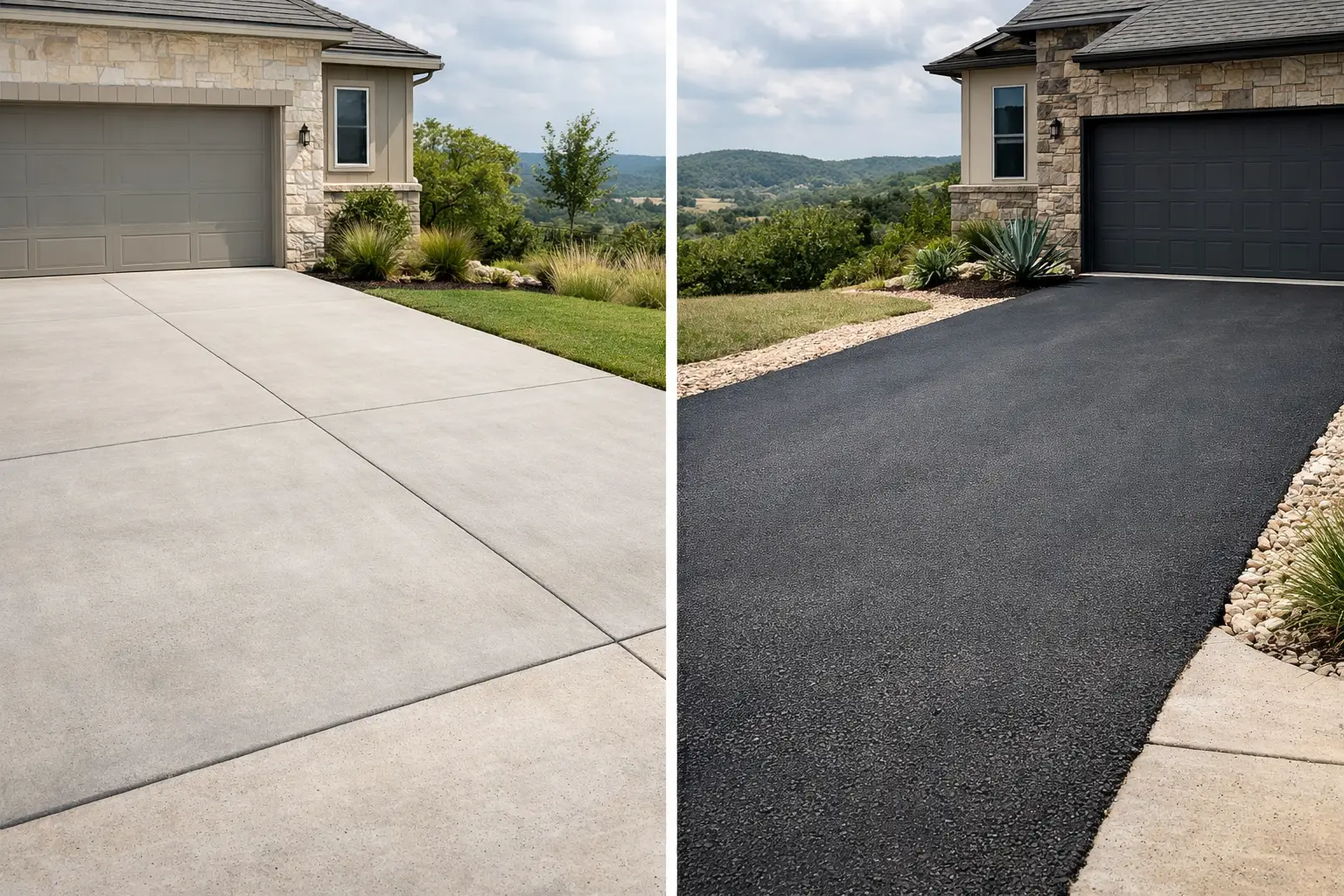
A driveway in Austin takes more punishment than most homeowners expect. Summer heat, intense sun, sudden rain, expanding soils, heavy pickups, and regular vehicle traffic all test the surface and the base underneath it. When comparing a concrete driveway vs asphalt, the better choice is not simply the one with the lower installation price. It is the material and construction approach that fits your property, budget, drainage conditions, and long-term plans.
For many Central Texas homeowners, concrete is the stronger long-term investment. Asphalt can still make sense in specific situations, particularly when upfront cost and quick installation matter most. The key is understanding where each material performs well and where it creates future maintenance demands.
Concrete Driveway vs Asphalt in Austin Conditions
Concrete and asphalt are both proven paving materials, but they respond very differently to Texas weather. Concrete is a rigid surface that carries weight through the slab and base. Asphalt is flexible, with a dark, petroleum-based surface that can soften in high heat and flex under traffic.
Austin's climate puts both materials under pressure. High temperatures can make asphalt softer, especially in direct afternoon sun. A parked vehicle, trailer jack, or repeated turning tires can leave depressions in a weak or overheated asphalt surface. Concrete does not soften in the heat, although it expands and contracts, which is why properly placed control joints are necessary.
The ground matters just as much as the finish. Much of the Austin area has clay-heavy soil that expands when wet and shrinks during dry stretches. No driveway surface can overcome poor site preparation. A strong base, correct grading, compaction, and drainage management are what keep either concrete or asphalt from moving, cracking, or settling prematurely.
Upfront Cost and Long-Term Value
Asphalt generally costs less to install than concrete. That lower initial price is the main reason homeowners consider it. It can be a practical option for a large driveway where the immediate budget is tight or for a property that needs a usable surface quickly.
Concrete usually requires a higher upfront investment because the work involves excavation, base preparation, forming, reinforcement where appropriate, placing the concrete, finishing, cutting control joints, and curing. It is labor-intensive, and the quality of the installation has a major effect on performance.
The cost conversation should not stop at installation day. Asphalt normally needs sealcoating on a regular schedule and may need patching or resurfacing as it ages. Concrete often has lower routine maintenance needs and can last significantly longer when it is built on a properly prepared base. For homeowners planning to stay in the home or investors improving a higher-value property, that longer service life can offset the higher starting cost.
A very low bid deserves a closer look, regardless of material. Ask what is included for demolition, base depth, grading, drainage corrections, reinforcement, thickness, edge support, and cleanup. A driveway quote without those details can leave room for shortcuts that show up later as cracks, standing water, or broken edges.
Lifespan, Cracks, and Repairs
A well-installed concrete driveway commonly serves a property for decades. It will eventually show wear, and concrete can crack, but the goal is controlled cracking at planned joints rather than random movement across the slab. Joint placement, slab thickness, base compaction, and water management all affect the result.
Concrete cracks are not always a sign of failed work. Concrete naturally shrinks as it cures and moves slightly with temperature changes. Small, stable cracks can be cosmetic. Wider cracks, vertical separation, repeated cracking near one area, or slabs that hold water point to a bigger issue such as soil movement, inadequate base work, drainage failure, or excessive load.
Asphalt tends to crack differently. It can develop surface cracking from age and oxidation, fatigue cracks from traffic, and cracks caused by movement in the base. Small asphalt repairs can be more straightforward and less visually obvious than concrete patching. However, patches do not solve a weak subbase or ongoing drainage problem. If the foundation beneath the pavement is failing, repeated patching becomes an expense without a lasting fix.
Concrete repairs can be more noticeable because new concrete rarely matches the color of an older slab exactly. That said, a driveway with isolated damaged sections may be repairable if the rest of the slab and base remain stable. The right repair depends on the cause, not just what the crack looks like from the street.
Heat, Appearance, and Curb Appeal
In a concrete driveway vs asphalt decision, appearance often carries more weight than homeowners first realize. A driveway covers a large part of the front yard. It affects curb appeal, how landscaping reads from the street, and the overall impression of the property.
Concrete has a cleaner, more permanent look and works well with modern homes, traditional brick exteriors, stone details, and landscaped front yards. It can be finished with a standard broom texture for traction or upgraded with decorative borders, exposed aggregate, color, or other finish options. Simple gray concrete remains a dependable choice for many homes because it looks clean without adding unnecessary maintenance.
Asphalt provides a uniform black surface when new, but it fades to gray as it weathers. Sealcoating can restore a darker appearance, though that becomes part of the maintenance cycle. Its dark color also absorbs more heat. In an Austin summer, an asphalt driveway can become extremely hot, which is worth considering near entry paths, play areas, and landscaped edges.
Concrete is generally lighter in color and reflects more sunlight. It can still get hot, but it typically does not absorb and retain heat the way dark asphalt does. For a property with limited shade, that difference can improve daily comfort around the driveway.
Drainage Is Not Optional
Water is one of the most common reasons driveways deteriorate early. A surface should move water away from the garage, home foundation, and low areas of the yard. Water that runs under a driveway can soften the soil, erode the base, and create voids that lead to settlement and cracking.
Concrete driveways should have a deliberate slope and properly planned transitions at the street, garage, walkways, and adjacent landscaping. In some cases, drains, swales, or retaining solutions are needed before the driveway is poured. Pouring a new slab over an existing drainage problem only hides the issue for a while.
Asphalt also requires correct slope and base preparation, but its edges are especially vulnerable when they lack support. Water and traffic can break down unsupported asphalt edges, particularly where vehicles pull off the pavement. Proper grading and a stable shoulder or edge restraint make a real difference.
This is where combining concrete work with landscaping planning helps. Grading, drainage paths, rock beds, turf, planting areas, and walkways should work together instead of competing for the same space. Texan Strong Builds approaches exterior projects with that whole-property view in mind.
When Asphalt Is the Better Choice
Asphalt is not automatically the wrong answer in Austin. It may be a good fit when a homeowner needs a lower initial cost, has a long private drive, wants a fast installation schedule, or expects to resurface the driveway as part of a shorter-term property plan.
It can also be useful where some flexibility is beneficial, provided the base is properly built. The homeowner should be prepared for periodic sealcoating, prompt crack repair, and more frequent attention as the surface ages. Parking heavy equipment in the same location, turning sharply while stopped, and allowing water to collect will shorten its lifespan.
When Concrete Is the Better Choice
Concrete is usually the stronger option for a primary residential driveway, especially when durability, appearance, and lower routine maintenance are priorities. It handles everyday vehicle loads well, resists heat-related softening, and offers more design flexibility for a finished front-yard upgrade.
It is particularly well suited for homeowners who plan to remain in the property for years, property managers who want fewer recurring surface-maintenance tasks, and investors improving curb appeal before leasing or selling. Concrete can also tie together a driveway, front walk, patio, and landscape borders for a more intentional exterior layout.
The best concrete driveway is not the thickest slab or the most expensive finish. It is the one designed for the expected vehicles, installed over a properly compacted base, graded to shed water, and finished with joints that manage normal movement.
Before choosing a surface, walk the property with the contractor and discuss how vehicles enter and turn, where water flows after a storm, whether the soil has moved before, and how the driveway should connect to landscaping. Those practical details will do more for the life of the project than choosing a material based on price alone.