
Best Concrete Patio Finishes for Austin Homes
Compare the best concrete patio finishes for Austin homes, from broom texture to stains and overlays, with practical advice on heat, upkeep, and value.
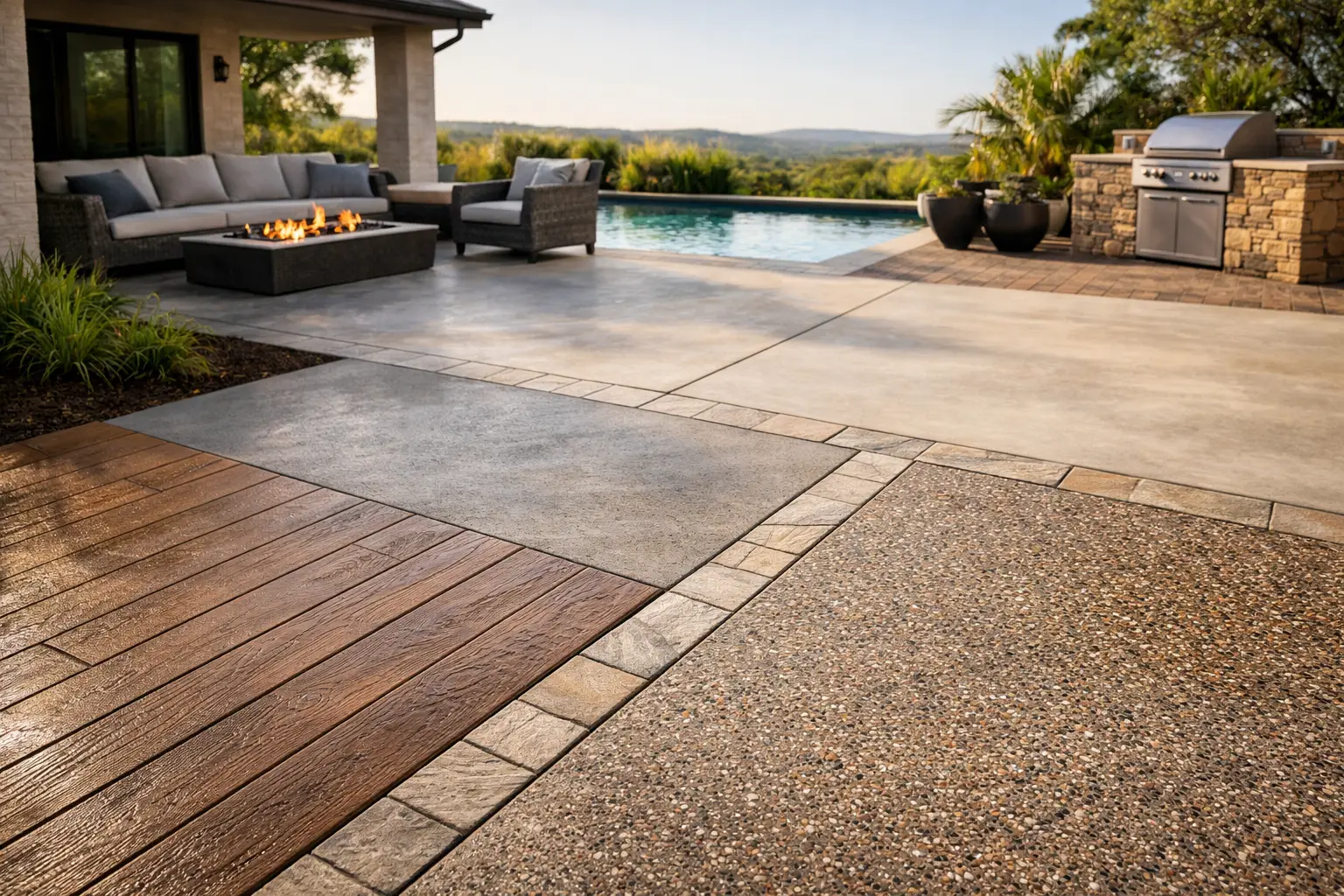
A patio in Austin has to handle more than backyard traffic. It takes direct summer sun, sudden downpours, muddy paws, grill grease, and long stretches of dry weather. The best concrete patio finishes balance appearance with traction, heat management, maintenance, and the way you actually plan to use the space.
A smooth gray slab may be the lowest-cost starting point, but it is not always the best final surface. The right finish can make a patio safer around a pool, easier to keep clean beneath an outdoor kitchen, or more connected to the stone, plants, and architecture around your home. Here is what Austin homeowners should consider before choosing one.
Best Concrete Patio Finishes for Austin Properties
There is no single finish that works for every property. A covered patio outside a modern home has different needs than an exposed pool deck or a rental property courtyard. Start with the location, sun exposure, drainage, and expected foot traffic. Then choose the look.
Broom finish: practical traction at a sensible cost
A broom finish is created by pulling a specialized broom across fresh concrete. The result is a subtle, linear texture that gives shoes and bare feet more grip than a hard-troweled slab.
For many patios, this is the most practical option. It holds up well, does not require a decorative coating, and is easier to work into a straightforward concrete installation budget. It is especially useful on uncovered patios, sloped areas, walkways leading to the yard, and spaces that may get wet during storms.
The trade-off is appearance. A basic broom finish has a clean, utilitarian look, but it will not resemble stone or tile. Direction matters, too. The broom lines should be planned to improve traction and complement the shape of the patio rather than looking random. A light integral color can give it more character without making the project overly complicated.
Exposed aggregate: durable texture with a natural look
Exposed aggregate reveals decorative stone within the concrete surface. After placement, the top layer of cement paste is removed at the right stage of curing, leaving smooth pebbles or crushed aggregate visible.
This finish has strong traction and a more finished appearance than standard broom concrete. It works well for pool surrounds, garden patios, and properties where natural stone, gravel beds, or native landscaping are part of the design. The mix can use aggregate colors that support warm Texas exterior palettes, including tan, cream, charcoal, and muted earth tones.
Exposed aggregate is not the cheapest choice, and workmanship matters. If the surface is exposed unevenly or the mix is poorly selected, the patio can look patchy. It is also textured enough that patio furniture feet, leaves, and dirt may take more effort to clean than they would on a smoother slab. For the right setting, though, it is one of the tougher long-term finishes available.
Stamped concrete: decorative impact without individual pavers
Stamped concrete can imitate flagstone, slate, wood planks, brick, or tile patterns. Color hardeners, release colors, and stamp mats create depth and variation while the concrete is still workable. It gives homeowners a decorative hardscape look without every joint, shift, and weed concern that can come with separate pavers.
It is a strong option for entertaining patios, covered outdoor living areas, and homes where the patio needs to match existing masonry. A well-designed stamped patio can create a larger visual statement than a plain slab, particularly when paired with landscape borders, retaining walls, or a built-in fire pit.
The practical concern is surface temperature and slipperiness. Dark colors can get hot in Austin sun, while a heavily sealed, smooth stamped surface can become slick when wet. Lighter colors, properly selected texture, and a sealer with a traction additive can help. Stamped concrete also needs periodic resealing to protect its color and finish. It is not maintenance-free, but it can be a good investment when decorative appeal is a priority.
Integral color and stained concrete: color with a cleaner profile
Integral color is mixed into the concrete before it is poured, so the color runs through the slab rather than sitting only on top. It can be used with a broom, light texture, or smooth finish. This approach creates a consistent base color and is useful for warm neutrals that fit Austin homes well.
Concrete stains are applied after the slab has cured. Acid stains react with concrete to create variegated, translucent color, while water-based stains offer more predictable color options. Both can add visual depth to an existing or new patio without the raised texture of stamped or aggregate finishes.
Stains are best for homeowners who like a more refined, custom look and are willing to protect it. The final color can vary based on the concrete itself, especially with acid stain, so samples are worth reviewing before committing. Existing patio stains, repairs, and surface inconsistencies may remain visible. On a clean, well-prepared slab, stained concrete can look sharp. On a heavily patched patio, an overlay may be the better route.
Decorative overlays: a solution for worn or outdated patios
A concrete overlay is a thin cement-based layer installed over an existing slab. It can be textured, stained, stamped, or troweled to create a new finish without fully removing sound concrete underneath.
Overlays are often a practical choice when a patio is cosmetically tired but structurally stable. They can cover minor surface discoloration, old coatings, and shallow imperfections while giving the space a new decorative direction. This can be less disruptive than demolition and replacement.
That said, an overlay is not a fix for major cracking, poor drainage, or slab movement. If the existing patio has active structural problems, those issues need to be addressed first. A contractor should inspect the base, evaluate cracks, and confirm that water will move away from the home before recommending an overlay.
How Austin Weather Changes the Decision
Central Texas heat makes color selection more than a design choice. Light gray, sand, buff, and soft taupe finishes generally feel more comfortable underfoot than dark brown, black, or deep charcoal in full sun. No concrete finish stays cool through a 100-degree afternoon, but lighter colors can make a real difference.
Rainfall is the other factor. Your patio should have enough slope to drain water away from the foundation, and the finish should provide traction where water collects or where people step out of a pool. Texture helps, but it cannot correct poor grading. If water is already standing on the slab, fix drainage before spending money on stain, sealer, or decorative work.
Large temperature swings and dry soil also make proper concrete preparation essential. Control joints, reinforcement where appropriate, a well-prepared base, and correct curing protect the slab itself. The finish is only as good as the concrete underneath it.
Choosing a Finish Based on Patio Use
For a family patio with kids, pets, and regular outdoor meals, a light-colored broom finish or lightly textured integral-color finish is usually hard to beat. It is practical, easy to rinse off, and less stressful to live with.
For a pool deck, exposed aggregate or a properly textured finish usually provides better footing. Avoid making looks the only deciding factor. Bare feet and wet surfaces change what works.
For a covered patio with an outdoor kitchen, stained concrete or stamped concrete can bring more design value because the surface gets less direct sun and weather exposure. Grease, spills, and furniture movement still matter, so use a finish and sealer suited to the space.
For an older patio that is still stable, a decorative overlay can provide the biggest visual change without starting from scratch. If the slab is badly cracked, sinking, or draining toward the house, replacement may be the wiser long-term decision.
Maintenance That Protects the Finish
Concrete does not need constant attention, but neglect shortens the life of decorative work. Sweep grit and leaves off the patio, rinse away dirt, and clean spills before they set. Use cleaners that are appropriate for concrete and avoid harsh products that can damage color or sealer.
Sealed stamped, stained, and overlay finishes need occasional resealing, especially in high-traffic or full-sun areas. The timing depends on the product, exposure, and use, but waiting until the finish looks worn is usually too late. If a sealed patio becomes slippery, have the surface evaluated before applying another glossy coat.
A good patio finish should support the way your property is used, not create another chore. When the concrete, drainage, landscape plan, and finish are handled as one project, the result looks better and works harder for years.