
Stamped Concrete vs Pavers in Austin
Stamped concrete vs pavers in Austin: compare cost, durability, repairs, upkeep, and curb appeal so you can choose the right surface.
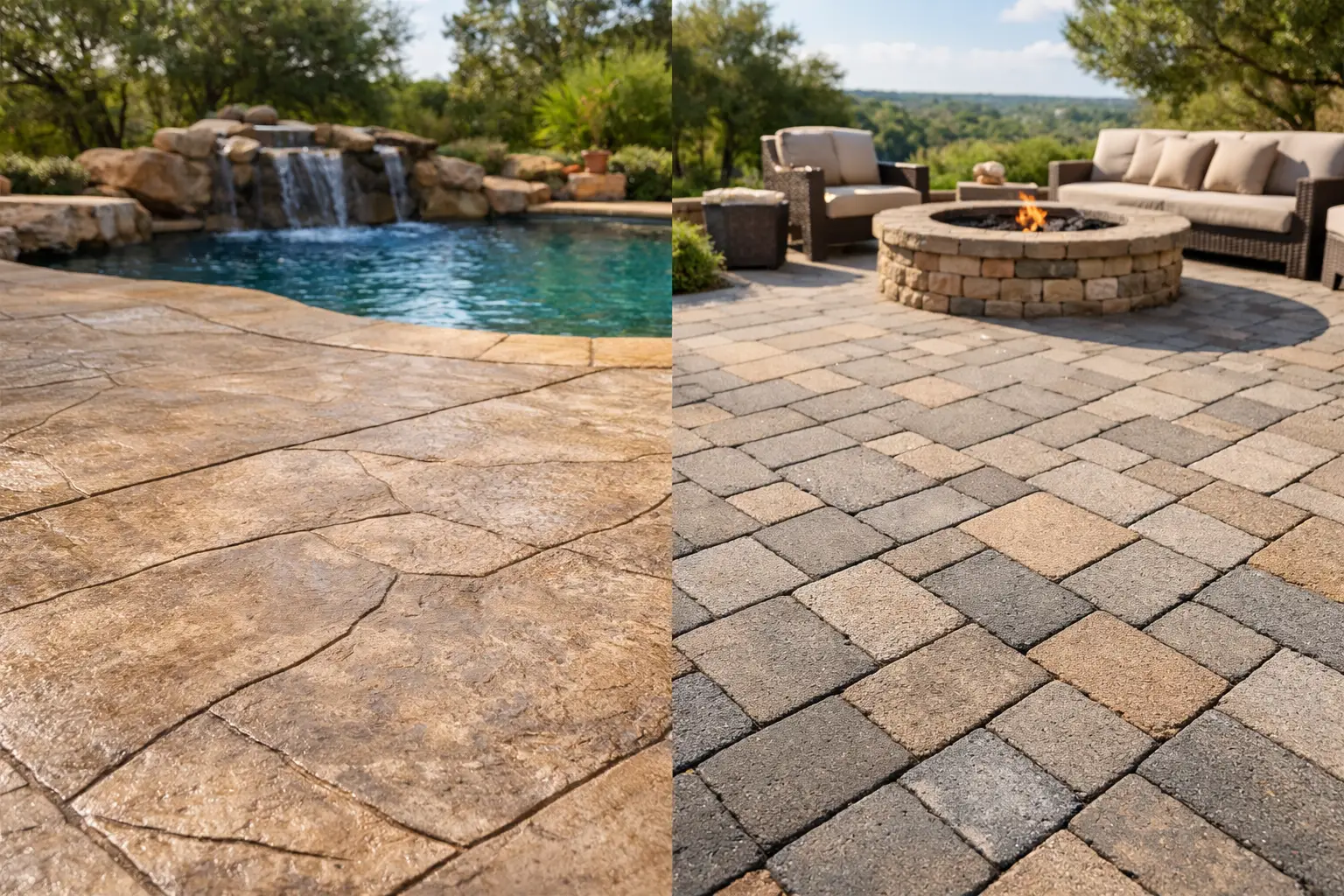
If you're deciding between stamped concrete vs pavers for a patio, driveway, or walkway in Austin, the right answer usually comes down to how you use the space, how much maintenance you can tolerate, and how the surface will handle Texas heat. Both can look sharp. Both can add value. But they do not perform the same over time, and the differences matter once the job is installed and exposed to sun, rain, and daily wear.
Stamped concrete vs pavers: the real difference
Stamped concrete is a poured slab finished with texture and pattern to imitate stone, brick, tile, or other materials. It gives you a continuous surface with a custom look at a lower upfront cost than many premium hardscape options. Pavers are individual units, usually concrete or stone, installed piece by piece over a prepared base. They create a segmented surface instead of one solid slab.
That structural difference is the whole conversation. A stamped concrete surface depends on proper mix, reinforcement, grading, joint placement, and finishing. Pavers depend on excavation depth, compaction, edge restraint, bedding sand, and consistent installation across the field. Both require skill, but they age differently because they are built differently.
For Austin-area property owners, this is not just a style decision. Expansive soils, intense summer heat, heavy rain events, and normal ground movement can all affect outdoor surfaces. What looks best on day one is only part of the job. What matters is how it holds up in year five and how expensive it is to correct if something shifts.
Cost is usually the first filter
For many homeowners, stamped concrete wins the first round because initial pricing is often lower than pavers for the same square footage. A stamped patio or walkway can deliver a decorative finish without the labor involved in setting individual units. If your goal is to upgrade curb appeal on a working budget, it can be a strong value.
Pavers usually cost more upfront because there is more material handling and more installation labor. That does not automatically make them overpriced. It just means the investment is front-loaded. In some cases, especially on higher-end homes or larger outdoor living areas, the look and repair flexibility justify that added cost.
The smarter way to look at price is not just install cost. Think about what happens if you need corrections later. A cracked or settled section of stamped concrete can be difficult to blend invisibly. A paver area with localized movement can often be lifted, regraded, and reset without replacing the whole surface.
Appearance depends on the look you want
Stamped concrete gives you a cleaner, more unified appearance. If you want broad texture, defined pattern, and fewer visible joints, it does that well. It can work especially nicely for patios, pool decks, and entry areas where you want a finished decorative surface without visual busyness.
Pavers give you more natural joint lines, more texture variation, and a more traditional hardscape look. They tend to fit well with homes where you want a built-up, custom exterior feel rather than the appearance of a decorative slab. Color blends and laying patterns also give you more design flexibility.
This is where preference matters. Some property owners like the continuous look of stamped concrete because it feels clean and simple. Others prefer pavers because they read as more premium and more architectural. Neither choice is wrong, but the house and landscape should drive the decision.
Durability in Austin is where the trade-offs show up
In Central Texas, heat and ground movement are part of the job. Stamped concrete can absolutely perform well, but it is still a slab. Concrete expands, contracts, and can crack. Control joints help manage where cracking happens, but they do not eliminate movement. Good installation reduces problems. It does not change the material's basic behavior.
Pavers handle minor movement differently because they are individual units with joints between them. Instead of one slab taking stress, the system can flex slightly across the surface. That makes pavers appealing in areas where soil movement is a concern. If a few sections settle, the repair is usually more targeted.
That said, pavers are not maintenance-free and they are not immune to poor workmanship. A weak base, bad drainage, or sloppy edge restraint can lead to shifting, separation, or uneven spots. The fact that pavers are repairable does not excuse a bad install.
Driveways and heavy traffic
For driveways, the conversation gets stricter. Vehicle loads expose weak prep fast. Stamped concrete driveways need proper thickness, reinforcement, subgrade preparation, and drainage planning. If those basics are handled right, they can last well and look strong.
Pavers can also perform well on driveways, but only when the base is built specifically for traffic loads. Done right, they offer excellent durability and easier spot repair. Done wrong, they can rut or shift. For either option, the contractor matters more on a driveway than almost anywhere else.
Maintenance is not the same
Stamped concrete needs sealing to help preserve color, improve stain resistance, and protect the finish from weather exposure. Over time, sealer wears down. In the Austin climate, that maintenance cycle matters. If you ignore it too long, fading and surface wear become more noticeable.
Pavers also benefit from maintenance, especially weed control in joints, occasional re-sanding, and sealing if you want color enhancement or extra protection. Some owners assume pavers require no upkeep because they are segmented. That is not accurate. They simply require a different kind of upkeep.
If you want the easiest day-to-day surface to clean, stamped concrete often feels simpler because there are fewer joints. If you want a system that is easier to repair in sections, pavers usually have the edge.
Repairs are where pavers usually win
This is one of the clearest differences in stamped concrete vs pavers. When stamped concrete cracks, chips, or settles, repairs can be tough to hide. Even if the structural fix is sound, color and texture matching can be difficult, especially after sun exposure and age.
With pavers, an isolated problem area can often be removed and reset. If one paver gets damaged, that unit can be replaced. The repair may still show some variation if materials have weathered differently, but in most cases it is more manageable than trying to patch decorative concrete and make it disappear.
If long-term serviceability is a major priority for you, pavers usually offer more flexibility.
Which option fits which project?
For patios, stamped concrete is often a strong fit when you want a decorative finish, a smooth layout, and solid value. It works well for entertaining spaces, backyard seating areas, and homeowners who want a clean upgrade without moving into the higher paver price range.
For walkways and garden paths, either option can work. Stamped concrete creates a more continuous path and can tie in nicely with a driveway or porch. Pavers can create more visual interest and are a strong choice when the landscape design leans more custom.
For driveways, both can work, but the decision should be made carefully based on traffic, slope, drainage, and budget. For high-end curb appeal and repair flexibility, pavers are compelling. For a cost-conscious decorative upgrade with strong visual impact, stamped concrete remains a practical choice.
So which should you choose?
Choose stamped concrete if you want a decorative surface with lower upfront cost, a more unified appearance, and straightforward cleaning. It is a practical solution for many Austin patios, pool surrounds, and residential flatwork projects when installed correctly and maintained over time.
Choose pavers if you are willing to spend more upfront for easier sectional repair, better tolerance for minor movement, and a more traditional hardscape look. They make sense for owners who see the surface as a longer-term investment and want more flexibility if repairs are needed later.
A lot of projects come down to priorities, not absolutes. If budget is tight and the area is a patio or walkway, stamped concrete often makes a lot of sense. If repairability and movement tolerance matter more than initial cost, pavers usually make the stronger case.
For Austin properties, the best result comes from matching the material to the site conditions, the intended use, and the level of maintenance you are actually willing to keep up with. A good contractor should be able to look at drainage, grading, traffic, and design goals before pushing one option over the other. That is how you avoid paying twice for a surface that looked right on paper but was wrong for the property.
If you are planning an outdoor upgrade, the smart move is to choose the material that fits your ground, your budget, and your expectations after the install is finished, not just the one that looks best in a photo.