
Stamped Concrete Patio Review for Austin Homes
Our stamped concrete patio review covers cost, durability, maintenance, and heat concerns to help Austin homeowners choose a patio built to last for years.
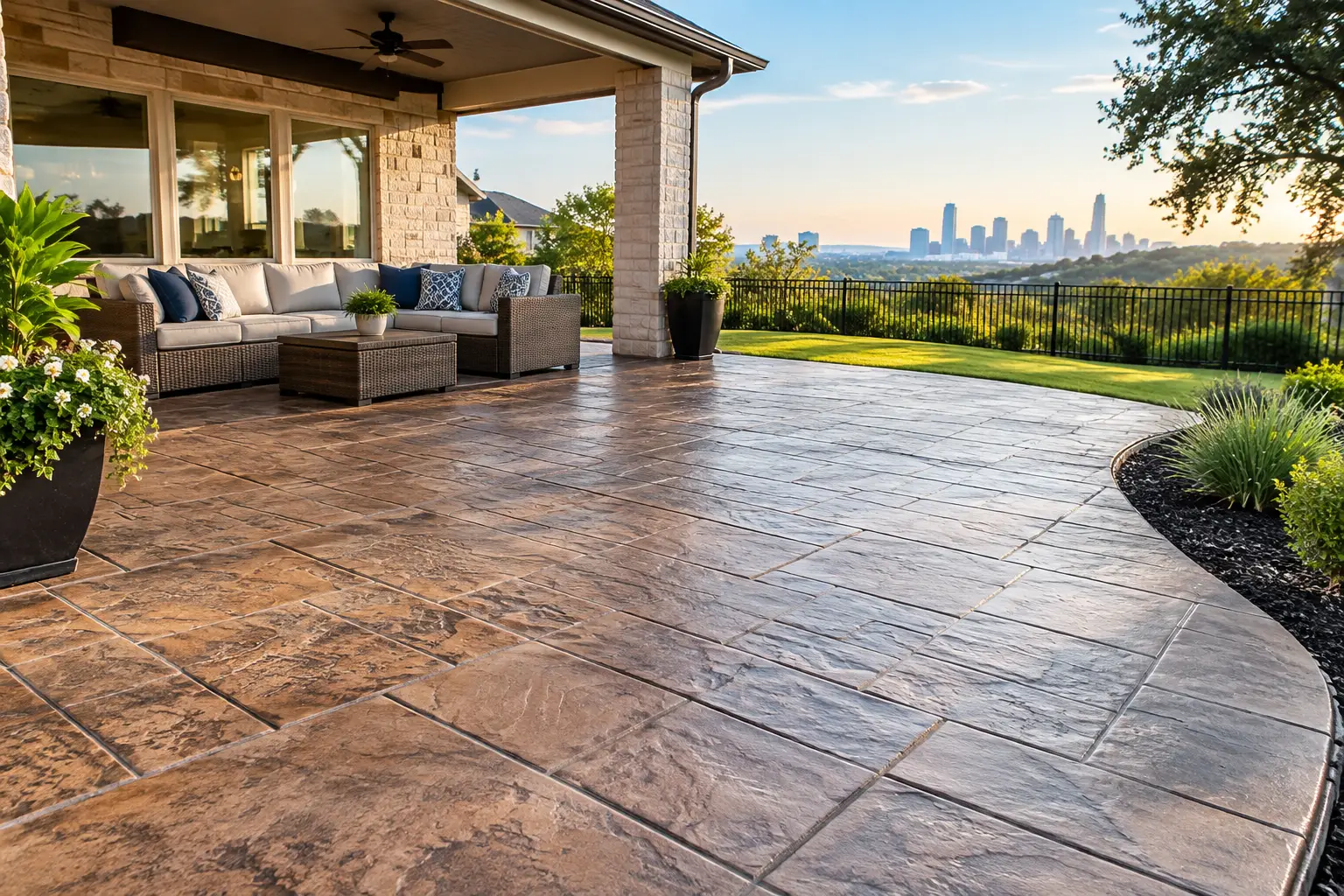
A stamped concrete patio review should start with the conditions that actually test the slab: Austin heat, sudden downpours, shifting soils, and regular outdoor use. A stamped finish can give a backyard the look of stone, wood, slate, or brick without installing individual pavers. Done right, it is a durable, low-maintenance hardscape. Done poorly, the decorative pattern will not make up for weak base preparation, bad drainage, or cracks.
For many Austin homeowners, stamped concrete is a practical middle ground between a plain broom-finished slab and a higher-cost natural stone patio. It creates a finished outdoor area for grilling, seating, poolside use, and entertaining while keeping the surface continuous and easier to maintain than patios with many joints.
What a Stamped Concrete Patio Looks Like in Real Use
Stamped concrete is poured as a standard concrete slab, then textured with specialty mats while the concrete is still workable. Color can be mixed into the concrete, applied as a color hardener, or added with stains after curing. The final result can resemble flagstone, travertine, wood planks, brick, or other materials.
The key word is resemble. From a normal viewing distance, a quality stamped patio can look sharp and intentional. Up close, it is still concrete. Homeowners who want the exact variation, edge detail, and natural feel of real stone may be happier with stone. Homeowners who want a clean, durable surface with a decorative finish often find stamped concrete to be the better value.
The pattern should fit the house and yard. Large ashlar slate patterns work well on broad patios behind modern and traditional homes. Wood plank stamps can warm up a covered patio but can look forced if the surrounding landscape is formal limestone. Color matters just as much. In Central Texas, earth tones, warm grays, and natural tan shades generally age better than heavily saturated colors.
Stamped Concrete Patio Pros
The biggest benefit is appearance without the labor of laying separate materials. A stamped patio can create the visual structure of a finished outdoor room while remaining one continuous concrete surface. That makes it a strong option for homeowners who want more than plain gray concrete but do not want the maintenance demands of loose pavers or the cost of premium stone.
Durability is another advantage. A properly installed patio has the strength to handle furniture, foot traffic, grills, planters, and everyday backyard activity. Unlike pavers, there are no individual units to settle out of alignment. There are also fewer gaps where weeds can grow.
Maintenance is straightforward. Sweeping, occasional washing, and resealing on an appropriate schedule will protect the color and surface. A sealed patio is easier to rinse after pollen season, muddy weather, or outdoor gatherings. For rental properties and busy households, that simple upkeep can be a real advantage.
Stamped concrete also works well as part of a full outdoor plan. The patio can be shaped around a pergola, fire pit, outdoor kitchen, retaining edge, turf area, or landscape beds. Coordinating hardscape and landscaping at the same time helps avoid awkward transitions and drainage problems later.
The Drawbacks to Consider Before You Pour
Concrete cracks. This is not a sales pitch against stamped concrete. It is a fact of the material. Control joints are installed to guide where shrinkage cracks are most likely to occur, but they do not guarantee a crack-free slab. Soil movement, tree roots, drainage failures, and extreme weather can all create cracking over time.
A crack in a plain gray slab may blend into the surface. A crack through a detailed stamped pattern is more noticeable and harder to disguise. Repairs can be made, but matching the original texture and color perfectly is difficult, especially after years of weathering. That is why site preparation, reinforcement, proper joint placement, and drainage are not optional details.
Stamped surfaces can also become slick when wet if the finish is too smooth or the wrong sealer is used. This deserves special attention around pools, steps, and shaded areas where moisture lingers. A contractor can use texture and traction additives to improve grip, but homeowners should discuss slip resistance before selecting a pattern.
Heat is another Austin-specific trade-off. Dark-colored concrete absorbs more sun and can get hot under bare feet. Large patios with little shade will feel hot regardless of finish, but dark stamps and dense sealers can make the problem worse. Lighter colors, shade structures, trees, and thoughtful patio orientation make a noticeable difference.
Cost: What Drives the Price?
A stamped concrete patio costs more than a basic broom-finished slab because it requires more labor, materials, timing, and finishing skill. The exact price depends on patio size, access to the backyard, demolition needs, grading, thickness, reinforcement, pattern complexity, color method, drainage work, and site conditions.
As a general planning range, homeowners often see stamped concrete priced above basic concrete and below many natural-stone installations. Small patios can carry a higher per-square-foot cost because mobilization, forming, and finishing work still have to happen. A larger, simple rectangular patio may price more efficiently than a small patio with curves, steps, multiple colors, and tight access.
Do not compare bids only by the final number. Ask what is included beneath the decorative surface. A lower bid can leave out demolition, compacted base work, reinforcement, sealing, proper slope, or cleanup. Those items affect whether the patio stays level, drains away from the home, and holds up through Texas weather.
What Good Installation Looks Like
A strong stamped concrete project starts before the truck arrives. The area should be evaluated for drainage, soil condition, elevation, access, existing utilities, and connection points to the house or yard. Water needs a planned path away from structures. If the patio is being added near a foundation, poor slope is not a cosmetic issue. It can create a water-management problem.
The crew should establish the correct excavation depth, prepare and compact the subgrade, set forms, and place reinforcement according to the project needs. Concrete thickness should match the intended use. A foot-traffic patio does not need the same design as a driveway, but it still needs a stable base and proper depth.
During placement, timing matters. Stamping too early can distort the surface. Stamping too late can produce weak texture and rushed results. The crew should also cut or tool control joints in a layout that works with the pattern as much as possible. Joints are part of a sound concrete job, not a flaw to hide.
After curing, sealing helps protect the color and makes routine cleaning easier. The patio should not be sealed too aggressively or too often. Excess sealer can create a blotchy appearance, make the surface slick, or trap moisture. A contractor should provide clear guidance on when to reseal based on the product used and how exposed the patio is.
Maintenance Expectations in Central Texas
Most stamped patios need basic cleaning and periodic resealing, often every two to four years depending on sun exposure, foot traffic, drainage, and the type of sealer. Covered patios generally need less attention than full-sun patios near pools or sprinklers.
Avoid harsh de-icing chemicals, even though Austin rarely sees prolonged freezing conditions. Clean spills such as grease, fertilizer, and leaf tannins promptly. Keep planters elevated when possible so trapped moisture does not leave uneven marks. If the surface starts looking dull or water stops beading on it, it may be time to assess the sealer rather than wait for staining to become permanent.
Is Stamped Concrete the Right Patio Choice?
Stamped concrete makes sense when you want a durable outdoor surface with more character than standard concrete, a budget below high-end natural stone, and manageable maintenance. It is especially useful for larger entertaining patios where paver joints or individual stone installation would add significant cost and upkeep.
It may not be the best choice if your property has major unresolved drainage or soil issues, if you expect a perfectly crack-free surface forever, or if you want the exact look of natural stone at close range. In those cases, the project may need more site work first, or another material may better fit your expectations.
For Austin properties, the best result comes from planning the patio as part of the whole yard: drainage, shade, landscape beds, walkways, and how people will actually use the space. Texan Strong Builds can help homeowners build that plan around a patio that looks right on day one and performs well through the Texas seasons.