
What Retaining Wall Contractors Should Handle
Austin retaining wall contractors should manage drainage, grading, base preparation, and finish work so your slope stays secure well through Texas weather.
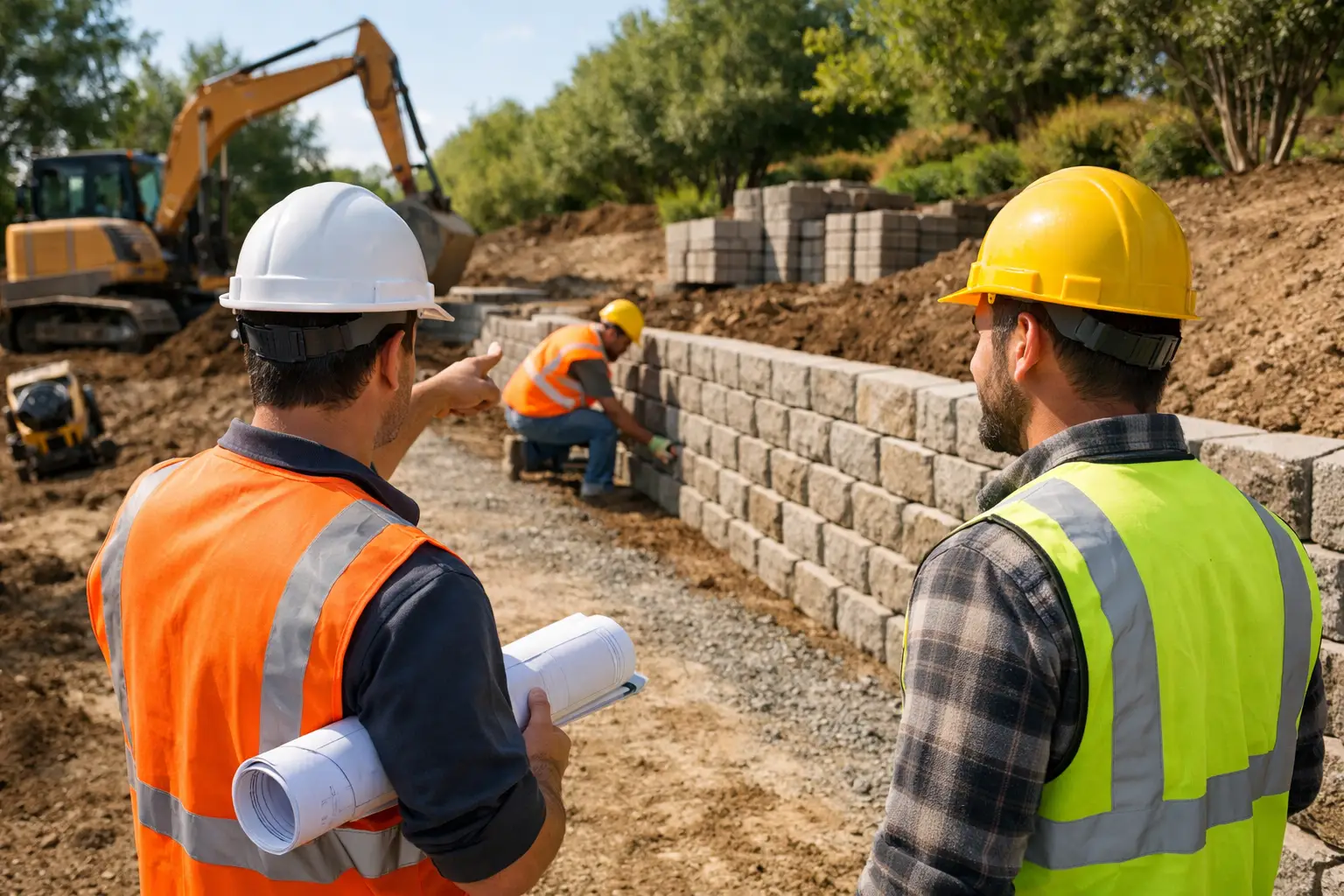
A retaining wall that leans after the first hard rain is rarely a masonry problem alone. It is usually a drainage, base, grading, or soil-pressure problem that started behind the wall. Experienced retaining wall contractors look at the entire slope before selecting block, stone, or concrete. For Austin property owners, that full-site approach matters because rocky ground, clay soils, sudden downpours, and sloped lots can all put pressure on a poorly planned wall.
A good retaining wall should do more than hold dirt in place. It should create usable yard space, manage changes in grade, protect nearby concrete, and fit the look of the property. The right contractor plans for all of those jobs from the start.
Start With the Reason the Wall Is Needed
Every retaining wall project needs a clear purpose. A short landscape border around a planting bed is different from a wall supporting a raised yard, driveway edge, patio, or hillside. The height of the wall, the slope above it, and what sits near it all affect the design.
For example, a wall holding back a few feet of soil beside a garden may be a straightforward landscape installation. A taller wall supporting a driveway, pool area, fence line, or neighboring grade requires more planning. The soil load is greater, water has more places to collect, and failure can affect more than appearance.
Before work begins, a contractor should evaluate the existing grade, identify where water flows during a heavy storm, and consider access for excavation equipment and material delivery. Austin lots can shift quickly from shallow limestone to deeper clay, sometimes within the same yard. That is why a wall design that worked at another home may not be the right answer for yours.
What Retaining Wall Contractors Should Include
The visible face of a wall gets most of the attention, but the work underneath and behind it determines whether it lasts. Reliable retaining wall contractors should explain how they plan to prepare the site, build the base, move water away, and finish the surrounding landscape.
Proper excavation and a stable base
The wall needs to begin on undisturbed ground or properly compacted fill. Contractors excavate to create enough room for a compacted gravel base and the first course of block or stone. That first course must be level. A small error at the bottom can become a noticeable lean as the wall rises.
The base depth depends on the wall system, site conditions, and wall height. There is no one-size-fits-all measurement. A decorative low wall does not carry the same forces as a structural retaining wall. What matters is that the base is built for the actual load and compacted in controlled lifts, not simply covered with loose gravel.
Drainage behind the wall
Water is one of the main causes of retaining wall failure. When rainwater collects behind a wall, the saturated soil becomes heavier and pushes harder against the structure. In Central Texas, a dry stretch can be followed by a fast, heavy rain, which makes drainage planning essential.
A properly built wall often includes free-draining gravel behind the face, a perforated drain pipe at the base where appropriate, and a clear outlet for collected water. The finished grade should direct surface runoff away from the wall instead of funneling it toward the backfill. Depending on the site, swales, drain extensions, catch basins, or adjustments to nearby hardscape may also be needed.
Drainage details should not be treated as an upgrade added at the end. They are part of the wall system. If a contractor cannot clearly explain where water will go, ask for a more complete plan before approving the job.
Reinforcement when the wall calls for it
As walls get taller or support more load, reinforcement becomes more important. Segmental block systems may use geogrid layers that extend back into the soil to create a wider, stronger mass behind the wall. Concrete walls may require reinforcing steel and footings designed for the conditions on site.
Not every wall needs the same reinforcement. Adding material where it is not needed can raise costs without improving the project. Skipping reinforcement on a wall that needs it creates a much more expensive problem later. The right choice depends on height, slope, soil, drainage, nearby structures, and the wall material.
A finished grade that works with the property
A retaining wall should not look dropped into the middle of the yard. The final grade, planting areas, steps, edging, and adjacent concrete need to work together. This is where a contractor with both hardscape and landscape experience can save homeowners from coordinating separate crews.
The best time to plan a patio extension, walkway, gravel area, planting bed, or drainage path is before the wall is built. Trying to force those elements into place afterward can lead to awkward transitions and extra excavation. Texan Strong Builds approaches retaining walls as part of the outdoor space, not as an isolated structure.
Choosing the Right Wall Material
Retaining wall material should match the wall's job, the property style, and the maintenance expectations. Concrete retaining wall block is a common choice because it is engineered for stacked wall systems, offers a clean appearance, and comes in several colors and textures. It works well for many residential slopes and terraced yards.
Natural stone can create a more traditional Hill Country look. It can be an excellent fit for landscape walls, but installation quality matters because stone sizes and shapes vary. A dry-stacked stone wall is not automatically suited for every structural application, especially where significant soil pressure or water runoff is involved.
Poured concrete offers a clean, modern look and can be appropriate for structural walls, particularly when integrated with stairs, patios, or other concrete work. It generally requires careful forming, reinforcement, drainage, and finish planning. It may cost more than a basic block wall, but it can make sense when the design calls for a continuous, customized structure.
Timber walls can be less expensive upfront, but they have a shorter service life in many conditions. Moisture, insects, and soil contact eventually take a toll. For a temporary grade transition or a low-budget project, timber may be reasonable. For a long-term investment near a home or driveway, concrete, block, or stone is usually the better path.
Know When Engineering or Permits May Be Required
Homeowners often assume a retaining wall is simply landscaping. That can be true for a low garden wall, but taller walls can become structural work. Local requirements may apply based on wall height, location, surcharge loads, drainage conditions, and whether the wall supports a structure, driveway, or neighboring property.
In Austin and surrounding communities, permit rules can vary by jurisdiction and project scope. Engineering may be needed for taller walls or walls carrying significant loads. A qualified contractor should flag those issues early, not after excavation has started.
This is also a good time to verify property lines, utility locations, and easements. A wall built too close to a boundary can create problems with neighbors, drainage, or future repairs. If the project involves a shared slope or affects runoff onto another lot, the design deserves extra attention.
Questions Worth Asking Before You Hire
Price matters, but the lowest estimate can leave out the work that keeps a wall standing. Compare proposals based on scope, not just the final number. Ask what excavation is included, how the base will be prepared, whether drainage materials are included, and how excess soil will be handled.
You should also ask whether the quote includes demolition of an old wall, grading around the finished wall, material delivery, cleanup, and repair of disturbed landscaping. These details affect both the cost and the completed appearance.
A contractor should be willing to discuss the wall height, material choice, expected drainage path, and any permit or engineering considerations. Clear answers at the estimate stage are a better sign than vague assurances that the crew will figure it out later.
Signs an Existing Wall Needs Attention
Do not wait for a retaining wall to collapse before addressing a problem. Visible leaning, separated blocks, cracks, bulging sections, loose capstones, washed-out soil, or standing water near the base are all warning signs. A wall that has started moving may still be repairable, but repairs become more limited as displacement increases.
Sometimes the wall itself is sound and the drainage around it is the real issue. Other times, rebuilding is more practical than trying to patch a failed base or damaged reinforcement. An onsite assessment is the only reliable way to determine which option makes financial sense.
A retaining wall is a working structure, even when it is finished with attractive stone, plants, and lighting. Build it around the actual grade and water conditions on your property, and it can turn a difficult slope into usable, dependable outdoor space for years to come.