
Residential Driveway Resurfacing Options
Compare residential driveway resurfacing options for Austin homes and choose the right concrete repair for heat, traffic, and curb appeal in Texas heat.
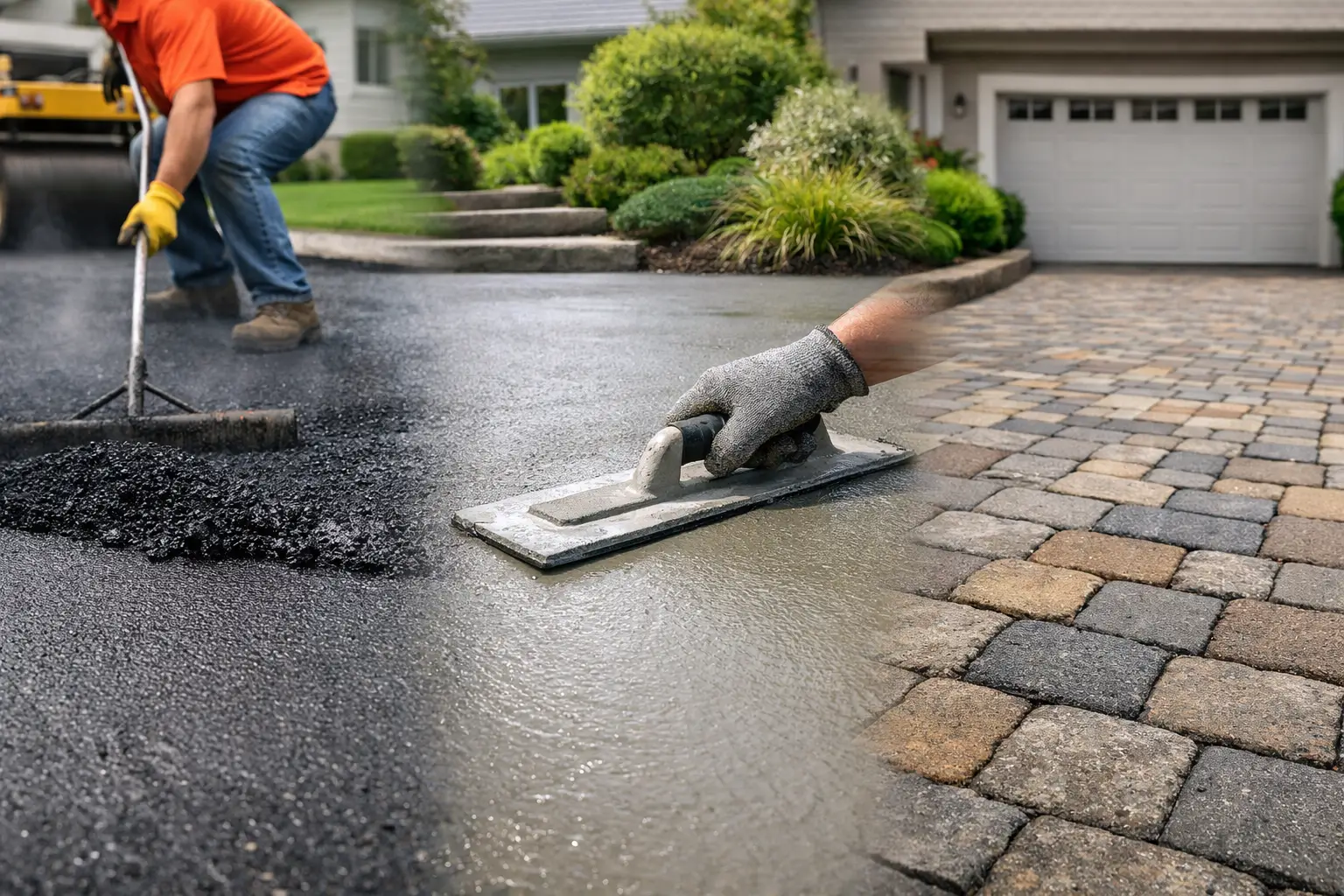
A driveway can look worn out long before it has reached the end of its useful life. In Austin, sun exposure, heavy vehicles, runoff, and shifting clay soil can leave concrete stained, rough, cracked, or uneven. The right residential driveway resurfacing options can restore the appearance and function of the surface without automatically paying for a full replacement.
The key is knowing whether the problem is cosmetic, surface-level, or structural. Resurfacing works well on a sound slab with wear at the top. It will not correct a driveway that is badly settled, heaved, broken through, or draining toward the house. A proper assessment saves money because it matches the repair method to the actual condition of the concrete.
Start With the Condition of the Existing Driveway
Before choosing a finish or color, look at the slab itself. Small hairline cracks, faded color, shallow pitting, old tire marks, and minor surface scaling are usually good candidates for resurfacing. These issues affect curb appeal and may allow moisture into the surface, but they do not always mean the concrete has failed.
More serious signs call for a different approach. Large cracks that separate or move, sections that sit at different heights, deep spalling that exposes aggregate, recurring puddles, and areas that slope toward the garage or foundation point to underlying problems. In Central Texas, expansive clay can shift with changing moisture levels. If the base moves, a new coating over the top may crack along with the old slab.
A contractor should check drainage, joint condition, crack movement, and the stability of the concrete before recommending a resurfacing system. That practical step matters more than choosing a decorative pattern from a sample board.
Concrete Overlay Resurfacing
A cement-based concrete overlay is one of the most common residential driveway resurfacing options for a structurally sound driveway with a worn surface. The existing concrete is cleaned, repaired, mechanically prepared, and coated with a bonded overlay material. Depending on the system, the finished layer may be thin and smooth or built up enough to improve a rough texture.
This option works well when homeowners want a cleaner, more uniform driveway without removing the entire slab. It can cover light surface defects, patch repairs, discoloration, and shallow scaling. A basic broom finish provides reliable traction and fits most Austin homes. It is also generally easier to maintain than heavily textured decorative finishes.
Preparation determines whether an overlay performs. Paint, oil, curing compounds, loose concrete, and contaminants have to be removed so the new material can bond. Cracks need appropriate repair, and expansion or control joints should be honored rather than buried. Skipping this work may produce a driveway that looks good briefly but starts peeling or cracking under traffic and weather.
Decorative and Stamped Overlays
A decorative overlay can give an existing driveway a more custom appearance. Color, scoring, stamped patterns, and exposed-texture finishes can create a stone, slate, tile, or more refined concrete look. This is a practical choice for homeowners focused on curb appeal, especially when the driveway needs to complement a new walkway, patio, retaining wall, or landscape upgrade.
There are trade-offs. Decorative patterns have more labor and material costs than a standard broom finish. Dark colors can show dust and tire marks, while highly textured patterns may hold dirt and require more detailed cleaning. The finish also needs to be selected with traction in mind. A driveway should look finished, but it also needs to remain safe when wet.
For Austin properties, lighter and medium-toned colors often make sense because they handle heat and dust better visually than very dark surfaces. A good contractor can also tie the driveway finish into nearby concrete and landscaping so the front of the property looks planned rather than pieced together.
Repair and Seal for Limited Surface Damage
Not every driveway needs a full overlay. If the slab is generally in good shape, targeted crack repair, spot patching, cleaning, and sealing may be the better investment. This approach is useful for small areas of damage, light staining, and early surface wear.
Crack repair should be chosen based on the crack itself. A stable hairline crack may be filled and blended before sealing. Wider or moving cracks need more attention because they can reflect through new material. Sealer can help reduce water intrusion and make the driveway easier to clean, but it does not rebuild missing concrete or stop slab movement.
This is the lower-cost option when the goal is maintenance rather than a major visual change. It is not the right answer for widespread scaling, multiple failed patches, or a driveway that has become uneven. Trying to stretch a failing slab with surface sealer alone usually leads to repeat repairs.
Asphalt Overlay or Replacement
Some homeowners consider asphalt as an alternative to concrete resurfacing. An asphalt overlay can provide a dark, smooth surface and may be less expensive upfront in certain situations. It is more common where an existing asphalt driveway is being renewed or where the driveway design calls for a flexible paving system.
For many Austin-area homes, concrete remains the stronger long-term fit for driveways because it handles heat, vehicle loads, and a broad range of design options well when properly installed. Asphalt can soften in extreme heat, develop depressions, and require periodic sealing. It also changes the look of the property significantly, which may not fit homes with existing concrete walkways, curbs, patios, or hardscape features.
An asphalt overlay should not be placed over a failing concrete slab without a clear plan for cracks, joints, and movement. The old slab can still influence the new surface. The decision should come down to budget, site conditions, maintenance expectations, and the appearance you want for the property.
When Full Concrete Replacement Is the Better Call
Full replacement costs more than resurfacing, but it is often the most dependable option when the driveway has structural problems. Removal and replacement allow the contractor to address the base, correct grading, improve drainage, set proper reinforcement where appropriate, and create a new surface with properly placed control joints.
Replacement is usually worth considering when the driveway has major settlement, extensive cracking, deep deterioration, poor drainage, or sections that have lifted enough to create a trip hazard. It is also the better route when homeowners want to widen the driveway, add a parking pad, change the layout, or connect the project to new walkways and landscaping.
This is where working with a contractor who understands both concrete and outdoor construction helps. Driveway work affects more than the slab. It can involve drainage routes, lawn grades, edging, planting areas, gates, irrigation, and access to the garage. Texan Strong Builds approaches these exterior projects with the full site in mind, not just the square footage of concrete.
Choosing the Right Option for Your Property
The best choice depends on what is happening below the surface as much as what is visible on top. A sound driveway with faded, worn concrete may benefit from an overlay or decorative resurfacing. A driveway with isolated minor damage may only need repair and sealing. A slab that is moving, settling, or sending water in the wrong direction should be repaired at the structural level or replaced.
Budget matters, but so does timing. A lower-cost repair can be smart when it solves a limited problem. It becomes expensive when it is used to cover conditions that need removal and reconstruction. Ask for a clear explanation of surface preparation, crack treatment, drainage considerations, finish options, and what the contractor expects the repair to handle over time.
A driveway should do its job every day without becoming another maintenance problem. Choose the resurfacing option that fits the slab you have, the Texas weather it faces, and the way your property needs to work.