
How to Repair Concrete Spalling the Right Way
Learn how to repair concrete spalling on Austin driveways, patios, and walkways, identify the cause, and choose a patch that holds up in Texas summer heat.
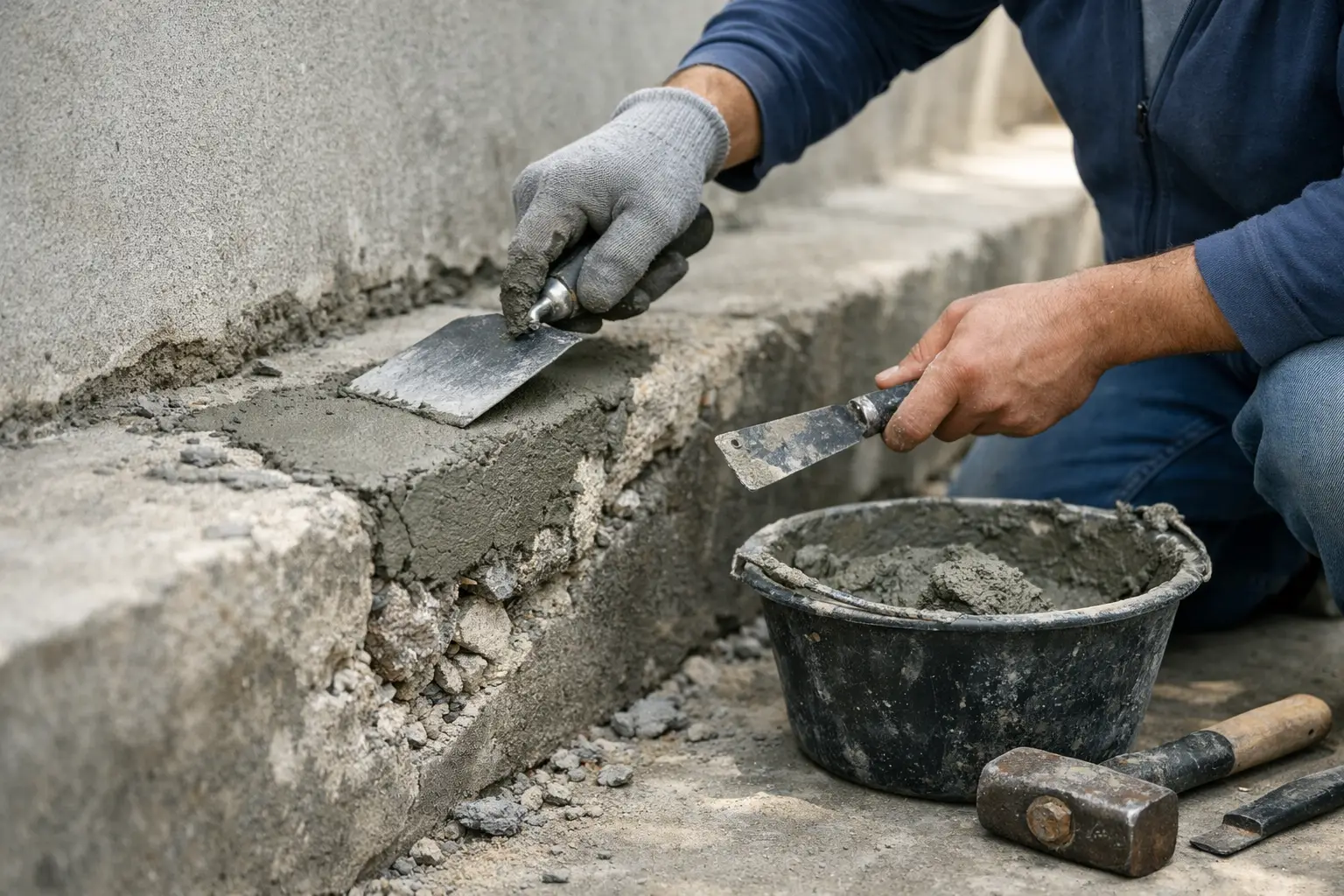
A driveway edge that starts flaking, a patio surface shedding thin layers, or porch steps showing rough, pitted spots are not just cosmetic problems. To repair concrete spalling correctly, you have to remove the failed material and address the conditions that caused it to break loose. Covering weak concrete with a thin patch may improve the appearance for a short time, but it will not create a lasting repair.
For Austin-area properties, heat, sudden rain, poor drainage, heavy vehicle traffic, and older concrete all play a role. The right fix depends on how deep the damage goes, where it is located, and whether the slab itself is still stable.
What Concrete Spalling Looks Like
Spalling happens when the top layer of concrete separates from the sound concrete underneath. It often begins as small chips or shallow craters, then expands into larger areas with loose aggregate and rough edges. On a driveway, it may show up near the garage, along tire paths, or at slab edges. On patios and walkways, it commonly develops where water sits after a storm or where sprinklers hit the concrete regularly.
Do not confuse spalling with normal surface discoloration. Stains, minor hairline cracks, and faded color may be surface-level concerns. Spalling means concrete is physically coming apart. If you can pull loose pieces away by hand, see exposed aggregate, or notice that a patch from a previous repair is lifting, the surface needs more than cleaning or sealing.
Why Concrete Spalls in Central Texas
Concrete is durable, but it is not maintenance-free. Most spalling problems can be traced to water, installation conditions, or a mix and finish that did not hold up under service.
Water is usually the main factor. When moisture enters pores and small cracks, it can weaken the bond near the surface. Austin does not face long periods of freezing weather like northern states, but temperature swings, hard rains, irrigation, and repeated wet-dry cycles still put stress on concrete. Water collecting at a low point is especially hard on patios, pool decks, walkways, and driveways.
Poor finishing during the original pour can also create trouble. If a concrete surface is finished while bleed water is still present, the top layer can become weak. Adding water to the surface during finishing is another common cause. The slab may look smooth at first, then begin to dust, chip, or peel after exposure to traffic and weather.
Deicing salts are less common in Austin, but some homeowners or tenants use chemical products during occasional winter events. Certain salts can damage concrete surfaces, particularly older slabs or surfaces that were already weak. Vehicle fluids, heavy loads, shifting soil, and roots can make the problem worse.
Determine Whether a Patch Is the Right Repair
Before choosing a repair material, inspect the damaged area closely. A surface patch can work when the concrete beneath the spalled area is solid, the damage is shallow, and the slab is otherwise level and stable. The repair area should not sound hollow when tapped, and there should not be widespread cracking around it.
A patch alone is not the right answer when the slab has major settlement, heaving, wide moving cracks, deep crumbling, or exposed reinforcing steel. Those conditions point to a larger structural or drainage issue. Repairing only the visible surface in that situation can leave you with a new patch over an old failure.
Driveway spalling also calls for a more careful decision than a lightly used patio. A repair on a vehicle path must handle tire weight, turning forces, heat, and water. A thin skim coat that might work on a decorative porch landing may fail quickly under a truck or SUV.
How to Repair Concrete Spalling Step by Step
A dependable concrete repair starts with preparation. The patch material matters, but its bond is only as good as the concrete left behind.
Remove All Loose and Weak Concrete
Chip, grind, or saw-cut the damaged area until you reach solid concrete. This is the step that determines whether the repair lasts. Loose flakes, dusty material, old failing patch compound, and weak edges all need to come out.
For small areas, a hammer and cold chisel may be enough. Larger repairs may require an angle grinder, chipping hammer, or concrete saw. Avoid feathering the edge of the repair. Create a clean, defined edge where possible so the patch has enough thickness to bond and resist breakage.
If the damage reaches reinforcing steel, remove concrete around the steel so it can be inspected. Rusting rebar expands and can force more concrete away. Any active corrosion needs to be addressed before the area is patched.
Clean the Repair Area Thoroughly
After removing failed concrete, clean out every piece of dust and debris. Vacuuming is effective for small repairs. For larger exterior areas, pressure washing can help, but allow the surface to drain and dry as required by the repair product.
Oil, grease, paint, curing compounds, and sealers can prevent bonding. If the concrete has been exposed to vehicle leaks or outdoor cooking areas, clean it with the right degreasing method before moving forward. A patch compound cannot bond through contamination.
Prepare the Surface for Bonding
Most repair mortars need a rough, sound surface. Smooth concrete should be mechanically roughened so the patch has something to grip. Depending on the product and repair depth, the surface may need to be dampened to a saturated surface-dry condition. That means the concrete is damp inside its pores but has no standing water on top.
Follow the specific instructions for the bonding agent or repair mortar being used. Some products call for a bonding adhesive. Others are designed to be applied directly to properly prepared concrete. Mixing systems without checking compatibility can create a weak bond.
Use the Right Repair Material
For shallow spalling, a polymer-modified concrete repair mortar is often a practical choice. It has better adhesion and flexibility than plain concrete mix and is made for thin-to-moderate depth repairs. For deeper areas, use a structural repair material or a concrete mix designed for the required placement thickness.
Do not use ordinary mortar mix on a driveway simply because it is available. It may not have the strength or durability needed for vehicle traffic. Likewise, avoid using a thin resurfacer to fill deep holes. Products have minimum and maximum application depths for a reason.
Mix only as much material as you can place within its working time. Texas heat can shorten that window quickly. Work in the cooler part of the day when possible, keep materials out of direct sun, and do not add extra water to make a stiff mix easier to spread. Too much water weakens the finished repair.
Finish and Cure the Patch Properly
Pack the repair material firmly into the prepared area, then strike it off and finish it to match the surrounding surface. On walkways, steps, and patios, maintain enough texture for safe footing. A slick patch can become a slip hazard after rain.
Curing is where many good repairs go wrong. Fresh concrete repair material needs protection from rapid moisture loss, especially during hot, dry, windy weather. Follow the product's curing directions before opening the area to foot traffic, vehicles, irrigation, or rain. A driveway patch may look hard the next day but still need more time before it can handle vehicle weight.
Fix the Cause Before It Damages the Repair
A sound patch will not solve standing water or runoff aimed directly at the slab. Check downspouts, grading, sprinkler heads, and low spots around the concrete. Water should move away from the house and should not collect along driveway edges, patio joints, or walkway transitions.
Control joints also deserve attention. These planned grooves give concrete a place to crack as it moves. If joints are packed with dirt, roots, or failing material, water can sit in them and work into the slab. Cleaning and properly sealing joints where appropriate can help protect surrounding concrete.
For older patios, driveways, and walkways with widespread surface deterioration, resurfacing or replacement may be more cost-effective than chasing dozens of small patches. The best option depends on the slab's condition, the use of the area, and whether drainage or soil movement has affected the base underneath.
When to Call a Concrete Contractor
Professional evaluation is worthwhile when spalling covers a large area, returns after previous repairs, exposes steel, or appears with significant cracking and settlement. These are signs that the visible surface may not be the only issue. A contractor can determine whether the work calls for localized repair, resurfacing, drainage correction, slab replacement, or coordination with landscape improvements.
For Austin homeowners and property managers, it also helps to plan concrete and drainage work together. A repaired patio will perform better when surrounding grades, irrigation, planting beds, and drainage paths are set up to keep water from working against it.
The strongest repair is rarely the fastest-looking one. Remove the weak concrete, use a material suited to the location, protect the patch while it cures, and keep water from returning to the same trouble spot. That approach gives your driveway, patio, or walkway a better chance of staying solid through the next Texas summer and the storms that follow.