
How to Prevent Patio Puddling Around Austin Homes
Learn how to prevent patio puddling in Austin with proper concrete slope, drainage, joints, and landscape grading for a safer, longer-lasting outdoor space.
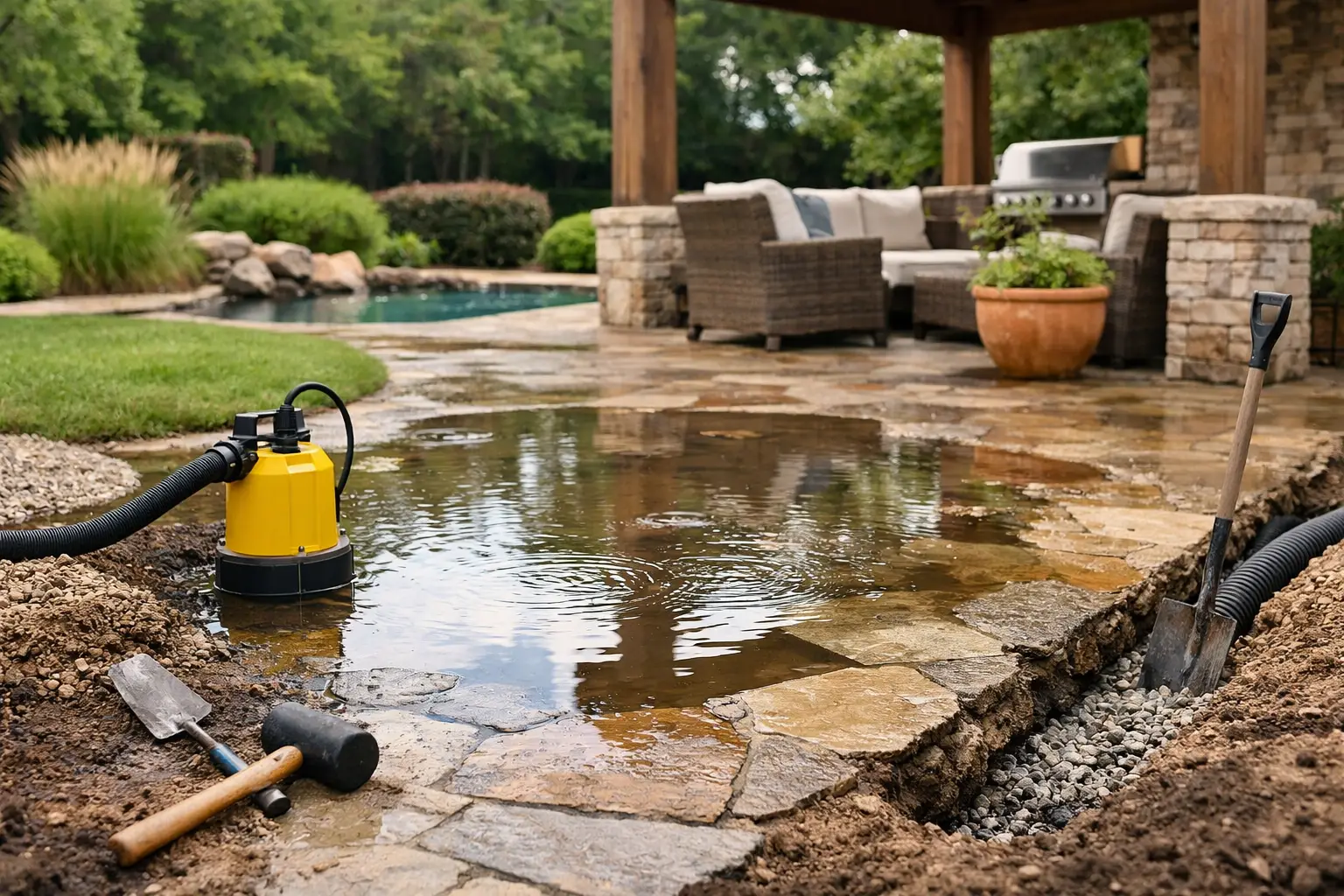
A patio should be the part of the yard you can use after a Texas rain, not the place where water sits for days. To prevent patio puddling, the concrete, surrounding soil, drainage path, and nearby landscaping all need to work together. A quick surface patch may hide the problem temporarily, but standing water usually points to a slope, settlement, or drainage issue that needs a real fix.
In Austin, heavy downpours can put a patio to the test fast. Water that has nowhere to go can stain concrete, create slick walking areas, weaken the base below the slab, and push moisture toward the house. The right solution depends on where the water starts, how much water reaches the patio, and whether the concrete is still structurally sound.
Why Patio Puddles Form
Most patio puddling comes down to one of three conditions: improper slope, low spots in the concrete, or runoff from the surrounding yard. Sometimes more than one issue is involved.
A properly installed concrete patio needs a consistent fall away from the home. As a working rule, concrete should generally slope about 1/8 to 1/4 inch per foot toward a planned drainage area. That is enough movement for water to shed without making the patio feel noticeably tilted underfoot. If a patio slopes toward the foundation, even a small amount, every storm sends water in the wrong direction.
Low spots are different. The overall patio may drain correctly, but one section holds water because the slab settled or was finished unevenly. This often shows up as a shallow bowl that stays wet after the rest of the patio dries. In Central Texas, shifting soils, poor base preparation, and erosion around slab edges can contribute to settlement over time.
The third issue is runoff. A patio can have good slope and still flood if roof water, a higher yard, or an adjacent driveway directs too much water onto it. Gutters that discharge beside the patio and landscape beds built too high against the slab are common causes.
Start With a Drainage Check
Before choosing a repair, look at the patio during or shortly after a rain. This is the most useful time to identify where water enters, where it stops, and whether it has a clear route away.
Watch the roofline first. A downspout dumping water directly beside a patio can overwhelm the surface in minutes. Also check whether the soil along the patio edge has washed away, leaving a gap where water can get under the concrete. Water below a slab can soften the supporting base and make future settlement more likely.
Then look at the larger yard grade. If the yard slopes down toward the patio, the patio is acting like a dam. Regrading nearby soil may be more effective than changing the concrete itself. The goal is to keep surface water moving around the patio or into a controlled collection point, not across the usable area.
A simple hose test can help when rain is not in the forecast. Run water from the high side of the patio and watch its path. Do not use this as the only test for major drainage work, since a hose does not always match the volume of a hard Austin storm, but it can reveal obvious low areas and reversed slope.
Use the Right Fix to Prevent Patio Puddling
There is no one repair that works for every patio. The best approach depends on whether the water problem is on the surface, below the slab, or coming from the surrounding property.
Correct the Concrete Slope
If a new patio is being planned, proper slope should be built into the project from the beginning. This is the most dependable way to protect the patio and foundation over the long term. The base must be compacted, forms must be set to the correct elevation, and the finish needs to maintain the intended drainage path.
For an existing patio with widespread reverse slope, replacement may be the practical answer. It costs more than a surface repair, but it allows the contractor to address base conditions, drainage layout, control joints, and final slope at the same time. This is often the right call when the slab is cracked, settled, or sending water toward the home.
In some cases, concrete leveling can raise settled sections and restore drainage without full replacement. This works best when the slab is otherwise in good shape and the issue is isolated settlement. It is not a cure for a patio that was originally built at the wrong pitch or one with extensive cracking and base failure.
Repair Isolated Low Spots
A small birdbath area in sound concrete may be corrected with a bonded concrete overlay or patch material rated for exterior use. Surface preparation matters. The area needs to be clean, stable, and properly profiled so the repair bonds to the existing slab instead of separating after a few weather cycles.
This option has limits. Thin patches can fail if the patio continues to move, and color or texture may not match the original concrete exactly. It is a sensible repair for a small, stable low spot, not a substitute for correcting settlement or poor overall drainage.
Add a Drain Where Water Must Cross the Area
A channel drain can be a good solution when water naturally reaches a patio from a higher area and cannot realistically be redirected. These drains are commonly installed where a patio meets a driveway, retaining wall, pool deck, or covered outdoor area. They collect runoff before it spreads across the concrete and direct it to a suitable discharge point.
Drain placement and outlet planning are critical. A drain that has no proper place to empty simply moves the puddle underground. It also needs enough slope, an accessible cleanout where appropriate, and a discharge location that does not create erosion or send water toward a neighbor's property.
Manage Roof and Landscape Runoff
Extending downspouts away from the patio is often one of the simplest improvements. Depending on the layout, water can be routed through buried pipe to a lower drainage area, a rock-lined swale, or another approved outlet. The system should be sized for the amount of roof water it handles, especially under large roof planes.
Landscape grading can also make a major difference. Soil should not be piled against the patio edge or above the slab level. Mulch, decomposed granite, and decorative rock can all interfere with drainage when installed too high. A well-planned landscape bed should support the drainage plan, not trap water against the concrete.
For yards with persistent runoff, a shallow swale, catch basin, or carefully placed dry creek bed may help move water through the landscape. These features can look natural, but they still need correct grade and a real destination for the water.
Protect the Slab From Future Water Damage
Once drainage is corrected, keep the patio in good condition. Clear leaves and soil from drain grates, inspect downspout connections, and make sure landscape material has not built up along the slab edge. After major storms, take a quick look at where water is moving. Small changes in the yard can create new drainage problems over time.
Concrete joints should also be monitored. Control joints are designed to help manage cracking, while expansion joints separate the patio from the house or other fixed structures. Open or damaged joints can allow water below the slab. The right sealant and maintenance plan depend on the joint type and condition, so avoid filling every crack or joint with the same product.
Sealing concrete can help reduce staining and make routine cleaning easier, but it will not fix standing water. Some coatings can even make a wet patio more slippery if the wrong product or finish is used. Drainage and slope come first; sealers are maintenance protection, not drainage repairs.
When to Bring in a Concrete and Landscape Contractor
Call for a professional assessment when puddling is widespread, water runs toward the foundation, the patio has noticeable settlement, or cracks are widening. Those signs may mean the problem goes beyond the top surface. A proper evaluation should consider the concrete condition, the base below it, roof drainage, yard grade, and the planned path for runoff.
For Austin-area homeowners, Texan Strong Builds can assess concrete and landscape conditions together instead of treating the patio as an isolated surface. That matters when the durable solution requires both correctly sloped concrete and a landscape drainage plan that keeps water moving away from the home.
Do not wait for a shallow puddle to become a foundation concern or a slipping hazard. A patio that drains the right way stays cleaner, lasts longer, and is ready to use when the weather clears.