
Landscape Contractor Austin Homeowners Trust
Need a landscape contractor Austin property owners can count on? Learn what to look for, what to expect, and how to plan durable outdoor work.
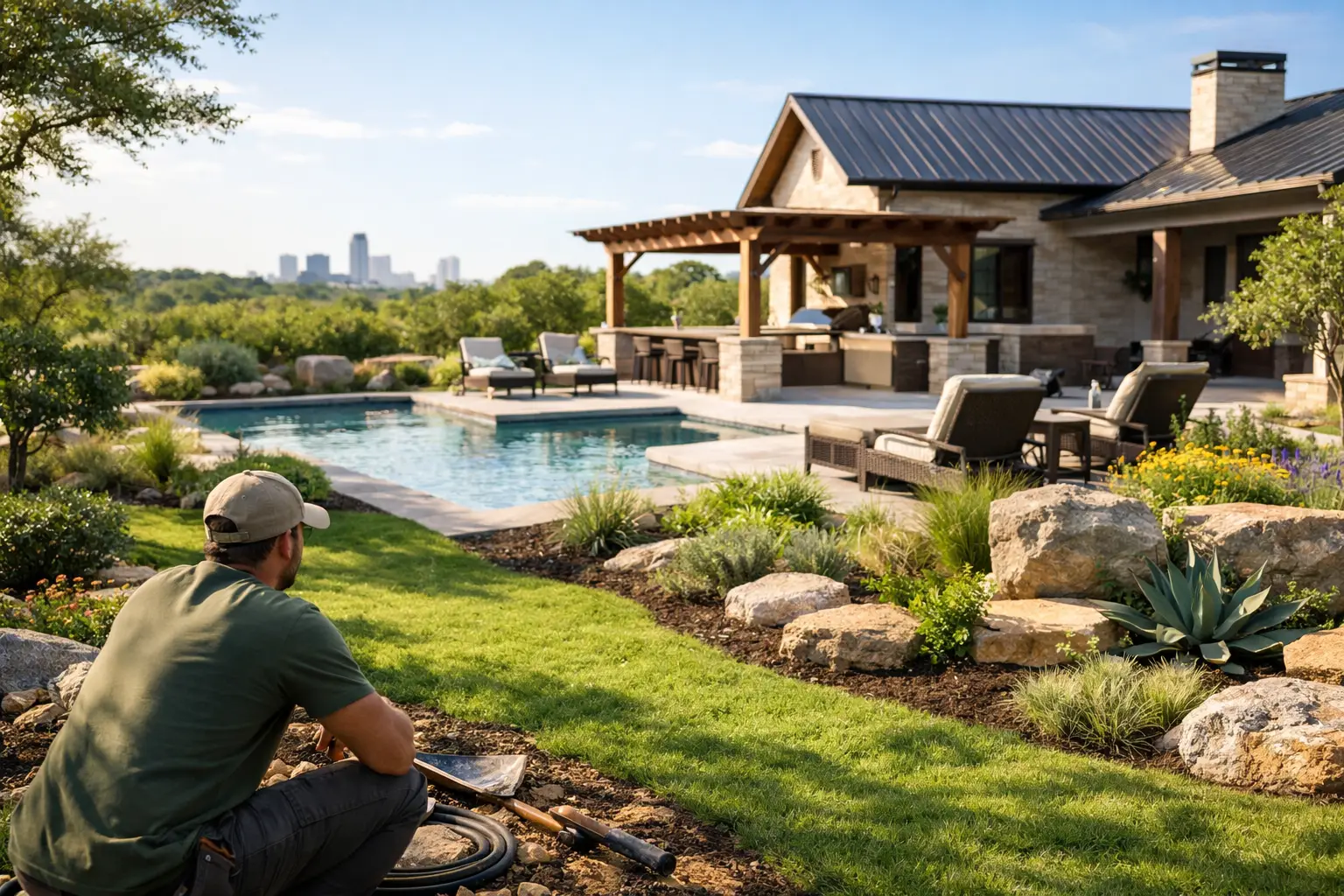
Austin yards do not stay easy for long. Between heat, hard rain, shifting soil, drainage issues, and fast-growing plants, outdoor spaces here need more than a basic cleanup. If you are hiring a landscape contractor Austin homeowners can rely on, you need someone who understands how the yard looks, how it drains, how it gets used, and how the work holds up over time.
That matters even more when a project includes both landscaping and concrete. A patio that sits too low can trap water. A walkway without proper grading can wash out adjacent beds. Fresh planting around poor hardscape work usually turns into rework. Good outdoor results come from planning the whole site, not treating each part like a separate job.
What a landscape contractor in Austin should actually handle
A lot of people hear "landscaping" and think mulch, sod, and plant selection. That is part of it, but on a real Austin property, the job is usually bigger. A capable contractor should be able to assess layout, drainage, grading, hardscape integration, planting conditions, and the long-term wear of the materials being installed.
For homeowners, investors, and property managers, that means the work should solve a practical problem as well as improve appearance. Maybe the yard needs cleaner edges and better curb appeal before listing a property. Maybe the backyard needs a usable patio and walk path instead of patchy grass and standing water. Maybe the front entry needs concrete and landscape improvements done together so the result feels finished instead of pieced together.
That is where trade overlap matters. When one contractor understands both concrete and landscape work, the project usually moves with fewer delays and fewer conflicts between crews. You are not left managing who handles grading, who protects the new flatwork, or who is responsible when runoff starts pooling near the house.
Why Austin landscaping is different
Austin is not a market where you can copy a design from another region and expect it to perform. The climate is tough on outdoor materials and plantings. Summer heat stresses turf and shallow-rooted plants. Intense storms test drainage quickly. Some neighborhoods deal with rocky soil, while others have movement in clay-heavy ground. Sun exposure can change drastically from the front yard to the back.
That means outdoor work has to be built for local conditions, not just for show. Plant choices need to make sense for the site. Concrete placement needs to account for slope and runoff. Bed placement, edging, and surface transitions need to hold up through weather swings and regular use.
A contractor who knows Austin should be talking about more than aesthetics. They should be asking where water goes, how the space gets used, what maintenance level you want, and whether the design fits the property instead of fighting it.
The best projects start with the site, not the wish list
Every property owner has a vision, but the yard has the final say. A backyard may seem perfect for an extended patio until grade and drainage reveal a different plan. A lush lawn might sound good until irrigation limits, shade patterns, and summer heat make it expensive to maintain. A clean modern look may still need practical features like retaining transitions, walkable access paths, or durable borders.
A good landscape contractor Austin clients can trust will start with a site read. That means looking at elevation, drainage flow, worn traffic paths, sun exposure, existing hardscape, and how close features sit to the house. It also means understanding your goals. Some clients care most about resale. Others want lower maintenance. Others need a yard that can handle kids, pets, tenants, or regular entertaining.
The right plan usually balances three things - appearance, function, and durability. If one gets ignored, the project often looks good for a short time and then becomes another repair item.
Where concrete and landscaping need to work together
This is where many outdoor projects either come together or start failing. Landscaping is not separate from hardscape. The two affect each other from day one.
Take a patio expansion. If the base prep is wrong or the slope is off, nearby planting beds can erode or flood. If a walkway cuts through a yard without proper transitions, water can collect along the edges and kill surrounding turf. If the yard gets landscaped before the concrete layout is finalized, finished areas may get torn up during installation.
When the same contractor can manage both scopes, decisions are made in the right order. Grade gets established before finish work. Drainage gets addressed before decorative improvements go in. Planting and concrete lines can be planned together so the space feels clean, usable, and built with purpose.
For many Austin properties, this combination is more efficient than hiring separate crews. It can also reduce the common problem of one trade blaming the other when something shifts, cracks, drains poorly, or fails early.
What to look for before hiring a landscape contractor Austin residents need
The first thing to look for is practical thinking. A contractor should be able to explain how the work will perform, not just how it will look. If the conversation never gets into grading, drainage, traffic flow, or material life span, you are not getting the full picture.
The second is scope clarity. Outdoor projects can expand fast. What starts as fresh landscaping can turn into edging, walkway replacement, patio work, or drainage correction once the site is reviewed. That is not always a bad sign, but it should be explained clearly. You want to know what is necessary, what is optional, and what should be phased if budget is a factor.
The third is local relevance. Austin-area work needs Austin-area judgment. Materials, layout choices, and installation methods should make sense for local weather and soil conditions. That includes knowing when a simpler, tougher solution is better than a more decorative one that will demand constant upkeep.
Finally, look at whether the contractor builds for the way you actually use the property. A rental property, a primary residence, and a high-end outdoor entertaining space all have different priorities. The right contractor will not force the same formula onto every yard.
Common mistakes property owners make
One of the biggest mistakes is focusing only on the visible finish. New sod, fresh mulch, and clean borders can make a big first impression, but they do not fix poor drainage or bad layout. If the underlying site issues remain, the surface improvements usually fade fast.
Another mistake is splitting the project between too many vendors. That can work on some jobs, but it often creates coordination problems. One crew finishes its part without accounting for the next phase, and the property owner ends up bridging the gap. Outdoor work tends to go better when responsibilities are clear and site planning is handled as one system.
Budgeting too tightly at the start is another common issue. Not because every project needs to be expensive, but because exterior work often uncovers conditions that need to be addressed for the finished result to last. It is better to build a sound first phase than to force a full cosmetic install over unresolved site problems.
A durable outdoor upgrade pays off longer
Good landscaping should make the property easier to use, easier to maintain, and stronger in appearance. On the right job, that can mean a cleaner front approach, a backyard that finally functions, or a rental property with tougher materials and lower upkeep. The value is not only in curb appeal. It is in reducing recurring problems and making the space work the way it should.
That is why many property owners in Austin look for a contractor who can handle more than planting alone. When concrete, grading, and landscape work are planned together, the result tends to be more stable and more complete. Texan Strong Builds works in that space because many properties need both structure and finish, not one without the other.
If you are planning outdoor work, start with the conditions on the ground and the way you want the space to function a year from now, not just how you want it to look next week. That is usually where the best decisions get made.