
Landscape Construction Near Me in Austin
Searching for landscape construction near me in Austin? Learn what to look for in a contractor, what affects cost, and how to plan a durable yard.
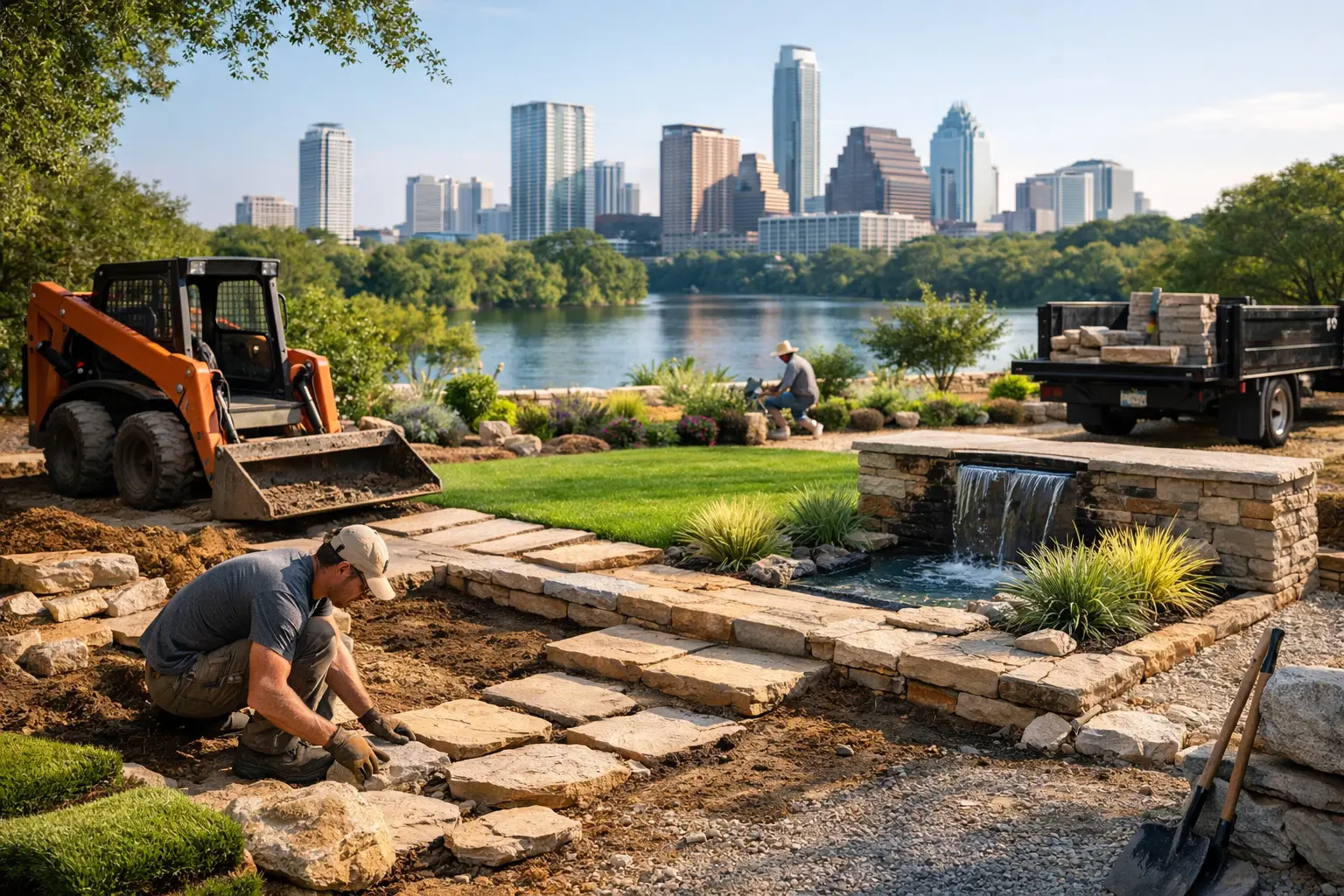
A search for landscape construction near me usually starts after the same moment - a yard feels unfinished, drainage starts causing problems, or an outdoor space no longer works for how the property is actually used. In Austin, that search needs to lead to more than a landscaping crew with a mower and a few plants. Real landscape construction involves grading, hardscape work, concrete, drainage, and installation choices that can handle Texas heat, rain, and long-term wear.
If you are hiring for a residential property, the goal is simple. You want a contractor who can build an outdoor space that looks clean, functions well, and holds up. That means focusing less on sales language and more on what the company can actually design, install, and finish on site.
What landscape construction really includes
Landscape construction is not just planting shrubs or laying mulch. It is the physical buildout of an outdoor space. Depending on the property, that can include patios, walkways, retaining features, grading, sod installation, planter beds, drainage solutions, concrete work, edging, and layout changes that improve how the yard performs.
For many Austin properties, the line between landscaping and hardscape is where the project succeeds or fails. A yard may need a concrete path before it needs decorative stone. A backyard may need drainage correction before it gets new sod. A front entry may need a properly formed walkway and border definition before new planting makes sense. If the structural parts are skipped, the cosmetic parts usually do not last.
That is why homeowners often get better results working with a contractor who understands both concrete and landscape installation. Those trades affect each other. Patio elevation changes drainage. Walkway placement changes bed layout. Soil movement affects flatwork. Treating each piece separately can create delays, mismatched finishes, and extra cost.
How to evaluate landscape construction near me
When you compare local contractors, the main question is not whether they can make a yard look better for a week. It is whether they can build it correctly for the next several years.
Start with scope. Some companies focus on maintenance and light planting. Others handle full outdoor construction. If you need a new patio, walkway, grading adjustments, and bed installation, make sure the contractor is equipped for real construction work and not just cosmetic updates.
Then look at how they talk about site conditions. In Austin, that matters. Soil movement, runoff, summer heat, and sudden rain can all affect performance. A qualified contractor should be able to explain how the yard drains, where water moves, what materials make sense, and how the layout will function after installation.
It also helps to ask how much of the work they self-perform versus subcontract. There is no one right answer, but you should know who is handling excavation, concrete, grading, and finish work. The more moving parts involved, the more important communication becomes.
Why Austin properties need a construction-first approach
Not every outdoor project in Central Texas needs major structural work, but many do. Austin yards often deal with compacted soil, sloping lots, exposed sun, and water that either disappears too fast or collects in the wrong place. A plan that looks good on paper can fail fast if it does not account for those conditions.
This is where a construction-first approach pays off. Before decorative details go in, the contractor should be thinking through elevation, surface transitions, traffic flow, and durability. A patio should sit at the right height relative to the house and yard. Walkways should direct movement naturally. Drainage should be solved before finish materials are installed. Planting areas should be shaped around how the hardscape functions, not the other way around.
That approach is especially useful for property owners who want one project instead of a series of fixes. If you install landscaping first and hardscape later, the second phase often tears up the first. Getting the build sequence right saves time and money.
The biggest cost factors in landscape construction
Pricing varies a lot because landscape construction is site-specific. Two yards with the same square footage can have very different requirements depending on slope, access, drainage, demolition needs, and material selection.
Concrete and hardscape work often drive a large part of the budget because they involve prep, formwork, base material, finishing, and labor. Drainage corrections can also add cost, but they are usually cheaper to address during the project than after water damage or erosion starts showing up. Site access matters too. A backyard with tight entry can require more manual labor and more time.
Material choice is another major variable. Standard broom-finish concrete, decorative concrete, gravel features, sod, stone edging, and built planting beds all carry different labor and installation demands. Higher-end materials can improve appearance, but they are only worth it if the base work underneath is done right.
A good contractor should be able to explain where the budget is going and where cutting corners will create problems later. Usually, the smartest place to spend is on prep, drainage, and structural installation. Those are the parts you do not want to redo.
Common project types homeowners ask for
A lot of clients start with one visible problem, then realize the yard needs a more complete solution. A cracked or undersized patio may lead to a redesigned backyard layout. Poor drainage near a walkway may reveal grading issues across the whole side yard. A plain front entry may need both concrete improvements and landscape framing to look finished.
In Austin, common requests include new patios for usable outdoor living, walkways that connect front and backyard areas, fresh sod and bed installation for curb appeal, and drainage work to manage runoff around foundations and low spots. Many projects also combine hard edges and soft landscaping so the yard looks intentional instead of pieced together.
That combination work is often where a contractor with both concrete and landscaping experience stands out. Instead of hiring one company for flatwork and another for planting, the property owner can keep the design, scheduling, and installation under one roof. Texan Strong Builds operates in that lane, which is useful for clients who want the job coordinated from the base layer up.
Red flags to watch before you hire
Some warning signs show up early. If a contractor gives a price without asking about drainage, slope, access, or the condition of existing surfaces, that is a problem. If the proposal is vague about what is included, that can create change orders and confusion later. If the conversation stays focused on appearance but avoids construction details, the job may be getting oversold.
Another red flag is a plan that skips site prep. Outdoor projects last or fail based on the hidden work. Base preparation, grading, compaction, and layout matter more than most customers realize. A clean finish means very little if the surface settles, drains poorly, or cracks early because the prep was rushed.
It is also worth paying attention to how realistic the contractor is. Good contractors do not promise that every yard will be maintenance-free or that every problem has a cheap fix. Some sites are straightforward. Others need trade-offs. A narrow side yard, major elevation change, or poor soil conditions can limit options. Straight answers are usually a good sign.
How to prepare for your project
Before you request quotes, get clear on how you want the space to function. Do you need a better patio for gathering, a more durable path from driveway to backyard, improved drainage, or a front yard that gives the property a cleaner look? Knowing the practical goal helps shape the right scope.
You should also think about priorities. If the full wish list exceeds the current budget, what matters most right now - structural corrections, usable surface area, or visual upgrade? In many cases, it makes sense to build the framework first and add decorative features later.
Photos help, but site conditions matter more than inspiration images. A contractor can take a look at what is actually happening on your property and tell you what is realistic for the space, soil, grade, and budget. That is where the real planning starts.
When people search for landscape construction near me, they are usually trying to solve a real property problem, not just buy a nicer-looking yard. The best results come from treating the project like construction from day one. If the grading is right, the concrete is sound, the drainage makes sense, and the finish work is built for Austin conditions, the space will do what it is supposed to do long after installation day is over.