
Is Stamped Concrete Slippery? What to Know
Is stamped concrete slippery? Learn what affects traction, how Austin weather changes the risk, and the finishes that make patios and walks safer for Texas…
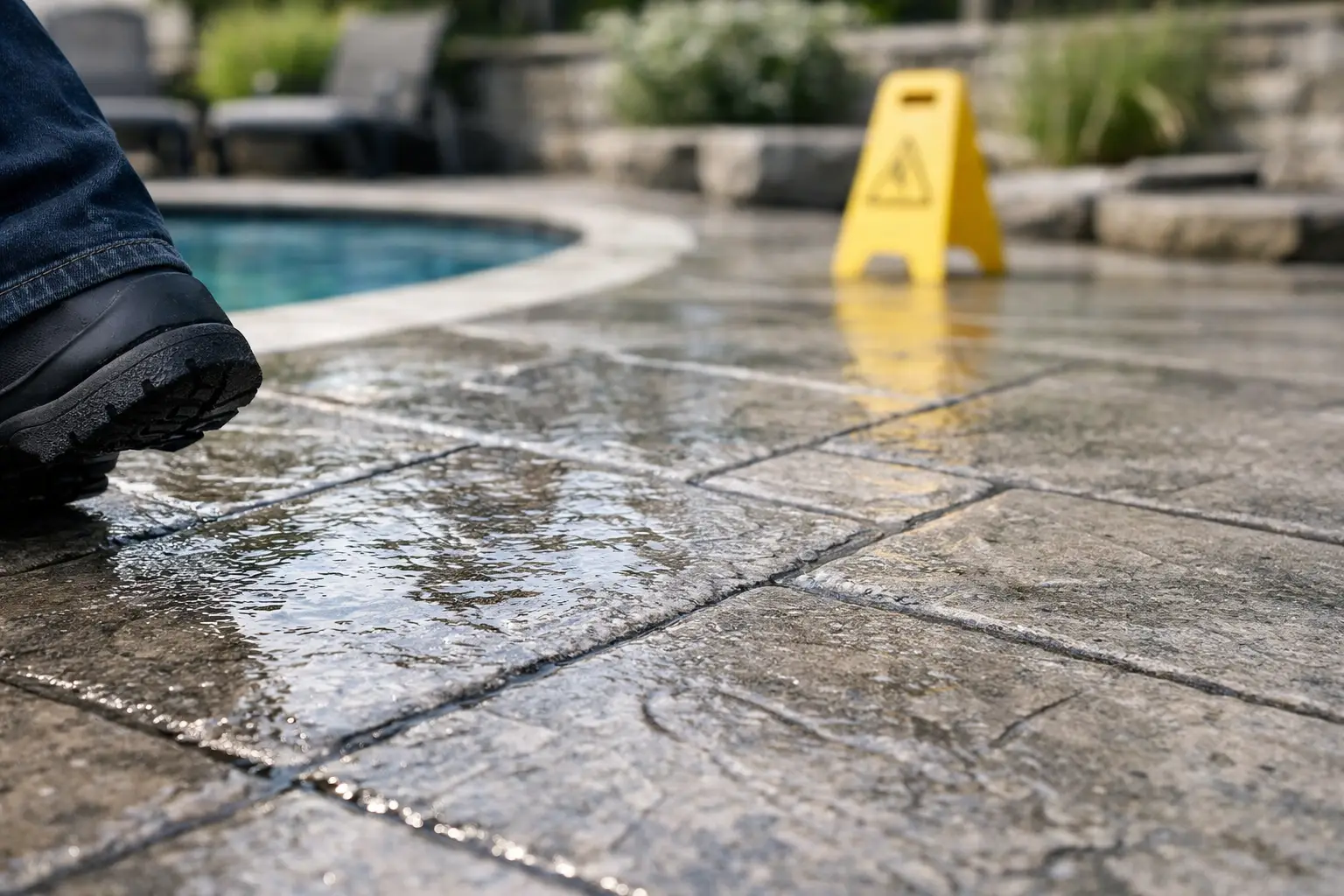
A stamped concrete patio can look like natural stone, brick, slate, or wood, but homeowners often ask one practical question before committing: is stamped concrete slippery? It can be, especially when wet, if the surface is finished too smooth or sealed with the wrong product. That does not mean stamped concrete is automatically unsafe. Proper texture, drainage, sealer selection, and routine cleaning make a major difference.
For Austin-area homes, that question deserves a straight answer. Patios, pool decks, walkways, and entry paths take on sudden rain, humidity, irrigation overspray, and summer foot traffic. A decorative concrete surface needs to look good, but it also needs to provide dependable footing where people actually walk.
Is Stamped Concrete Slippery When Wet?
Stamped concrete is generally more slippery when wet than broom-finished concrete, particularly if it has a glossy sealer. The stamping process creates a pattern and some surface relief, but not all patterns provide the same level of grip. A slate or rough stone pattern may offer more texture than a shallow brick pattern or a design that has been heavily troweled and sealed.
The risk is not limited to rainy days. Water from sprinklers, pool splash, wet shoes, condensation, or a shaded section of patio can create slick conditions. Algae and mildew can also form on surfaces that stay damp, making even a textured slab more slippery than it should be.
Dry stamped concrete is usually comfortable to walk on. The concern is how the surface performs when moisture is present. That is why the finish should match the location, not just the appearance a homeowner wants.
What Makes Stamped Concrete More or Less Slippery?
Traction starts with the concrete finish, but several jobsite decisions affect the final result.
The stamp pattern and surface texture
Deeper, more irregular patterns generally provide better footing than smooth, low-relief designs. A textured stone pattern can be a good fit for a patio or walkway because it adds visual character without creating large joints that collect dirt. A smooth pattern may be better suited for a covered porch or a low-traffic decorative area where rain exposure is limited.
Texture has a practical limit. Extremely deep texture can be difficult to sweep, uncomfortable for bare feet, and harder to keep clean. The goal is not the roughest possible surface. It is enough texture to create reliable traction while maintaining a usable outdoor living area.
The sealer used after installation
Sealer protects stamped concrete from staining, fading, moisture intrusion, and weathering. It also enriches the color and gives the pattern a finished look. But a high-gloss sealer can reduce traction, especially after repeated coats build up on the surface.
A contractor can use a lower-sheen sealer or add a compatible non-slip additive to the final coat. These additives create fine grit that improves grip without taking away the decorative appearance. They are especially worth considering around pools, outdoor kitchens, front entries, steps, and walkways that receive irrigation.
Adding grit is not a shortcut for poor planning. It works best as part of a complete finish system that includes appropriate texture and drainage.
Drainage and slab slope
Standing water is a slip issue and a concrete performance issue. A patio or walk should be pitched away from the house and toward a planned drainage area. Even a well-textured surface becomes less safe if water puddles in the same spots after every storm or sprinkler cycle.
In Central Texas, a hard rain can expose drainage mistakes quickly. Water should not run toward a foundation, collect at the bottom of steps, or drain across a primary walking path. Correct slope needs to be established when the concrete is formed and placed. It is far easier to build proper drainage into a new slab than to correct it after the fact.
Surface buildup and maintenance
Dust, pollen, tree debris, sunscreen, cooking grease, leaf tannins, and algae all affect traction. This is common on outdoor concrete, particularly under trees or near landscaped beds. A patio may not feel slippery when new, then become slick months later because the finish has not been cleaned.
Regular sweeping and occasional washing help keep the texture open. Use a cleaner appropriate for sealed concrete and avoid harsh methods that can damage the sealer or leave residue behind. If algae is recurring, look at the cause as well: excessive shade, poor drainage, leaking irrigation heads, or overgrown landscaping may need attention.
Where Should Homeowners Plan for Extra Traction?
Some areas call for a more cautious finish choice than others. Around a pool, grip should be a top priority because bare feet and constant water are part of daily use. On steps, even a small amount of moisture can become a problem, so defined edges and a traction-focused sealer are smart investments.
Front walks and entry landings also deserve attention. Guests may arrive during a storm, and people are less likely to notice a slick surface when carrying packages or moving quickly to the door. Side-yard paths can be another trouble spot because they often receive less sun and can stay damp longer than an open patio.
For a covered patio that is protected from direct rain, a homeowner may have more flexibility with a smoother or more decorative finish. Even then, water can still enter from the sides, be tracked in from the yard, or come from a nearby grill or sink area. The use of the space should guide the finish selection.
How to Make a Stamped Concrete Surface Safer
The best time to address slip resistance is before the concrete is poured. Choose a pattern with practical texture, plan the slope, and identify areas exposed to water. If the project includes landscaping, consider where downspouts, irrigation zones, planting beds, and turf transitions will direct moisture.
After installation, select a sealer based on the surface's use. A glossy finish may be appropriate for a protected decorative patio, while a satin or lower-gloss finish with a non-slip additive is often the better call for walks, entries, and pool-adjacent areas. A good contractor should explain that difference before sealing, not after the surface becomes slick.
Existing stamped concrete can often be improved as well. If the sealer is worn, overly glossy, or coated with years of buildup, the surface may be cleaned, prepared, and resealed with a traction additive. The right repair approach depends on the condition of the slab, the current sealer, and whether moisture or drainage problems are contributing to the issue.
Do not assume every slippery patio needs to be torn out. Sometimes the fix is maintenance and resealing. In other cases, poor drainage, improper slope, or a failing surface calls for more substantial work. An on-site evaluation is the right way to separate a finish issue from a concrete issue.
Stamped Concrete Versus Other Outdoor Concrete Finishes
Broom-finished concrete is usually the strongest option for basic wet-weather traction. Its rough, linear texture is practical, durable, and common for sidewalks and driveways. The trade-off is appearance. It does not offer the decorative detail of stamped concrete.
Exposed aggregate can also provide strong traction and a more decorative look, though it has a different style and can feel rough under bare feet. Pavers have natural joint lines and texture, but they require a different installation system and may shift or settle if the base is not built correctly.
Stamped concrete sits in the middle. It can deliver a high-end appearance with a continuous, easy-to-clean surface, but it requires smarter finish decisions in wet areas. It is a good option for homeowners who want the look of stone or brick without the individual-unit maintenance of pavers.
Is Stamped Concrete a Good Choice for Austin Homes?
Yes, stamped concrete can be a solid choice for Austin patios, walkways, and outdoor living spaces when it is installed for local conditions. The heat, sun, sudden storms, and expansive soils in this area place real demands on exterior concrete. A durable project needs proper base preparation, reinforcement where appropriate, control joints, drainage planning, and a finish selected for the way the space will be used.
A decorative patio should not force homeowners to choose between curb appeal and safe footing. With the right pattern, sealer, and water management, stamped concrete can provide both. For an Austin project, Texan Strong Builds can help match the concrete finish and surrounding landscape plan to the conditions on the property, so the finished space works as hard as it looks.