
Front Yard Landscaping Guide for Austin Homes
Use this front yard landscaping guide to plan durable, water-wise curb appeal for Austin homes, from drainage and concrete walks to smart plant choices.
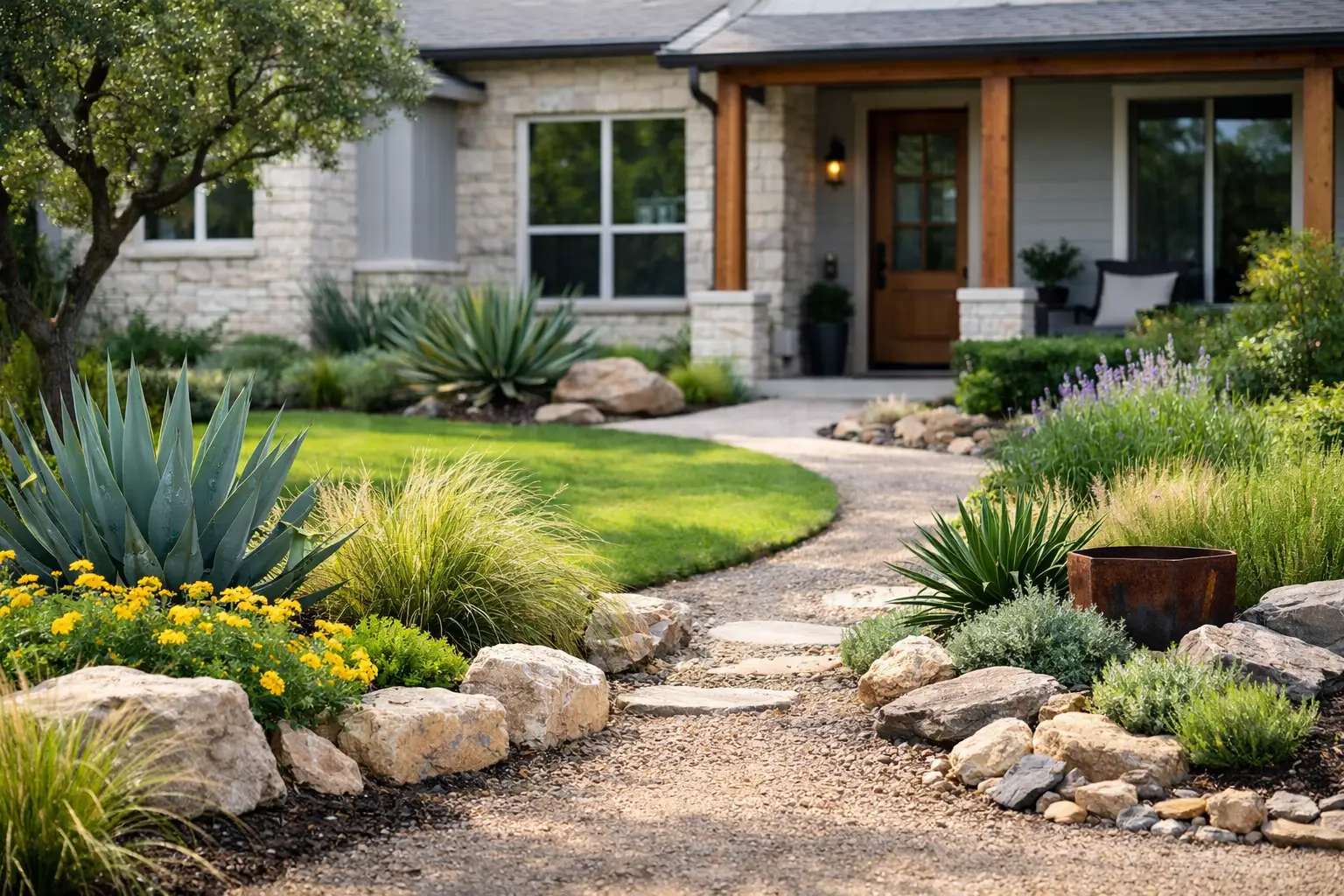
A good front yard has to do more than look clean from the street. In Austin, it needs to handle hard sun, sudden downpours, compacted soil, and daily use without becoming a high-maintenance project. This front yard landscaping guide focuses on the decisions that make curb appeal last: drainage, access, hardscape, plant selection, and a layout that fits the property.
Start With How the Front Yard Works
Before choosing gravel color or flowering plants, look at how water and people move through the space. Walk the yard after a rain if possible. Note where water pools, where soil washes out, and whether downspouts discharge near the foundation, driveway, or walkway. A front yard that stays wet in one area and dry in another needs a plan built around those conditions, not one generic plant palette.
Access matters just as much. The path from driveway to front door should be clear, stable, and wide enough for normal traffic. Guests should not have to step through planting beds, over loose stone, or across uneven turf to reach the entry. If the current route feels awkward, a properly placed concrete walkway often makes a bigger difference than adding more plants.
Also consider the work the yard must support. A rental property may need lower-maintenance materials than an owner-occupied home. A house on a busy street may benefit from a stronger entry border and simple planting design that reads well from a distance. A sloped lot may need grading, retaining, or drainage work before cosmetic improvements begin.
Build the Front Yard Landscaping Plan From the Ground Up
The best front yard projects are completed in the right order. Fixing drainage after installing new beds means tearing out finished work. Adding a walk after landscaping often creates unnecessary damage and extra cost. Start with the permanent elements, then build the landscape around them.
Grade for Drainage, Not Just Appearance
Austin clay soils can become hard and dry for long stretches, then shed water quickly during a heavy storm. That runoff can cut channels through mulch, push gravel into walks, and collect against concrete or foundations. Proper grading directs water away from the house while avoiding a new problem at the sidewalk, driveway, or neighboring property.
Some yards need only minor soil adjustment and better downspout routing. Others need swales, catch basins, French drains, or a rebuilt planting-bed edge to control runoff. The right approach depends on the lot slope, roof drainage, soil condition, and existing hardscape. A contractor should assess these conditions before quoting a landscape design based only on appearance.
Get Walkways and Concrete Right
Concrete provides structure in a front yard. It creates a dependable route to the entry, defines the landscape layout, and cuts down on dirt tracked into the house. Straight walks fit some homes well, but a gentle curve can improve circulation when the front door sits off-center or the driveway approach is awkward.
Thickness, base preparation, slope, and control joints all matter. Decorative finishes can add curb appeal, but a basic broom-finish concrete walkway is often the practical choice for homeowners who want traction, durability, and easy maintenance. Concrete borders can also contain gravel and planting beds more effectively than loose edging, especially where runoff is a concern.
Do not crowd a new walkway with plants that will overgrow it in two years. Leave room for mature plant size, irrigation checks, and easy access for maintenance. The same applies around driveways, mailboxes, gates, and utility equipment.
Define Beds With Purpose
Large, undefined beds usually become weed-prone areas that require constant mulch and trimming. Instead, use planting beds to frame key areas: the front entry, house corners, a sign or mailbox, or the edge where lawn meets hardscape. Clean lines make a front yard look organized even when the planting design is simple.
Bed depth should match the plants going into it. A shallow strip against the house works for groundcovers and small accents, but it will not support a layered design with shrubs and ornamental grasses. On many properties, deeper beds near the foundation and narrower beds along paths create a better balance between greenery and open space.
Choose Plants That Can Handle Austin Conditions
A healthy landscape is not one that looks good only in the first month after installation. Choose plants based on sun exposure, drainage, mature size, and ongoing water needs. The front of a west-facing home may receive intense afternoon heat that quickly stresses plants suited for shade or regular moisture.
Native and adapted plants can reduce water demand once established, but they are not maintenance-free. New plantings still need consistent watering while roots develop. Mulch helps conserve moisture and moderate soil temperatures, but it should be kept back from plant stems and the foundation.
For many Austin front yards, a practical mix includes drought-tolerant shrubs, ornamental grasses, flowering perennials, and a few focal-point plants near the entry. Texas sage, yaupon holly, rosemary, lantana, salvia, esperanza, agave, and sotol can work well in the right location. Plant choice should still be site-specific. A plant that handles full sun may struggle in low spots that stay saturated after storms.
Avoid designing every bed around seasonal color. Annual flowers can be useful near a front porch or address marker, but relying on them throughout the yard creates more watering, replacement, and cleanup. Structure should come from evergreen shrubs, durable grasses, and well-placed hardscape. Seasonal color should be the finishing layer, not the whole plan.
Use Mulch, Gravel, and Turf Carefully
Ground cover choices affect maintenance, drainage, and the final look. Mulch is useful around shrubs and trees because it protects soil and supports moisture retention. Organic mulch breaks down over time, which improves soil but means it must be refreshed periodically. In sloped areas, choose a mulch that is less likely to float or wash away during heavy rain.
Gravel can create a clean, low-water look, especially around modern homes or in narrow side sections. It also works well as a transition between concrete and planting beds. However, gravel is not automatically low maintenance. Leaves, weeds, and soil can accumulate in it, and loose stone can migrate into sidewalks or driveways without solid edging.
Turf has a place when the yard needs open play space, pet space, or a traditional lawn appearance. The trade-off is water use and routine mowing. Reducing lawn area with larger beds, walkways, or defined gravel zones can lower maintenance without making the front yard feel bare. Keep enough open space to make the property look balanced and to maintain clear sightlines from the street.
Plan Lighting and Irrigation Early
Landscape lighting is easiest to install before beds are fully planted and mulched. A few well-placed fixtures can improve entry safety and highlight a walkway, tree, or architectural feature. Avoid over-lighting the entire yard. The goal is usable visibility and a finished appearance, not a runway.
Irrigation should match the design. Spray heads are not ideal for every bed, particularly where shrubs, gravel, and narrow strips are involved. Drip irrigation often delivers water more efficiently to plant roots and keeps hardscape cleaner. Zones should separate plants with different water needs rather than treating the entire front yard the same.
Check that irrigation does not spray the house, sidewalk, driveway, or street. Overspray wastes water and can stain concrete over time. After installation, adjust the system as plants grow and seasons change.
Set a Realistic Budget and Project Scope
The largest costs in a front yard are usually site preparation, drainage correction, concrete work, retaining solutions, and irrigation changes. Plants and mulch can be adjusted to fit a budget, but cutting corners on the base work can create problems that cost more later.
A phased project can make sense when the overall plan is clear. For example, complete grading, drainage, and the main concrete walkway first. Then install bed edging and irrigation. Planting and lighting can follow when budget allows. What matters is avoiding temporary work that has to be removed for the next phase.
For homeowners who want one coordinated scope, Texan Strong Builds can combine concrete and landscape work so the walkway, grading, beds, and finished planting layout are planned to work together. That approach helps prevent the common problem of hiring separate crews that each address only one piece of the front yard.
A Strong Front Yard Holds Up After Installation
Fresh mulch and new plants can make almost any yard look improved for a short time. Long-term curb appeal comes from the less visible work: proper slopes, solid concrete, defined edges, appropriate plants, and enough room for everything to mature. Start with the conditions already on the property, make the permanent improvements first, and choose finishes that suit the way the home will actually be used.