
Driveway Materials That Hold Up in Austin
Compare driveway materials for Austin homes, from concrete and pavers to gravel, with practical guidance on heat, drainage, cost, and maintenance needs.
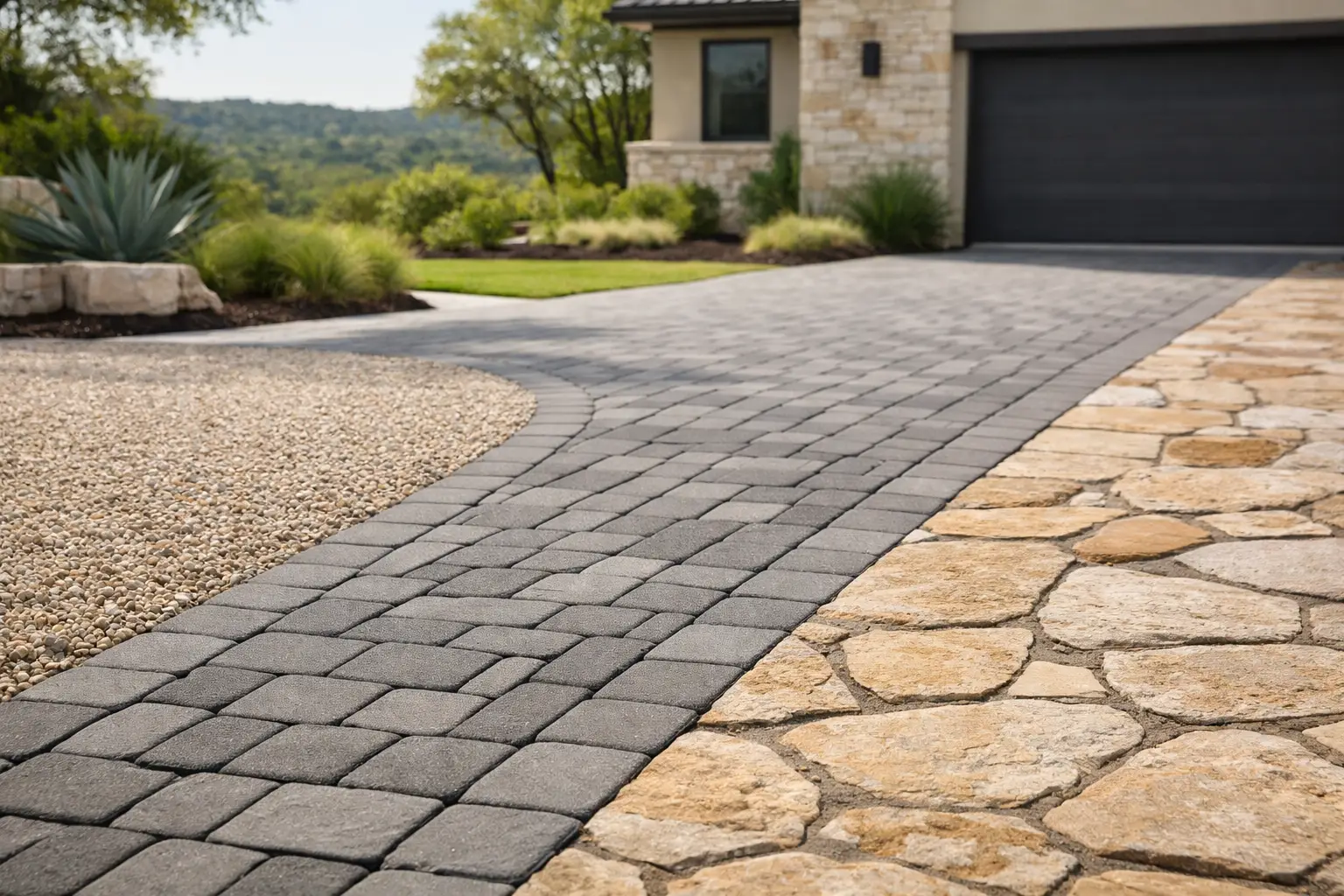
A driveway has to carry more than vehicles in Central Texas. It has to handle intense sun, sudden downpours, shifting clay soil, and daily use without becoming an eyesore or a maintenance problem. The right driveway materials depend on your property’s grade, drainage, traffic, budget, and the look you want at the street.
For many Austin homeowners, concrete is the practical first choice. That does not make it the right answer for every site. Pavers, gravel, asphalt, and permeable systems all have a place when they are matched to the ground conditions and installed with the proper base.
Start With Austin Site Conditions
Material selection starts below the surface. Much of the Austin area has expansive clay soil, rocky ground, or a mix of both. Clay can swell when it is wet and shrink during dry periods, which puts stress on a rigid driveway slab. Rocky sites can require more excavation and base preparation before any surface material goes down.
Drainage matters just as much. A driveway should move water away from the garage, home foundation, and neighboring property. Water that sits along slab edges can soften subgrade soils, contribute to settlement, and shorten the life of the installation. In many cases, the right slope, base depth, and drainage plan matter more than choosing the most expensive finish.
Think about how the driveway will actually be used. A two-car household with occasional guests has different needs than a property with work trucks, trailers, frequent deliveries, or a long drive serving a rental property. Heavier use calls for a stronger base and, often, a thicker concrete section.
Concrete Driveways: Built for Daily Use
Concrete remains one of the best all-around choices for Austin-area homes. It provides a clean appearance, handles regular vehicle traffic well, and works with a wide range of home styles. A properly placed concrete driveway can last for decades with reasonable care.
The finish can stay simple and functional with a broom texture, which provides traction and suits most residential properties. For more curb appeal, homeowners can choose exposed aggregate, integral color, decorative borders, or stamped concrete. Decorative work can improve the look of the front yard, but it also adds cost and should be selected with long-term maintenance in mind.
Concrete is not crack-proof. Small cracks can occur as concrete cures, settles, and responds to changes in soil and temperature. Proper control joints help manage where cracking occurs, while a well-compacted base and correct thickness help reduce movement-related damage. Poor drainage, thin slabs, and inadequate base work are common reasons a driveway fails early.
For a standard residential drive, concrete usually offers the best balance of strength, appearance, and maintenance. It is especially well suited to homeowners who want a permanent surface that is easy to clean and does not need regular resurfacing. The trade-off is that repairs to a large cracked or settled slab can be more visible than repairs to modular pavers.
When Concrete Makes the Most Sense
Concrete is a strong fit for flat or moderately sloped driveways, homes with regular vehicle use, and properties where a clean, low-maintenance appearance is the priority. It also pairs well with concrete walkways, patios, retaining features, and landscape borders, helping the exterior feel planned rather than pieced together.
Pavers and Permeable Driveway Systems
Concrete pavers offer a more segmented, custom look than a poured slab. Because they are individual units installed over a prepared base, pavers can be removed and reset if localized settling occurs. This can be useful on properties with soil movement or where underground utility access may be needed later.
Pavers come in many colors, patterns, and edge treatments. They can complement traditional stone homes, modern builds, and landscaped entry areas. The finished surface needs solid edge restraints and a properly compacted base. Without those details, pavers can shift, spread, or develop low spots over time.
Permeable pavers are designed to allow water to move through joints and into a gravel base below. They can help manage runoff on certain sites, but they are not a shortcut around drainage design. The base must be engineered for the soil, traffic load, and expected water flow. They also need periodic cleaning to keep joints from clogging with dirt and debris.
Pavers generally cost more upfront than plain concrete. They make sense when appearance, repair flexibility, or stormwater management justifies the added investment. For a long driveway used by multiple vehicles every day, the cost can add up quickly.
Gravel and Asphalt: Where They Fit
Gravel is often the most affordable driveway surface at the start of a project. It works well for long rural drives, secondary parking areas, and properties where a more natural appearance fits the landscape. It is also easy to extend when the parking area needs to grow.
The downside is maintenance. Gravel shifts under tires, migrates into landscape beds, and can wash out during heavy rain if the driveway is not shaped and drained correctly. A stable gravel drive requires base material, compaction, edging in many cases, and periodic regrading. Loose gravel is usually not the best choice for a steep residential driveway or a front entry where a polished curb appeal is the goal.
Asphalt provides a dark, smooth driving surface and can be less expensive than concrete in some markets. It is flexible, which can help it tolerate minor ground movement. However, Austin heat can make asphalt softer, and the surface typically needs sealcoating and repair over time. Oil stains, edge breakdown, and sun exposure can also affect its appearance.
Asphalt can be a sensible option for larger drive areas where initial budget is a major factor. It is less commonly chosen for high-end residential entryways where homeowners want the long-term look and lower upkeep of concrete or pavers.
How to Choose Driveway Materials for Your Property
The best driveway material is the one that fits the site rather than the one that simply looks good in a photo. Start with the expected load. Passenger vehicles place far less stress on a driveway than loaded trucks, RVs, dumpsters, and trailers. If heavy vehicles will use the drive, plan for appropriate thickness and base preparation from the beginning.
Next, look at water. If your current driveway has puddles, erosion along the edges, water entering the garage, or runoff toward the foundation, solve those issues before installing a new surface. This may involve changing the slope, installing drainage, rebuilding the base, or adding a swale or landscape solution that directs water safely away.
Then consider maintenance honestly. Concrete needs occasional cleaning and joint attention. Pavers may need joint sand refreshed and individual units reset. Gravel requires routine grading. Asphalt needs periodic sealing. Lower initial cost does not always mean lower ownership cost over the life of the driveway.
Finally, consider the rest of the exterior. A new driveway often creates an opportunity to improve walkways, planting beds, drainage routes, lighting areas, or a front patio at the same time. Coordinating hardscape and landscaping work can produce a better finished property and prevent newly installed surfaces from being disturbed later.
Installation Details That Protect the Investment
Even premium materials will underperform if the preparation is poor. The work should begin with excavation to the right depth, removal of weak material where needed, and compaction of a stable base. The driveway must be graded for drainage before concrete, pavers, gravel, or asphalt are installed.
For concrete, correct forming, reinforcement where specified, joint layout, finishing, and curing all affect performance. The driveway should also tie into the street, garage, and adjacent walkways without creating trip points or places where water gets trapped. On sloped sites, runoff control and surface traction deserve extra attention.
This is where experienced local installation matters. Texan Strong Builds evaluates the driveway as part of the whole exterior, including grade, drainage, concrete work, and the surrounding landscape, so the finished project is built for Austin conditions instead of just installed over them.
A driveway should make arriving home easier, keep vehicles supported, and add real value at the curb. Choose the material after the site has been assessed, then invest in the base and drainage work that gives it a fair chance to last.