
Does Concrete Expand and Contract?
Does concrete expand and contract? Learn how heat, moisture, and Texas weather affect slabs, patios, and driveways - and what prevents damage.
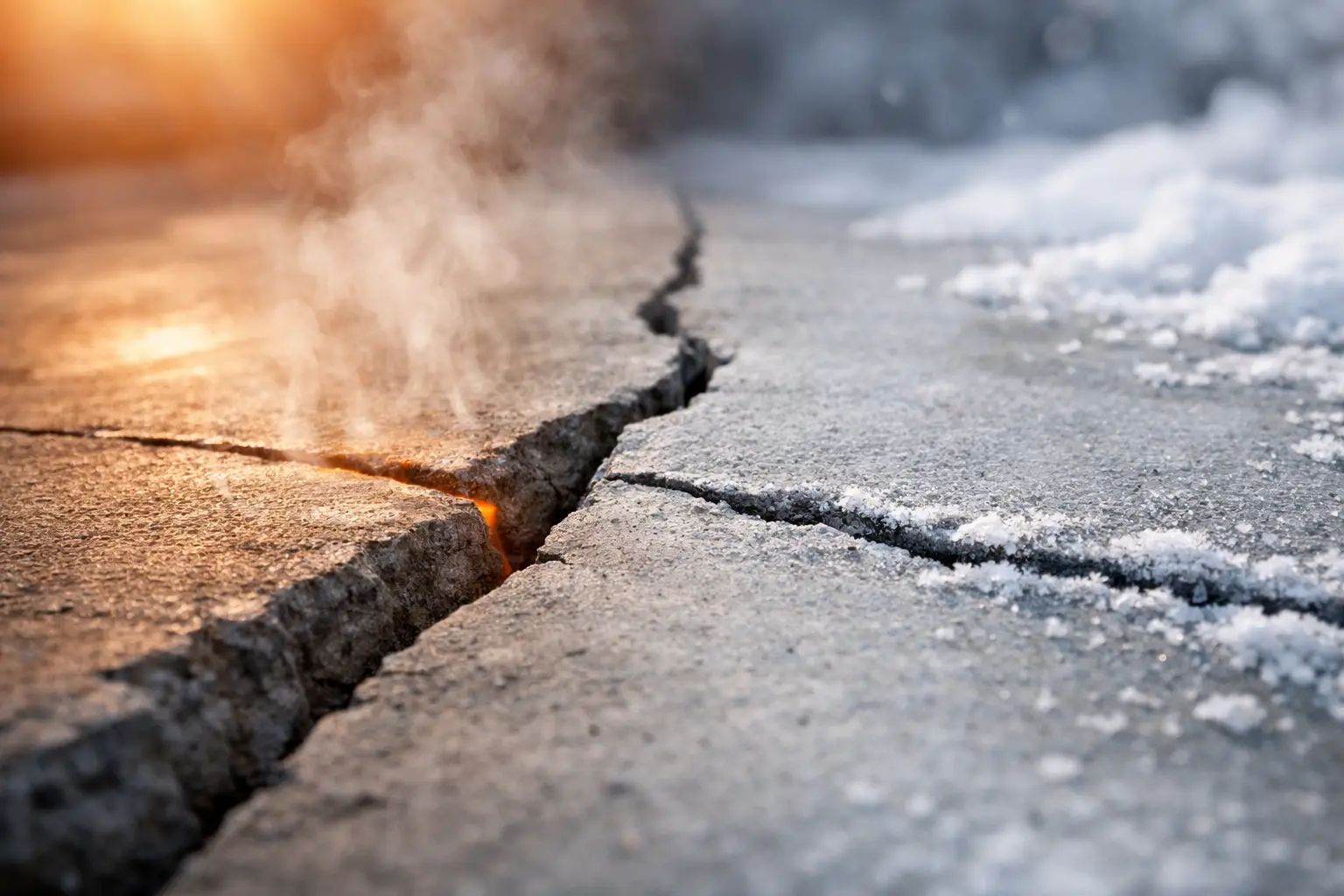
A driveway that looks fine in the morning can show a new hairline crack after a week of Austin heat. That usually leads to the same question: does concrete expand and contract? Yes, it does. Concrete moves with temperature changes, moisture shifts, and normal curing behavior, and that movement is one of the main reasons cracks, joint issues, and surface stress show up over time.
That does not mean concrete is failing. It means concrete is doing what concrete does. The real issue is whether the slab was designed, poured, and jointed in a way that allows that movement to happen without turning into larger structural or cosmetic problems.
Why concrete expands and contracts
Concrete is a rigid material, but it is not a perfectly static one. When temperatures rise, the slab expands slightly. When temperatures drop, it contracts. Those changes may seem minor, but across a driveway, patio, walkway, or pool deck, even small movement adds up.
Moisture also plays a role. Concrete can absorb water and then dry out again, which causes subtle dimensional changes. On top of that, concrete shrinks as it cures. That early shrinkage is different from thermal expansion and contraction, but homeowners often lump it all together because the end result can look the same - cracks, separation, or uneven stress.
In Central Texas, this matters even more because outdoor concrete takes a beating. Summer heat, strong sun exposure, dry spells, heavy rain, and shifting soils all put pressure on slabs. A patio in full sun will not behave exactly like a shaded walkway, and a driveway over active clay soil has different risks than a small backyard pad.
Does concrete expand and contract more in Texas?
Concrete itself follows the same basic rules anywhere, but Texas conditions make the movement more noticeable and the consequences more severe. In the Austin area, heat is a major factor. Long stretches of high temperatures can cause slabs to expand, especially on surfaces with direct sun exposure for most of the day.
Then there is the soil. Much of the region deals with expansive clay, which swells when it gets wet and shrinks when it dries out. That means the concrete is not only moving on its own - the ground under it may be moving too. When slab movement and soil movement stack together, that is when homeowners start seeing wider cracks, lifted sections, or edges that no longer sit flush.
This is why proper site prep matters as much as the mix itself. Good concrete work is not just about pouring and finishing. It starts with subgrade preparation, thickness, reinforcement, drainage planning, and joint placement.
What kind of movement is normal?
Some movement is expected. A concrete slab is not supposed to stay frozen in place forever without reacting to weather. Small hairline cracks can happen even in quality work, especially as the concrete cures and adjusts. The goal is not to promise zero cracking. The goal is to control where and how that cracking happens.
That is where control joints come in. These joints create planned weak points that encourage the concrete to crack in a more predictable location instead of randomly across the surface. Expansion joints serve a different purpose. They help separate slabs from fixed structures or adjacent sections so there is room for movement.
Without those details, concrete tends to make its own decisions. And concrete is rarely polite about it.
How expansion and contraction cause damage
When concrete expands and has nowhere to go, pressure builds. That pressure can lead to surface cracking, spalling, edge stress, or pushing against nearby structures. When it contracts, gaps can open up, joint sealant can fail, and unsupported sections may become more vulnerable.
On a driveway, this may show up as cracks running across the slab or separation near the garage. On a patio, you might see shifting along the house line, loose borders, or uneven transitions into landscaped areas. On walkways, repeated movement can create trip hazards if one section lifts or settles differently from the next.
Water often makes things worse. Once cracks or joint failures allow moisture in, the soil underneath can soften, erode, or swell depending on conditions. That creates a cycle where movement leads to water intrusion, and water intrusion leads to more movement.
Does concrete expand and contract enough to crack?
Yes, it can. But the better answer is that movement contributes to cracking, while poor installation usually decides how bad that cracking gets. A well-built slab can handle normal expansion and contraction much better than one poured over weak base material or finished without proper joints.
Thickness matters. Reinforcement matters. Base compaction matters. Drainage matters. Joint spacing matters. If any of those pieces are off, the slab has fewer ways to absorb normal stress.
That is why two patios poured in the same neighborhood can age very differently. One may hold up for years with only minor cosmetic wear, while the other starts showing serious problems far too early.
How contractors account for concrete movement
A good concrete installation plans for movement before the truck ever arrives. That starts with evaluating the site. Sun exposure, slope, drainage patterns, nearby structures, tree roots, and soil conditions all affect how the slab should be built.
The next step is base preparation. Concrete needs a stable, properly compacted foundation. If the subgrade is inconsistent or too soft, the slab is already at a disadvantage. Reinforcement may then be added depending on the application. Reinforcement does not stop concrete from cracking, but it can help hold the slab together and reduce the impact of stress.
Joint layout is one of the biggest factors. Control joints should be placed at the right intervals and cut to the proper depth. Expansion joints should be used where the slab meets a structure, another slab, or an area where independent movement is expected. Drainage also has to be handled correctly so water does not collect around or beneath the concrete.
For outdoor spaces in Austin, this practical approach matters. Whether the project is a driveway, patio, walkway, or larger hardscape layout, the concrete has to be built for real field conditions, not ideal lab conditions.
Signs your concrete movement may be a problem
Not every crack means you need to replace the slab. But some signs deserve a closer look. If cracks are widening, one side of the slab is sitting higher than the other, or sections are pulling away from the house, that points to more than ordinary surface movement.
You should also pay attention to pooling water, crumbling edges, broken joint material, and repeated cracking in the same area after repairs. Those are often clues that the issue involves drainage, subgrade movement, or installation problems rather than simple age.
If the slab is near landscaping, irrigation can also affect performance. Overwatering next to concrete can keep soil too active, while poor grading can direct runoff where it should not go. That is one reason exterior improvement projects benefit from looking at the whole site, not just the slab by itself.
Can you prevent all expansion and contraction issues?
No. Concrete is always going to move. No contractor can honestly promise otherwise. What you can do is reduce the chances of that movement turning into expensive damage.
That starts with proper installation and continues with basic maintenance. Keeping joints sealed where appropriate, managing drainage, avoiding major water swings around the slab, and addressing small issues early can all help. So can making sure adjacent landscaping does not create unintended moisture problems.
For homeowners and property managers, the practical takeaway is simple: movement is normal, but unmanaged movement is where trouble starts. If you are planning a new patio, driveway, or walkway, the build quality matters more than the sales pitch. And if you already have cracking or slab shift, waiting usually gives the problem more time to spread.
At Texan Strong Builds, that is the reason concrete work has to be approached with local conditions in mind. In Austin, durability comes from planning for heat, water, and soil movement from day one, not pretending those factors will not matter.
Concrete is strong, but it is not motionless. The better you account for that reality, the longer your outdoor surfaces will hold their shape, function, and finish.