
Concrete Patio Versus Pavers in Austin
Concrete patio versus pavers in Austin comes down to cost, upkeep, style, and heat. See which option fits your yard and budget best.
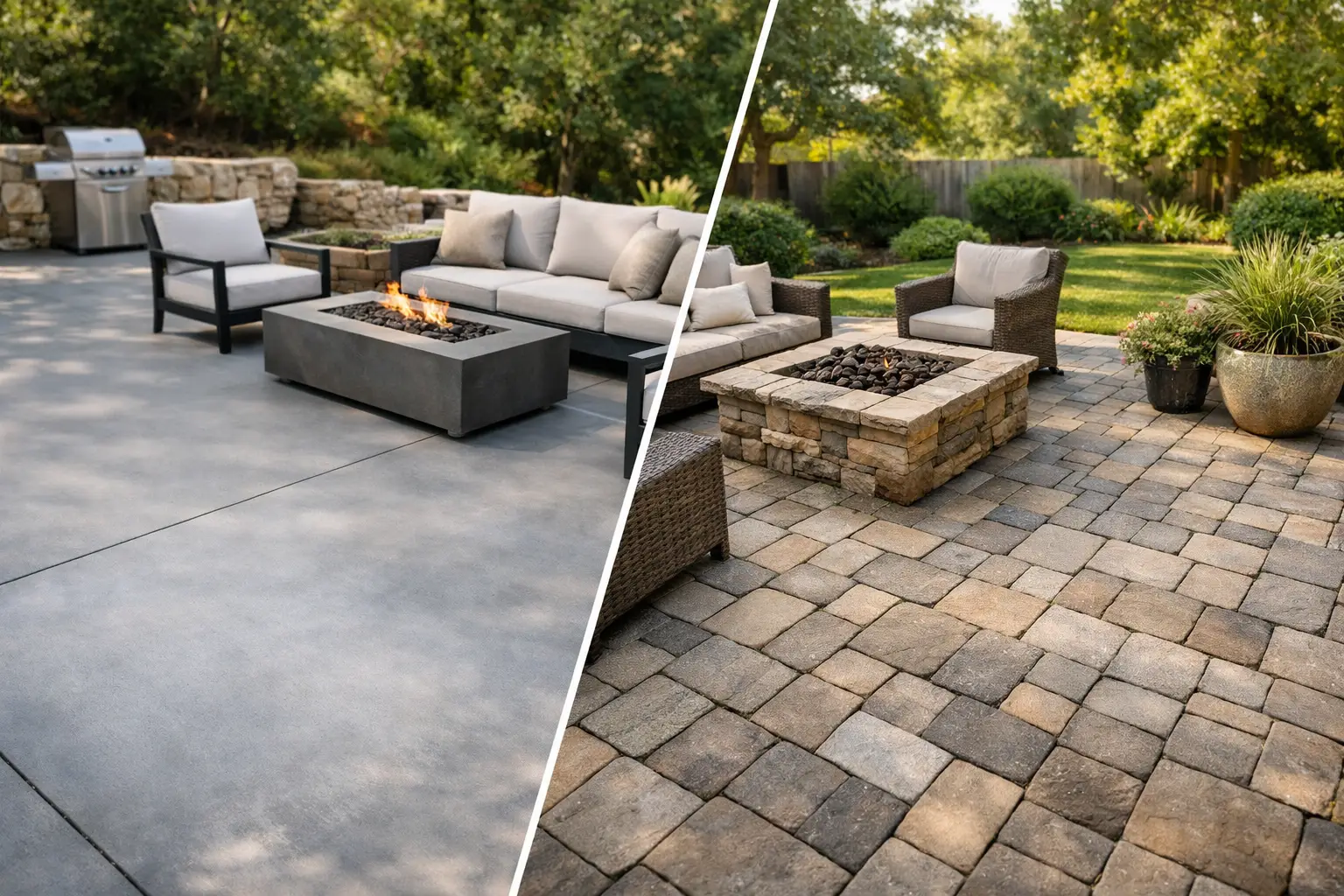
A patio decision usually looks simple until you start pricing materials, thinking about drainage, and standing in your backyard at 4 p.m. in August. When homeowners compare concrete patio versus pavers, the right answer often depends on how you use the space, how much maintenance you can tolerate, and how well the surface will hold up in Austin conditions.
Both options can work well. Both can also disappoint if they are installed poorly or chosen for the wrong yard. If you want a patio that looks good, drains properly, and stays serviceable through heat, rain, shifting soil, and regular foot traffic, the details matter more than the sales pitch.
Concrete patio versus pavers: what changes the decision
The biggest difference is how each system is built. A concrete patio is a continuous slab. Pavers are individual units laid over a prepared base, with joints between them. That one difference affects cost, movement, appearance, repairs, and long-term maintenance.
Concrete gives you a cleaner, more uniform surface. It is often the more budget-friendly option on the front end, especially for larger patios. It can be broom finished, stamped, colored, or left with a simple natural look. For homeowners who want a functional patio without adding a lot of pattern or texture, concrete is usually the straightforward choice.
Pavers offer more design flexibility. You can mix colors, shapes, border styles, and laying patterns to create a more customized look. They tend to feel more upscale, especially when the patio is part of a broader landscape design with walkways, planters, and retaining features. If appearance is the priority, pavers often win that comparison.
Cost in Austin: upfront price versus long-term value
For many property owners, cost narrows the field quickly. In most cases, a standard concrete patio costs less to install than a comparable paver patio. Labor is usually faster, and material costs are often lower. That matters if you are adding a patio mainly for function, rental value, or a practical backyard upgrade.
Pavers typically cost more because there is more labor in base preparation, layout, edge restraint, and unit placement. The material itself can also run higher depending on the style selected. If you are working within a strict budget, concrete often makes more sense.
That said, upfront cost is only one part of the equation. A paver patio can be easier to repair if a section settles or gets damaged. Individual units can be lifted and replaced without tearing out the whole surface. With concrete, repairs are possible, but patching rarely blends perfectly. If a slab cracks or shifts significantly, the fix can be more obvious and more expensive.
For some Austin homeowners, that trade-off matters. A lower initial cost can still be the right move, but it helps to think beyond installation day.
Performance in Texas heat and shifting soil
Austin weather is hard on exterior surfaces. High heat, sudden heavy rain, and clay-heavy soil movement all put stress on patios. That is where the concrete patio versus pavers decision becomes less about style and more about performance.
Concrete is strong, but it is not immune to cracking. Even with control joints and solid preparation, slabs can develop cracks over time as the ground expands, contracts, and settles. Some cracking is cosmetic. Some points to a deeper base or drainage issue. Good installation reduces risk, but no honest contractor should promise crack-free concrete forever.
Pavers handle ground movement differently. Because they are made of separate pieces, they can shift slightly without creating one large visible crack across the entire patio. In areas where small movement is expected, that flexibility can be an advantage. But pavers are not maintenance-free. If the base is poorly built, you can end up with uneven spots, edge creep, or low areas that hold water.
In other words, concrete tends to crack while pavers tend to shift. Neither issue is automatic if the work is done right, but each material has its own failure pattern.
Drainage matters more than most homeowners expect
A patio should do more than look good. It should move water away from the house, avoid standing puddles, and stay usable after rain. Drainage is a major part of patio performance in Central Texas, especially during hard downpours.
Concrete can be formed with a defined slope so water runs off predictably. That makes it easier to direct drainage when the patio is placed close to a foundation, pool area, or covered structure. If the slab is poured flat or the yard grading is wrong, though, water problems show up fast.
Pavers allow water to move through the joints to some degree, depending on the system and joint material used. That can help with surface drainage, but it does not remove the need for a proper base and grading plan. Water still needs somewhere to go. A patio that drains into the house, fence line, or soft planting bed is a problem no matter what material you choose.
This is one reason patio work should not be treated like a simple surface upgrade. The base, slope, and surrounding landscape all affect the outcome.
Appearance and design flexibility
If you want a clean, modern, low-distraction patio, concrete fits well. It works with contemporary homes, traditional backyards, outdoor kitchens, and simple utility spaces. Decorative options like stamped concrete and integral color can add character without turning the patio into the focal point of the yard.
Stamped concrete can mimic stone or brick, but it is still a slab. Some homeowners like that because it offers more visual interest at a lower price than premium pavers. Others prefer the natural texture and pattern variation of actual paver units.
Pavers are usually the stronger choice when design is a major priority. They can create a more finished, layered look and pair well with landscaping features. If your yard includes pathways, garden borders, fire pit zones, or raised beds, pavers can tie everything together in a way plain concrete usually does not.
Still, design should match the property. On some homes, pavers can look too busy if the house and landscape are simple. On others, basic gray concrete can feel underbuilt. Good patio planning looks at the whole outdoor space, not just the surface material.
Maintenance and repairs over time
Concrete is often chosen because it feels lower maintenance. That is true in a basic sense. There are no individual units to shift, no joint sand to replenish, and no pattern lines collecting weeds in the same way pavers can. Routine cleaning and occasional sealing, depending on the finish, are usually enough.
But when concrete has a problem, the repair can be harder to hide. Cracks, spalling, discoloration, and settled sections are not always easy to correct cleanly. If appearance matters, one damaged area can affect the whole patio visually.
Pavers need more ongoing attention. Joint material may need refreshing. Weeds can appear if maintenance is ignored. Ants and erosion can create issues in some installations. The upside is that spot repairs are more manageable. A section can be reset without replacing the full patio.
For rental properties or owners who want the least day-to-day upkeep, concrete often wins. For homeowners who care more about repair flexibility and high-end appearance, pavers may justify the extra maintenance.
Which option is better for your property?
A concrete patio is usually the better fit if you want solid function, lower upfront cost, faster installation, and a clean look that does the job without a lot of complexity. It is a practical choice for straightforward backyard living areas, grilling spaces, side-yard patios, and larger surfaces where budget matters.
Pavers are often the better fit if your project is design-driven, your landscape plan is more detailed, or you want a patio that can be repaired in smaller sections over time. They also make sense when the patio needs to feel like part of a broader outdoor upgrade rather than a standalone slab.
For Austin properties, the quality of installation matters as much as the material itself. Base prep, grading, compaction, reinforcement, edge control, and drainage planning all shape how well the patio performs. A great material installed poorly will fail. A practical material installed correctly will usually outperform a fancier one done the cheap way.
That is why a real site evaluation matters. Yard slope, soil conditions, intended use, shade exposure, and surrounding landscaping all influence the right call. Texan Strong Builds sees this often on local projects - the best patio choice is rarely about trends and usually about how the property actually functions.
If you are deciding between the two, start with your priorities. Know your budget. Think about how much maintenance you want. Be honest about whether you care more about appearance, repair flexibility, or straightforward durability. The right patio is the one that still works well after a few Texas summers, not just the one that looks good the week it is finished.