
Concrete Driveway Contractor Reviews That Matter
Concrete driveway contractor reviews can reveal workmanship, communication, and value. Learn what Austin owners should check before hiring a driveway pro
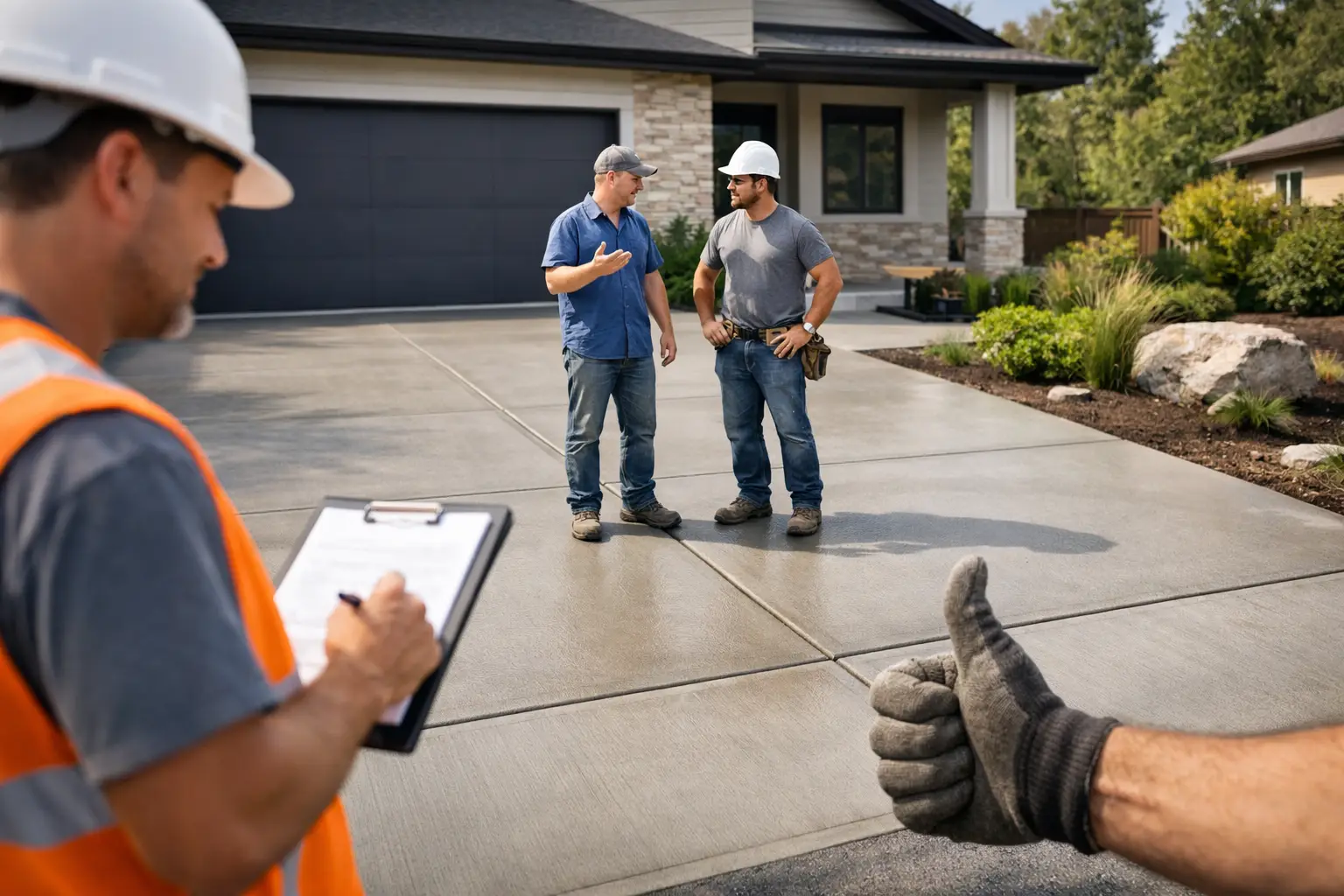
A driveway can look clean when the crew leaves and still develop cracks, low spots, or drainage problems within the first year. That is why concrete driveway contractor reviews deserve more attention than a simple star rating. For Austin homeowners, investors, and property managers, the useful reviews are the ones that show how a contractor handled site preparation, scheduling, concrete placement, cleanup, and issues after the job was complete.
A new driveway is a structural exterior improvement, not a cosmetic patch. It needs to carry vehicles, manage rainwater, work around existing grade, and hold up through Central Texas heat and soil movement. The contractor you choose matters as much as the finish you see on installation day.
What Concrete Driveway Contractor Reviews Should Tell You
The strongest reviews give details. A customer who says a contractor was great may be satisfied, but that comment does not tell you whether the driveway was built to the right thickness, whether the base was prepared correctly, or whether the crew protected nearby landscaping.
Look for reviews that describe the actual scope of work. Useful details include removal of old concrete, excavation, base material, reinforcement, forms, drainage planning, expansion joints, finish quality, and cleanup. These comments show that the customer watched the project closely enough to speak about more than the final appearance.
Communication is another major factor. Concrete work moves quickly once a pour begins, but the planning should not feel rushed. Reviews should indicate whether the contractor explained the schedule, showed up when promised, answered questions directly, and made clear what was included in the estimate. A delayed pour can happen because of rain, supplier timing, or an unexpected site condition. The issue is whether the contractor communicated early and handled the change professionally.
Also pay attention to how reviews describe problem-solving. A property may have a steep approach, poor drainage near the garage, tree roots, utility lines, or a driveway that needs to connect cleanly to a walkway or patio. The best contractors do not ignore those conditions to keep a bid simple. They identify them, explain the options, and price the work honestly.
Read Reviews for Workmanship, Not Just Friendliness
A polite crew matters, but friendliness alone does not make a driveway durable. When reading concrete driveway contractor reviews, separate customer service comments from comments that show trade skill.
Base preparation and thickness
Most driveway failures begin below the slab. If the ground is soft, uneven, or poorly compacted, concrete can crack or settle even when the surface finish looks good. Reviews that mention proper excavation, base work, compacting, and a crew taking time to prepare the area carry real weight.
The right slab thickness depends on the driveway use. A standard residential passenger vehicle has different demands than a work truck, trailer, RV, or frequent delivery traffic. A qualified contractor should ask how the driveway will be used instead of applying the same plan to every property.
Drainage and slope
Water should move away from the home and should not pond where vehicles drive. Austin storms can drop heavy rain in a short period, exposing weak drainage quickly. Look for comments about grading, slope, transitions at the street or garage, and whether water was directed away from structures.
A driveway replacement sometimes reveals a larger drainage issue that was hidden by the old slab. That does not always mean the contractor created the problem. What matters is whether the contractor recognized the condition before pouring and offered a workable solution.
Edges, joints, and finish quality
Clean edges and a consistent broom finish are visible signs of care, but joints matter too. Control joints help manage where concrete is most likely to crack as it cures and moves. Reviews that mention neat joint lines, smooth transitions, and professional finishing can help confirm the crew paid attention to the final details.
Do not expect any contractor to promise that concrete will never crack. Concrete naturally shrinks and moves, and Central Texas soil can add pressure through seasonal changes. A trustworthy contractor explains reasonable expectations, uses sound installation practices, and does not make unrealistic guarantees.
How to Spot Reviews That Are Actually Useful
One glowing review is not enough, and one negative review does not automatically rule out a contractor. Look for patterns across several recent reviews. A company with repeated feedback about punctuality, clean work areas, clear estimates, and durable results is showing consistency.
Recent reviews matter because crews, suppliers, and business practices can change. Reviews from the past year are especially helpful for judging how a contractor currently communicates and manages jobs. Still, older reviews can be valuable when customers mention that a driveway or patio has held up for several years.
Be cautious with reviews that are extremely vague. Comments such as good job or highly recommended may be real, but they offer little proof of the contractor's concrete experience. Detailed reviews are more useful when they explain the original problem, the work performed, and the condition of the project afterward.
Negative reviews need context. Read the contractor's response, if there is one. A professional response should be factual, respectful, and focused on resolving the concern. A contractor who argues publicly, blames every customer, or avoids responsibility may create the same frustration on your project.
Questions to Ask After Reading Reviews
Reviews should help you narrow your options, not replace a direct conversation. Before selecting a concrete contractor, ask how the existing driveway will be removed, how the subgrade and base will be prepared, what slab thickness is planned, and where the control joints will go.
You should also ask how drainage will be handled, whether reinforcement is included, how nearby landscaping and structures will be protected, and when you can drive on the new surface. These answers should match the level of care described in the reviews.
Request a written scope that identifies the work clearly. A lower estimate can be attractive, but it may leave out demolition, hauling, base preparation, reinforcement, sealing, or cleanup. Compare scopes line by line before comparing prices. The lowest number is not always the lower cost if the driveway needs repair or replacement sooner than expected.
For a larger project, ask whether the contractor can coordinate concrete work with landscaping, drainage improvements, walkways, or outdoor living features. Combining related exterior work can reduce disruption, prevent mismatched elevations, and create a more finished result.
Austin Conditions Change the Right Driveway Plan
Austin-area properties do not all need the same driveway solution. Expansive clay soils, limestone ground, mature trees, hillside lots, and intense summer heat can all affect planning. A driveway in a newer neighborhood with level access may require a straightforward replacement, while an older property may need grade correction, drainage work, or a redesigned layout.
Local experience helps a contractor recognize those differences before the pour truck arrives. Texan Strong Builds approaches concrete and landscape work as connected parts of the same exterior project, which is especially useful when a driveway affects grading, planting areas, walkways, or curb appeal.
A contractor should be willing to walk the site, identify practical constraints, and explain where spending more will improve long-term performance. In some cases, a full replacement is the right answer. In others, a targeted extension, apron repair, or drainage correction may solve the actual problem without unnecessary work.
Take your time with the reviews that contain real project details, then use that information to ask better questions on-site. The right contractor will not be pressured by informed questions. They will be prepared to show you how the driveway will be built and why that plan fits your property.