
8 Best Backyard Concrete Upgrades for Austin
See the best backyard concrete upgrades for Austin homes, from patios and walkways to drainage-ready slabs built for heat, soil movement, and daily use.
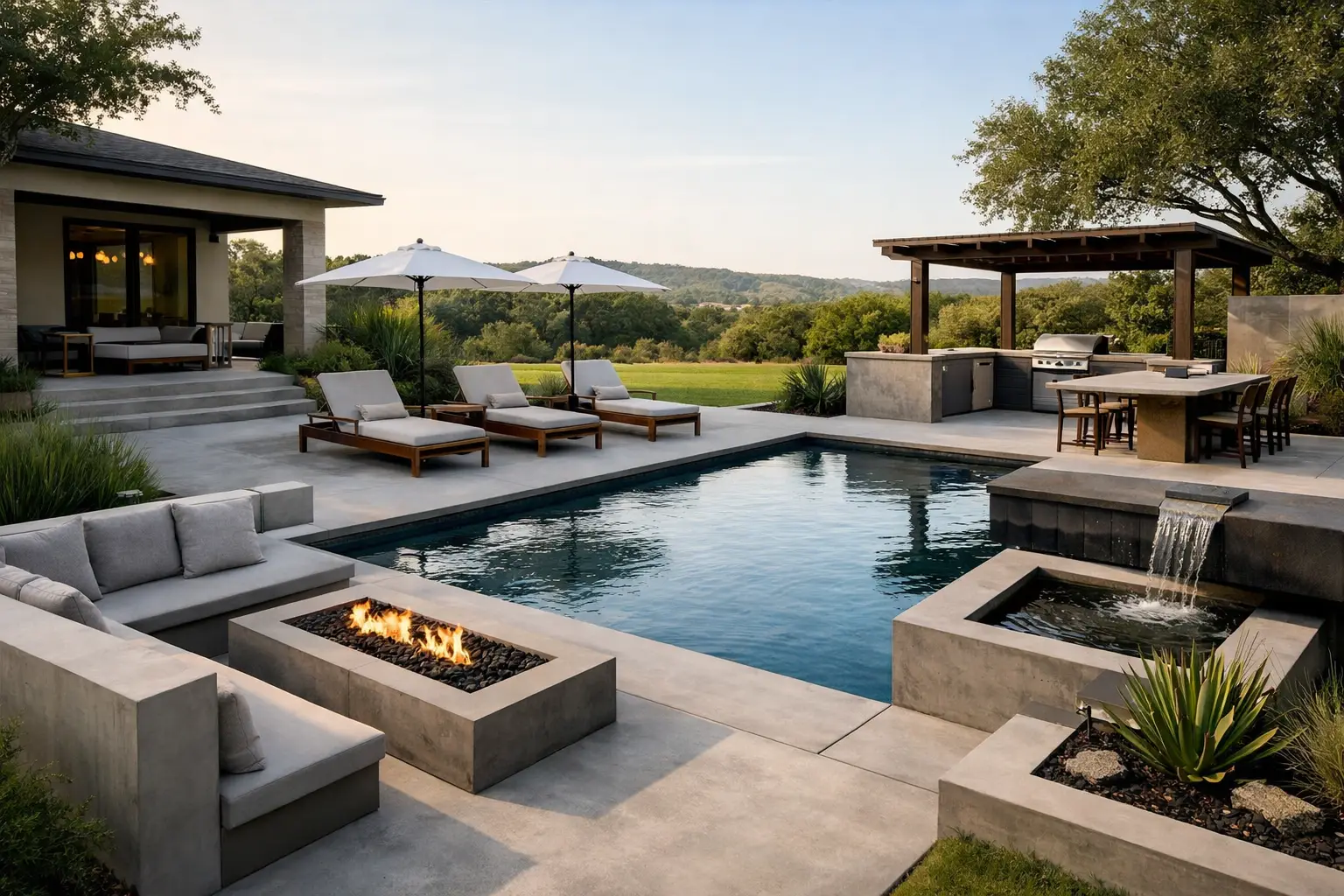
A backyard that turns muddy after rain, cracks along the patio edge, or offers nowhere solid to gather is not getting full use out of the property. The best backyard concrete upgrades solve those everyday problems while giving Austin homeowners a cleaner, more durable outdoor space built for heat, heavy rain, and shifting soil.
Concrete is not a one-size-fits-all material. A good backyard project starts with how the space will be used, where water moves, how the yard grades, and how the new work connects to the house, fence, landscaping, and existing hardscape. The right upgrade should look finished, hold up under regular use, and avoid creating drainage trouble later.
Best Backyard Concrete Upgrades That Add Real Use
1. Expand or Replace the Backyard Patio
For most homes, a larger patio is the highest-value place to start. It creates a dependable surface for outdoor dining, grilling, seating, and everyday family use. A small builder-grade slab may be enough for a grill and two chairs, but it often feels crowded once a table, furniture, and a fire feature enter the picture.
A patio expansion can wrap around the existing slab or replace it entirely when the original concrete has major cracking, poor slope, or an awkward layout. The best design leaves enough room to walk around furniture without stepping into grass or landscape beds. It should also slope away from the home so water does not collect near the foundation.
In Austin, larger patios need proper base preparation, reinforcement, control joints, and drainage planning. Skipping those details may save money at the start, but it can lead to premature cracks, standing water, or sections that settle unevenly.
2. Install a Concrete Walkway Where Traffic Already Exists
If people repeatedly cut through the lawn to reach a gate, shed, side yard, grill area, or trash bins, that route needs a walkway. A concrete path keeps shoes out of mud, protects turf, and gives the yard a more organized layout.
Straight walkways work well for side yards and service areas. Curved paths can soften the look of a landscaped backyard and guide people toward a patio, pool area, or garden. Either way, the width matters. A narrow path may work for one person, while a wider route is better for moving lawn equipment, hauling bins, or walking beside someone.
A walkway also makes landscape maintenance easier. Defined concrete edges help keep mulch, gravel, and planting areas where they belong instead of drifting into the main traffic path.
3. Add a Concrete Pad for a Grill, Smoker, or Outdoor Kitchen
Austin backyards are built for cooking outside, but a grill parked on uneven pavers or bare ground is not a permanent setup. A dedicated concrete pad gives a smoker, grill station, pizza oven, or outdoor kitchen a level, stable base that is easier to clean and safer to use.
The size depends on the equipment and how much prep space is needed. A simple grill pad may only need room for the appliance and safe clearance. An outdoor kitchen requires more planning for counters, utilities, drainage, seating, and access from the house.
Concrete makes sense here because it stands up to grease, weather, and repeated foot traffic. The finish should match the use. A broom finish provides better traction than a slick surface, especially around cooking and serving areas where spills happen.
4. Build a Concrete Fire Pit or Gathering Area
A fire feature works best when it has a solid area around it. Concrete provides a stable surface for chairs, benches, and foot traffic, without the shifting that can happen with loose gravel or poorly installed pavers.
The layout matters more than the fire pit itself. Leave enough room for seating to pull back comfortably and for people to move through the area without crowding the flame. Think about prevailing wind, nearby trees, fences, roof overhangs, and local fire restrictions before finalizing the location.
A circular or square concrete pad can give the space a defined destination in the yard. It can be finished as simple broom concrete for a clean, practical look, or upgraded with a decorative texture or color if that fits the rest of the property.
5. Create a Concrete Pool Deck or Equipment Pad
Pool areas demand surfaces that are stable, drain well, and provide traction under wet feet. A properly designed concrete pool deck can expand lounging space, improve access around the pool, and replace worn sections that have become uneven or difficult to maintain.
This is not a project where appearance should outrank drainage and safety. Water needs a clear path away from the house and toward appropriate drainage areas. The surface also needs joints placed correctly to manage normal concrete movement and reduce random cracking.
Even without a pool, a concrete equipment pad can clean up a backyard. Pads for HVAC equipment, generators, storage sheds, and trash enclosures keep heavy equipment off soft soil and create a neater, more serviceable space.
6. Improve Drainage With Concrete Swales and Channel Solutions
Some of the best backyard concrete upgrades are not flashy. If water runs toward the home, pools along a fence, or washes out landscape beds, drainage work should come before a patio extension or decorative hardscape.
Concrete can help direct water through shallow swales, curbed edges, drainage channels, or properly sloped flatwork. The goal is not simply to move water faster. It is to move it to a safe place without sending runoff toward a neighbor's property, undermining a slab, or flooding planting areas.
This type of work depends on the property. A backyard with a mild slope may only need regrading and better patio pitch. A low-lying lot or a yard with heavy runoff may need a more deliberate drainage plan. Before pouring concrete, the contractor should identify where water currently enters, travels, and exits the yard.
7. Pour a Storage Shed or Workshop Slab
A shed placed directly on soil often shifts, collects moisture, and becomes harder to keep level. A concrete slab gives a storage building, workshop, or backyard gym a firm foundation that handles tools, equipment, and regular use.
The slab should be sized for the structure plus practical clearance around doors and access points. If the building will house heavy equipment, a riding mower, or a workshop bench, thickness and reinforcement need to match the load.
Plan utilities early if the space may eventually need electrical service, lighting, or plumbing. It is far easier to account for conduits and layout before concrete is placed than to cut into a finished slab later.
8. Use Concrete Borders to Define Landscape Areas
Concrete borders are a practical upgrade for homeowners who want cleaner landscape lines without constant edging. They can define flower beds, separate gravel from turf, contain mulch, and create a finished transition between lawn and hardscape.
This is a smaller project than a patio or walkway, but it can make a major visual difference when paired with fresh planting, rock, or new sod. Concrete curbing is especially useful around trees and front-to-back landscape beds where maintenance has become a recurring chore.
The trade-off is permanence. Once concrete borders are installed, changing the shape of a bed takes more work than moving a plastic or metal edge. Set the layout with future plant growth and irrigation access in mind.
Choosing the Right Concrete Finish for an Austin Backyard
Plain gray broom-finished concrete remains a strong choice for patios, paths, and utility pads because it is durable, slip-resistant, and straightforward to maintain. Decorative options such as stamped concrete, exposed aggregate, or integral color can add more character, but they usually cost more and may require more attention over time.
The best finish depends on the location. A highly textured finish can be useful near a pool or outdoor kitchen. A smoother finish may suit a covered patio with low moisture exposure. For large open areas, control joint placement is just as important as the finish because concrete will move and shrink as it cures.
Color also deserves practical consideration. Very dark concrete can hold heat during Austin summers, while lighter shades may feel more comfortable underfoot. Decorative work should support the overall yard design, not compete with it.
Plan Concrete and Landscaping Together
Backyard concrete works better when the landscaping is part of the same plan. A new patio may need drainage adjustments, gravel borders, planting beds, turf repair, retaining solutions, or a path connecting it to the side gate. Handling the project as one coordinated scope avoids the common problem of finishing a slab and then realizing the surrounding yard no longer drains or functions well.
Before work begins, mark furniture zones, grill locations, gates, utility equipment, and existing drainage routes. Ask how the concrete will meet the house and whether permits, HOA approval, or utility considerations apply to the project. Those decisions affect the layout before the first form is set.
A well-built concrete upgrade should make the backyard easier to use on an ordinary Tuesday, not just look good on the day it is poured. For Austin homeowners, the strongest choice is the one that fits the property, manages water correctly, and gives the outdoor space a purpose that lasts.