
Why Is Concrete Cracking Around Your Austin Home?
Why is concrete cracking? Learn Austin's common causes, which cracks need repair, and how good installation protects patios, drives, and walks.
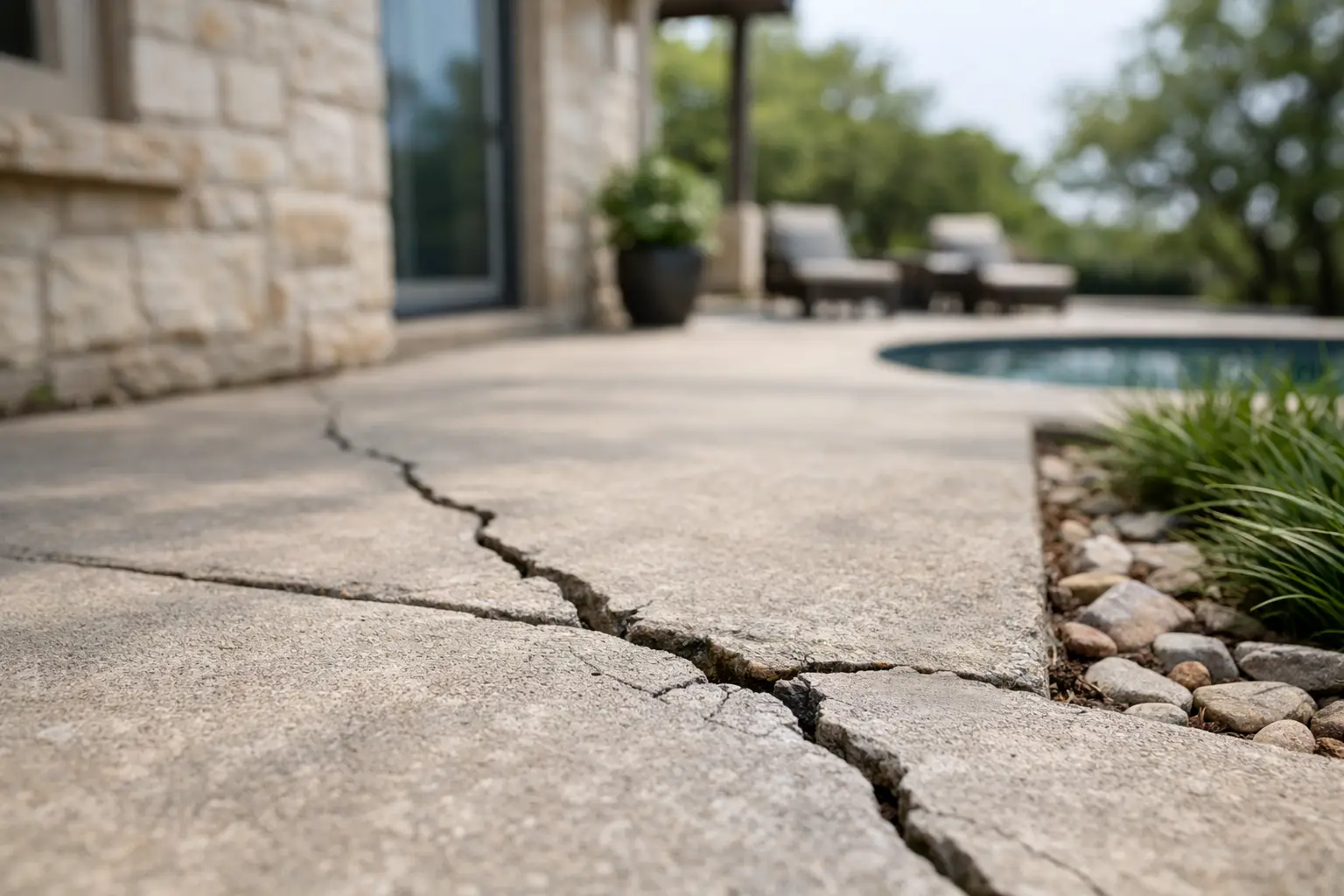
A hairline line across a new patio can be frustrating. A widening crack in a driveway can be a trip hazard, a drainage problem, or a sign that the ground below is moving. If you are asking, why is concrete cracking, the honest answer is that concrete naturally develops some cracks as it cures and ages. The real question is whether the crack is expected, cosmetic, or a warning that needs attention.
Austin properties put concrete through hard conditions. Long stretches of heat, sudden heavy rain, expansive clay soil, tree roots, and shifting drainage patterns all affect slabs. Good concrete work accounts for those conditions before the first truck arrives, not after cracks appear.
Why Is Concrete Cracking? The Main Causes
Concrete is strong under compression, but it has limited flexibility. When a slab shrinks, expands, settles unevenly, or carries more weight than it was designed for, it relieves that stress by cracking. The cause often comes down to a combination of material behavior, site preparation, and Texas weather.
Normal curing shrinkage
Concrete contains water when it is placed. As excess water leaves the slab during curing, the concrete shrinks slightly. Since the slab is restrained by the ground, edges, corners, and nearby structures, small cracks can form.
This is one reason control joints matter. These intentionally placed grooves create a planned weak point where concrete can crack in a straighter, less noticeable line. A properly jointed patio or walkway may still develop cracks, but the cracking is more likely to occur where it was intended.
Hairline shrinkage cracks are usually not a structural emergency. They may be visible, especially in direct Austin sun, but a narrow crack that stays level and does not spread is often a maintenance issue rather than a failed slab.
Expansive Austin-area soil
Much of Central Texas has clay-heavy soil that changes volume with moisture. During dry weather, clay can shrink and pull away from parts of the slab. After heavy rain, it can absorb water and expand. That repeated movement can leave one section of concrete supported while another settles or lifts.
This is a common reason driveways, sidewalks, and patios crack unevenly. The concrete itself may have been placed correctly, but the subgrade below it was not adequately prepared, compacted, or managed for drainage. On a property with significant soil movement, the solution may require more than filling the visible crack.
Poor base preparation and compaction
A concrete slab needs a stable, even base. Loose soil, buried organic material, poorly compacted fill, or an inconsistent gravel base can settle after the project is finished. When support disappears below one area of the slab, concrete bends under its own weight and eventually cracks.
Proper excavation, grading, base material, and compaction are not the glamorous parts of a concrete project, but they are where long-term performance is decided. Skipping these steps may lower the upfront price, yet it often leads to repairs that cost more later.
Heat, moisture, and rapid drying
Austin heat can cause fresh concrete to lose moisture too quickly. If the surface dries faster than the interior, it can create surface shrinkage cracks known as crazing. These fine, web-like cracks are generally shallow, but they can affect appearance and make the surface more vulnerable to staining and wear.
Weather also affects placement. Pouring in extreme heat requires planning around timing, water management, finishing, and curing. Adding too much water to a mix at the job site may make concrete easier to work with, but it can weaken the finished slab and increase shrinkage. There is a trade-off between short-term workability and long-term strength.
Heavy loads or the wrong slab design
Not every slab needs the same thickness or reinforcement. A decorative backyard patio has different demands than a driveway carrying SUVs, work trucks, trailers, or service vehicles. If a slab is too thin for the use, lacks appropriate reinforcement, or sits on a weak base, cracks can develop under repeated loading.
The same applies to edges. Driveway edges are vulnerable when vehicles regularly drive near or over them, especially where the soil slopes away and does not provide support. A thicker edge, proper grading, and a design matched to the property’s use help prevent this type of damage.
Water, drainage, and nearby roots
Water is often behind concrete problems, even when it is not obvious. Downspouts that dump water next to a slab, negative grading toward the house, irrigation overspray, and low spots in the yard can soften or wash out supporting soil. Water entering an existing crack can also make the problem worse over time.
Tree roots can lift sidewalks, patios, and small slabs. Removing a mature tree is not automatically the right answer, particularly if it adds value and shade to the property. In some cases, rerouting a walkway, improving root-zone planning, or replacing a localized section is more practical. The right approach depends on the tree, the crack location, and how much movement has occurred.
Which Concrete Cracks Need Repair?
Crack width matters, but movement and elevation matter more. A thin, stable hairline crack may only need monitoring or sealing. A crack that is widening, has one side higher than the other, or allows water to reach the base deserves a closer look.
Pay attention when a crack is wider than about one-quarter inch, runs through multiple slabs, forms a noticeable offset, or appears alongside sinking, pooling water, or crumbling edges. Cracks near a garage, foundation, retaining feature, or steps should also be evaluated carefully because drainage and soil movement may affect adjacent structures.
A simple way to monitor a questionable crack is to photograph it and measure it periodically. If it changes through dry and wet seasons, there is active movement. Filling the crack without addressing the movement may improve appearance for a while, but the crack can reopen.
Repair Options Depend on the Cause
For narrow, stable cracks, a flexible concrete crack sealant can help keep out water and debris. This is practical maintenance for a walkway or patio with minor cosmetic cracking. The crack should be cleaned thoroughly first, and the repair material should be appropriate for exterior concrete and movement.
For wider cracks without major settlement, a professional may use a repair mortar, joint filler, or resurfacing approach. Appearance can improve, but patch color rarely matches old concrete exactly. On visible decorative surfaces, it is worth discussing whether a repair, overlay, stain, or replacement will produce the best result.
When a slab has sunk but remains largely intact, lifting methods may be an option depending on access, slab condition, and the underlying cause. If the concrete is badly fractured, heaved by roots, or supported by unstable soil, removal and replacement may be the more dependable choice. Replacement should include correcting drainage and rebuilding the base, or the same issue can return.
How Proper Installation Helps Prevent Cracking
No contractor can honestly promise that concrete will never crack. Concrete is a rigid material, and minor cracking is part of its nature. What quality installation can do is reduce unnecessary cracking and control where it happens.
That starts with a site review. The grade, drainage routes, soil condition, intended use, nearby trees, and connection to existing structures should all influence the plan. A driveway needs a different build than a garden path, and a patio beside a home needs careful attention to water flow away from the structure.
A durable installation generally includes a properly prepared and compacted base, the right slab thickness, reinforcement when appropriate, control joints placed at sensible intervals, and curing practices suited to the weather. It also needs clean finishing work. Overworking the surface or adding water during finishing can create problems that may not show until later.
For Austin homeowners, landscaping should be part of the conversation as well. Grading, drainage swales, downspout extensions, gravel borders, and planting layouts can protect a concrete investment by directing water where it belongs. Concrete and landscape work are connected at the ground level, so planning them together often prevents avoidable repairs.
A crack does not always mean a bad concrete job, but it should never be ignored without understanding why it formed. Look at its size, location, movement, and the condition of the soil and drainage around it. A clear assessment now can help you choose between simple maintenance and a repair that protects the property for years.