
What Do Concrete Contractors Do?
What do concrete contractors do? They handle planning, grading, forms, pours, finishes, repairs, and outdoor concrete built for Austin weather.
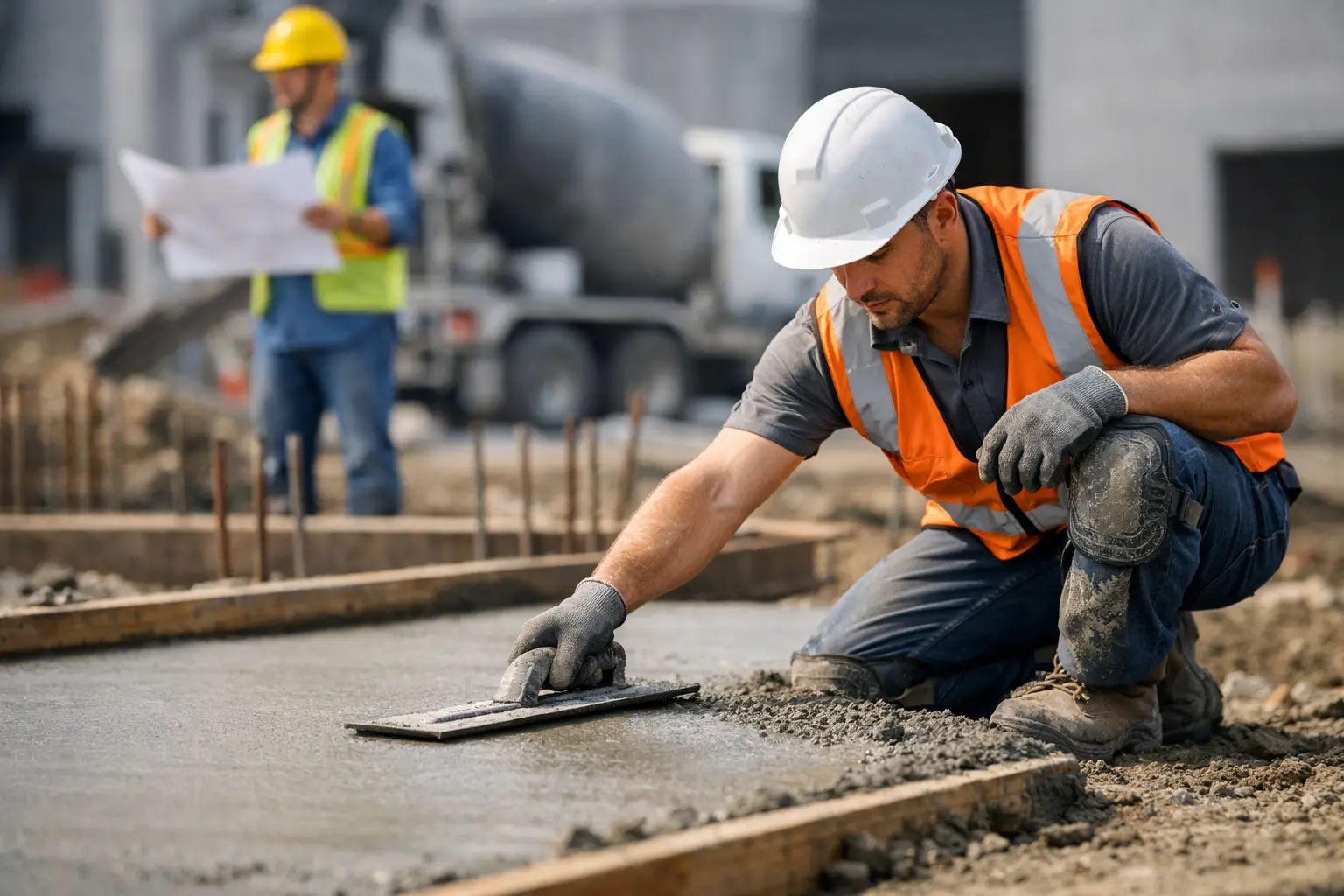
A concrete job can look simple from the street. You see a driveway, patio, walkway, or slab and it just looks finished. What do concrete contractors do to get it there? A lot more than pouring wet concrete into a framed box. Good concrete work starts before the truck arrives and continues well after the surface is finished.
For Austin homeowners and property managers, that matters. Central Texas heat, shifting soils, drainage issues, and heavy use can turn a cheap concrete job into cracking, settling, or standing water fast. A concrete contractor is there to plan the work correctly, build it to last, and make sure the finished surface actually fits the property.
What do concrete contractors do on a typical project?
Concrete contractors handle the full process of building and repairing concrete surfaces and structures. That usually includes site prep, grading, form setting, reinforcement, pouring, finishing, curing, and cleanup. Depending on the job, they may also handle demolition of old concrete, drainage adjustments, and coordination with landscape or hardscape work around the new surface.
That scope changes based on the project. A backyard patio has different requirements than a driveway, and a foundation slab is a different category entirely. But the basic responsibility stays the same: create a stable, properly placed concrete installation that performs well over time.
The work starts before the concrete pour
One of the biggest misunderstandings about this trade is thinking the pour is the main event. In reality, prep work often decides whether the project holds up.
A concrete contractor evaluates the site first. That means checking dimensions, access, slope, drainage patterns, soil conditions, and how the concrete will be used. A walkway for light foot traffic does not need the same build approach as a driveway that will carry vehicles every day.
In Austin, soil movement is a real issue. Expansive clay can shift with moisture changes, which puts stress on slabs and paved surfaces. A contractor who knows the local conditions plans for that with proper base prep, reinforcement, and joint placement. If that part is rushed, the concrete may look fine at first and then start failing later.
Site prep, grading, and base work
Before any forms go in, the area usually needs to be cleared and graded. That can involve removing grass, roots, old materials, or damaged concrete. If there is an existing slab, demolition and haul-off may be part of the job.
Then comes the base. This is the layer under the concrete that helps support the slab and reduce movement. A contractor may use compacted gravel or another suitable base material depending on the project. The goal is a firm, even surface that supports the concrete and helps with drainage.
Grading is just as important. Water should move away from the house and away from structures where possible. A patio that traps water near a foundation can create bigger property issues than just a bad outdoor surface. That is why experienced contractors pay attention to pitch and elevation, not just shape and size.
Forms, reinforcement, and layout
Once the site is ready, contractors set forms to establish the dimensions and edges of the pour. These forms hold the concrete in place while it is placed and finished. If the layout is off, the final product will be off too.
Reinforcement may also be added. Depending on the application, that can include rebar or wire mesh. Reinforcement does not make concrete crack-proof, because all concrete can crack, but it helps control movement and improves structural performance.
Joint planning is another part of the job that homeowners do not always notice. Contractors cut or place control joints to help manage cracking as the concrete cures and expands or contracts over time. Done right, joints help keep cracks more controlled and less visible.
Pouring and finishing concrete
This is the stage most people picture, but even here there is more skill involved than it seems. Concrete has to be placed efficiently, spread properly, leveled, and finished at the right time. Weather, temperature, mix consistency, and surface size all affect timing.
The finish depends on the use of the surface. A driveway or walkway often needs a broom finish for traction. A patio might use a smoother finish, decorative texture, or stamped pattern depending on the design. Contractors also shape edges and make sure transitions are clean where the new concrete meets existing surfaces.
There is a balance here between appearance and function. A decorative patio may look great, but if it becomes slippery when wet or drains poorly, it was not built well. Good contractors understand that curb appeal matters, but performance comes first.
Curing, protection, and final quality
Concrete is not done the moment it looks hard. It needs time to cure and gain strength. Contractors guide homeowners on when the surface can be walked on, driven on, or used normally. That timeline depends on the project and the conditions.
Protecting fresh concrete is part of the job too. Hot Texas weather can affect curing speed, and poor curing can weaken the finished slab or lead to surface issues. A professional contractor manages that process so the concrete develops properly.
Final cleanup and inspection matter as well. The finished work should have clean edges, consistent joints, proper slope, and a surface appropriate for the intended use. If the area around the project was disturbed, it should be left in good condition.
Common services concrete contractors provide
Many people hear "concrete contractor" and think only of driveways. In practice, the work can cover a wide range of residential exterior projects.
Common services include patios, sidewalks, walkways, driveways, slab installations, pool decks, retaining-related flatwork, parking pads, and concrete pads for sheds or outdoor equipment. Some contractors also handle decorative concrete, stamped finishes, stained surfaces, and concrete demolition or replacement.
For a company that also works in landscaping, the value can be even higher. A concrete patio often connects to grading, drainage, sod, planting beds, edging, or full backyard layout changes. When one contractor can handle both the hardscape and surrounding outdoor improvements, the project tends to move more smoothly.
Repairs are part of the trade too
Not every job starts from scratch. Concrete contractors also repair damaged surfaces when replacement is not the better option.
That may include fixing cracks, replacing broken sections, addressing trip hazards, resurfacing worn areas, or correcting drainage problems around existing concrete. Some issues are cosmetic. Others point to underlying movement, poor base preparation, or water problems.
This is one of those areas where it depends. Small surface cracks may be normal. Major settling, heaving, or wide cracking usually means more than a patch job is needed. A good contractor should be honest about whether repair makes sense or whether replacement will save money long term.
What concrete contractors do not do alone
Concrete contractors are skilled tradespeople, but they are not always the only trade involved. Larger or more complex projects may require coordination with excavation crews, plumbers, electricians, engineers, or permit offices.
That matters when a project includes drainage changes, utilities, footings, or major outdoor renovations. A straightforward patio is one thing. A full backyard transformation with concrete, grading, retaining features, and landscape work is another. In those cases, the contractor's role includes planning the sequence and making sure the finished pieces work together.
For property owners, that coordination is a major part of the value. It reduces mistakes, delays, and finger-pointing between separate crews.
Why the right contractor matters in Austin
Concrete in Austin has to deal with heat, sun exposure, sudden rain, runoff issues, and soil movement. Add daily vehicle use or backyard foot traffic, and a poorly built surface will show problems sooner than you want.
That is why hiring based on price alone can backfire. The lowest quote may leave out proper base prep, reinforcement, thickness, cleanup, or drainage work. Those details are not flashy, but they are what make the slab hold up.
A contractor with local experience understands how to build for the conditions here. That includes planning slope correctly, accounting for movement, and recommending the right finish and layout for the property. Texan Strong Builds works in that lane, focusing on concrete and outdoor improvements that make sense for how Austin properties are actually used.
How to tell if a contractor knows the work
You do not need to know every technical detail to spot professionalism. A solid concrete contractor can explain the project clearly, walk you through prep and drainage, describe the expected finish, and tell you what is included in the scope.
They should also talk realistically about limitations. Concrete can crack. Weather can affect timing. Some sites require more prep than others. Straight answers are usually a better sign than sales talk.
The best concrete work is not just a clean finish on pour day. It is a surface that still functions well after the heat, rain, traffic, and time have had their turn. If you are planning a driveway, patio, walkway, or slab, the right contractor is not just pouring concrete. They are building the groundwork for how that space will hold up and how your property will work every day.