
Water Wise Landscaping Trends for Austin Yards
Water wise landscaping trends help Austin homeowners cut irrigation needs with native plants, efficient layouts, hardscapes, and smart site drainage plans.
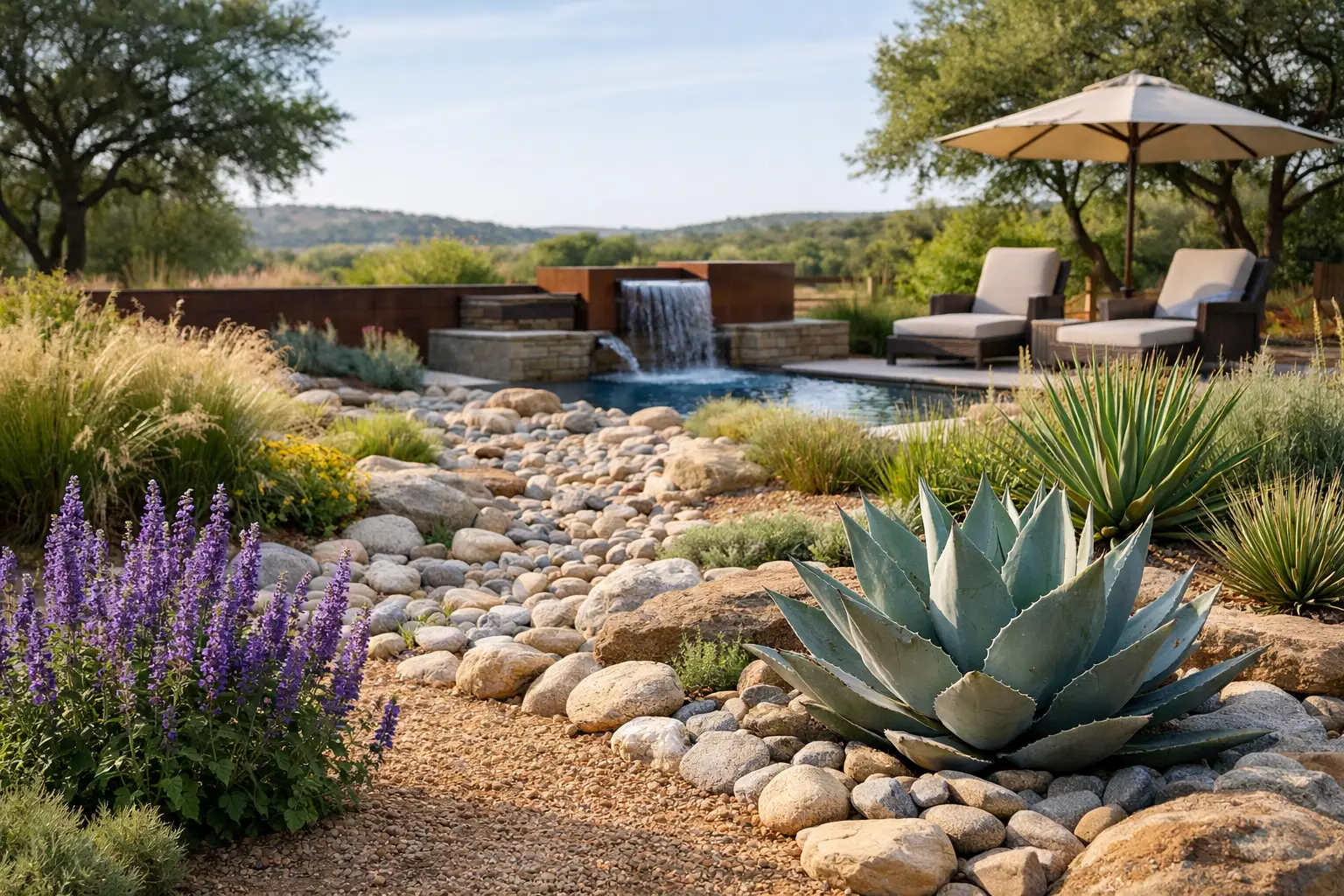
Austin yards are being redesigned around a hard fact: summer heat, watering limits, and rising utility costs can make a thirsty landscape expensive to maintain. Water wise landscaping trends are not about replacing every lawn with gravel. They are about building outdoor spaces that look finished, function well, and use water where it delivers real value.
For Austin homeowners, investors, and property managers, the best approach usually combines drought-tolerant planting, deliberate hardscape, practical drainage, and irrigation that matches the property. A good water-wise yard should still provide shade, curb appeal, usable patio space, and clear paths through the property. It just should not require constant watering to stay presentable.
Water Wise Landscaping Trends Shaping Austin Properties
The strongest trend is a move away from treating the entire lot the same way. Traditional landscapes often spread turf, irrigation, and high-maintenance planting from the front curb to the back fence. That setup wastes water and creates more mowing, edging, fertilizing, and replacement work.
Current water-wise designs use zones. A homeowner may keep a smaller area of healthy turf where children play or where a dog needs open space, then use native and adapted plants in beds, along fences, around trees, and near the street. Patios, walkways, and gravel seating areas take over parts of the yard that did not need to be lawn in the first place.
This is a better fit for Central Texas weather, but it is also a better construction strategy. Every part of the outdoor space has a job. Concrete provides durable access and gathering areas. Plant beds soften the edges, provide seasonal color, and help manage runoff. Mulch and groundcover protect exposed soil. The finished property looks intentional instead of stripped down.
Native and Adapted Plants Are Replacing High-Water Beds
Native plants remain a major part of water-wise design because they are built for local heat, soil conditions, and rainfall patterns once established. Texas sage, esperanza, lantana, blackfoot daisy, flame acanthus, yaupon holly, red yucca, and Turk's cap are common options for Austin landscapes. They can provide color, texture, and structure without the constant water demand of many traditional annuals and tropical plantings.
Adapted plants also have a place. Not every successful Austin landscape needs to be strictly native. The key is selecting species that tolerate heat and periods of dry weather rather than plants that depend on frequent irrigation. A contractor should account for sun exposure, mature plant size, soil depth, drainage, and the amount of maintenance the owner is willing to handle.
Plant selection still involves trade-offs. A low-water plant may not deliver a green appearance year-round. Some flowering plants look their best in certain seasons, while evergreen shrubs can provide more consistent structure but less color. Mixing plant types gives a landscape a more balanced appearance through the year.
Dense Planting, Not Bare Decorative Rock
Rock-heavy yards were once treated as the simple answer to drought. While gravel and stone can reduce mowing and define a clean modern look, covering an entire property with rock creates problems. Stone absorbs heat, can make the yard feel harsher in summer, and does little to improve soil health on its own.
The more durable trend is using gravel or crushed stone in targeted areas, such as side yards, utility access paths, dry creek beds, and seating zones. Plant beds should still include organic mulch where appropriate. Mulch helps hold moisture in the soil, moderates root-zone temperatures, and reduces weeds. It also gives plants a stronger chance of establishing during Austin's hot months.
Smaller, Purposeful Lawns Are More Practical
Turf is not going away, but oversized lawns are becoming less common in water-conscious projects. Many property owners are reducing grass to a manageable central area and using hardscape or planted beds around the perimeter. This lowers irrigation demand while keeping enough lawn for play, pets, or visual openness.
The right grass depends on the site. Bermuda grass handles heat and sun well, but it needs regular mowing and can spread aggressively. St. Augustine works in more shade but generally needs more water and attention. Zoysia can offer a denser finish with a slower growth rate, though installation costs may be higher. There is no single best turf for every Austin yard.
Before removing lawn, consider how the area is actually used. A front yard that receives full sun and is only viewed from the street may be a good candidate for larger plant beds and a reduced turf footprint. A backyard used for family activity may need more open grass, with water savings coming from better irrigation and planted borders instead.
Hardscape Is Doing More Than Adding Curb Appeal
Concrete patios, walkways, steps, and edging are central to many water-wise landscape plans. They create usable outdoor areas without adding irrigation demand, and they help organize the property. A properly planned patio can replace a portion of lawn that was rarely used while creating a space for dining, grilling, or relaxing.
The trend is toward hardscape that works with the home and the site, not hardscape installed without a drainage plan. Concrete must be graded correctly so water moves away from structures and does not collect against foundations. Walkways need practical access between gates, driveways, patios, and entry points. Edging should hold material in place and create clean transitions between beds, turf, and gravel.
Permeable materials can be useful in some areas, especially for paths and low-traffic spaces where infiltration is desired. However, they are not automatically the right choice. Austin clay soils, slope, compaction, and maintenance expectations all matter. Standard concrete may be the more dependable option for a heavily used patio or access route, while gravel or permeable pavers can work well for a side path or garden area.
Smart Irrigation Means Less Water, Not No Water
Even drought-tolerant landscaping needs water during establishment. New plants, fresh sod, and young trees need consistent attention until their root systems develop. The goal is not to install a landscape and ignore it. The goal is to use water efficiently and reduce demand over time.
Drip irrigation is increasingly used in plant beds because it puts water near the roots instead of spraying it over mulch, sidewalks, and foliage. For turf, properly adjusted spray heads or rotary nozzles can prevent overspray and uneven coverage. Smart controllers that adjust for weather can help, but they are only useful when the system is designed correctly and checked periodically.
Irrigation zones should separate plants with different needs. Turf, established shrubs, new plantings, and containers should not all run on the same schedule. A mature native bed may need far less water than a newly installed tree or a shaded lawn area. Treating those zones the same wastes water and can damage plants through overwatering.
Drainage and Rain Capture Are Becoming Part of the Landscape Plan
Water-wise landscaping is also about keeping valuable rainfall on the property long enough to benefit plants and soil. During Austin storms, runoff can move quickly across compacted ground and hard surfaces. Without a plan, it may erode beds, wash mulch into drains, or pool near the foundation.
Rain gardens, dry creek beds, swales, and properly placed catch basins can direct water through the landscape instead of letting it create problems. These features need correct grading and should be sized for the property. A decorative dry creek bed that does not connect to the actual flow of water will not solve a drainage issue.
Rainwater collection is another practical option for homeowners who want a backup supply for hand-watering beds or containers. The value depends on roof area, storage capacity, local rainfall, and how the collected water will be used. It works best as part of a broader plan, not as the only source of water for a large landscape.
Build for Maintenance, Not Just Installation Day
The best water-wise designs look good after the first summer, not just when the project is completed. That means allowing enough room for plants to reach mature size, avoiding narrow planting areas that are difficult to maintain, and choosing materials that can handle regular use.
It also means planning the work in the right order. Drainage and grading should be addressed before new beds and decorative materials go in. Concrete work should be coordinated with planting areas, irrigation lines, and access needs. When hardscape and landscaping are treated as one project, the finished yard is usually cleaner, more functional, and less likely to need expensive corrections later.
A water-wise Austin landscape should fit the way you use your property, not follow a one-size-fits-all formula. Start with the areas that waste the most water or create the most maintenance, then build a durable plan around shade, drainage, access, and the outdoor space you want to use every day.