
Sod Versus Seed Lawn: Which Fits Austin Yards?
Compare sod versus seed lawn options for Austin properties, including cost, timing, water needs, and long-term results in Central Texas heat year-round.
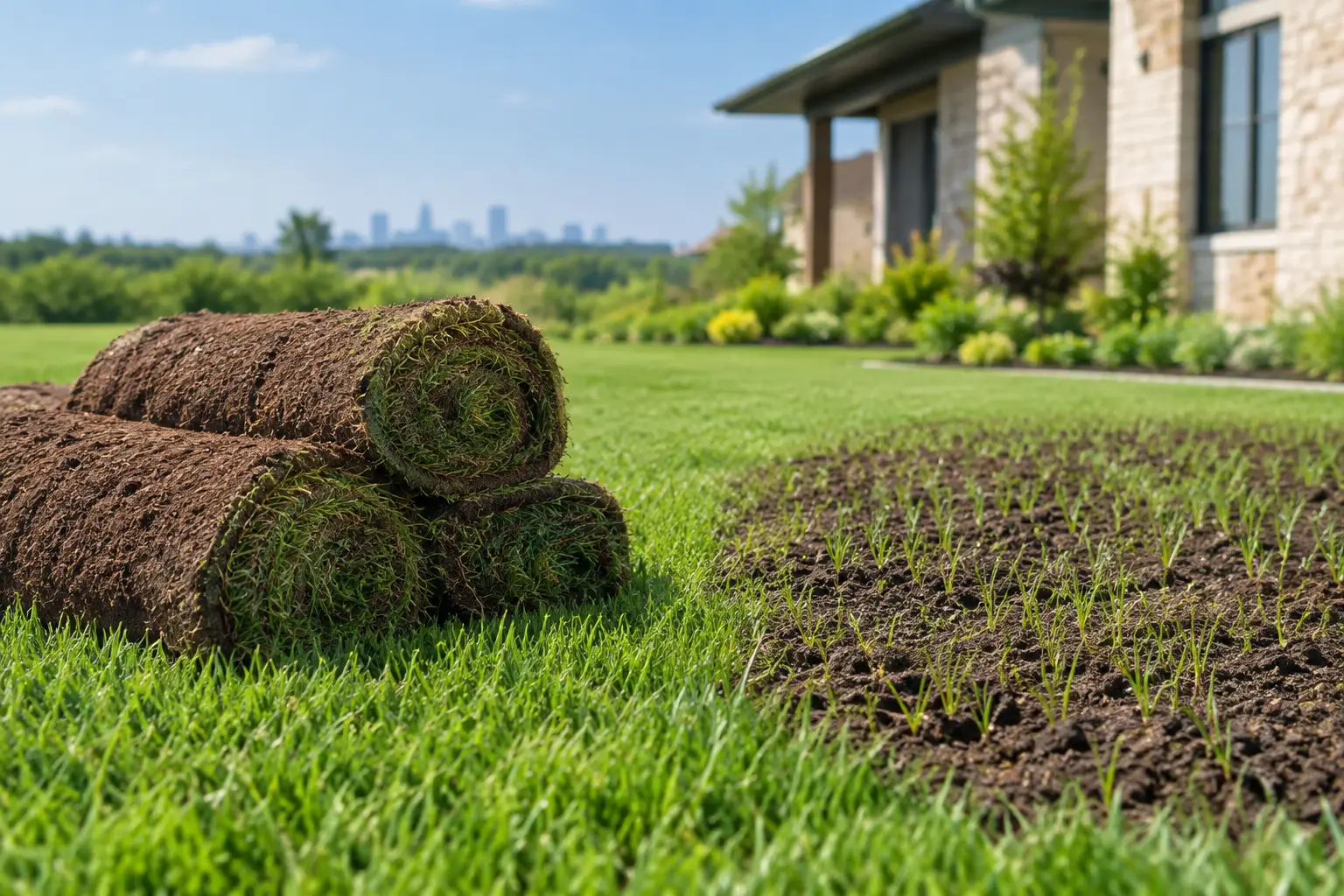
A bare yard after concrete work, drainage repairs, or a patio installation needs more than a quick layer of green. The sod versus seed lawn decision affects how soon you can use the space, how much water it needs, and whether it can stand up to Austin heat. Both options can produce a healthy lawn, but they solve different problems.
For most Central Texas properties, the right answer comes down to timing, budget, sun exposure, irrigation, and how quickly the yard needs to look finished. A new lawn should also be planned alongside grading, drainage, walkways, patios, and planting beds. Grass cannot correct poor site preparation.
Sod Versus Seed Lawn: The Main Difference
Sod is mature turf grass grown off-site, cut into rolls or squares, then installed over prepared soil. It gives a property immediate coverage and a finished appearance on day one. Seed starts from scratch. It costs less upfront, but it needs favorable weather, consistent moisture, and more patience while the grass establishes.
Sod is usually the better fit when a homeowner needs fast curb appeal, has erosion concerns on exposed soil, or wants to complete a larger outdoor project without leaving dirt in place for weeks. Seed can make sense for a budget-conscious project, a large open area, or a lawn renovation scheduled during the proper planting window.
Neither choice is automatically low-maintenance. New sod and new seed both require regular watering, traffic restrictions, and careful mowing during establishment. The difference is that sod starts with a stronger visual result, while seed asks the homeowner to wait for one.
When Sod Makes More Sense in Austin
Austin homeowners often choose sod because it handles the practical demands of a completed landscape project. Once installed correctly, sod covers the soil right away. That helps reduce mud, limits runoff from light rain, and gives kids, pets, tenants, and neighbors a clear sense that the work is nearly done.
Faster results for active properties
A newly sodded yard can look established immediately, although it is not ready for heavy use right away. Roots still need time to grow into the native soil. In most cases, foot traffic should stay light for the first few weeks, and mowing should wait until the sod has rooted and reached the appropriate height.
That said, sod is a strong choice for homes going on the market, rental turnovers, newly completed patios, and properties where exposed dirt would create a mess. It also works well around new concrete flatwork, where clean edges and finished grading matter.
Better protection on bare or sloped ground
Central Texas storms can move a lot of water quickly. A bare yard with uneven grades can wash out before seed has a chance to establish. Sod provides immediate soil coverage, which is helpful around slopes, drainage swales, sidewalk edges, and areas disturbed by construction.
It is not a substitute for proper drainage. If water regularly pools near a foundation, patio, or driveway, the grade and runoff path should be corrected before sod goes down. Installing turf over an unresolved drainage issue only hides the problem temporarily.
More predictable grass selection
Sod lets homeowners select a grass type that fits the yard's conditions. Bermuda is durable, heat-tolerant, and well suited to sunny Austin lawns. It recovers well from use but needs plenty of direct sun. St. Augustine handles more shade than Bermuda and creates a thicker look, but it needs more water and can struggle in hard-used areas. Zoysia offers a dense, refined appearance and good heat tolerance, though it generally costs more and establishes more slowly than Bermuda.
The best grass is not always the one with the darkest color at installation. A contractor should consider sun patterns, irrigation coverage, soil conditions, expected foot traffic, and maintenance expectations before selecting turf.
When Lawn Seed Is the Better Value
Seed costs less than sod because the material and installation are less intensive. For a large, open lot with good soil and no deadline, that savings can be meaningful. It also gives a homeowner more flexibility to seed a particular mix or fill in areas over time.
In Austin, though, timing matters more with seed than it does with sod. Cool-season seed is typically used for temporary winter color and is not a permanent solution to Texas summer heat. Warm-season grasses such as Bermuda need warm soil to germinate and establish. Seeding during a hot, dry stretch can lead to uneven results and high water use.
Seed requires steady attention
Fresh seed must stay consistently moist during germination. That often means short, frequent watering cycles, adjusted for temperature, rain, wind, and soil type. Letting the surface dry out at the wrong stage can reduce germination. Overwatering can wash seed into low spots or create conditions for disease.
The lawn will also be vulnerable longer. Birds, runoff, weeds, and foot traffic can all affect results. A seeded lawn may need touch-up work where growth comes in thin, especially if the ground was not graded, raked, and compacted properly beforehand.
Seed is a reasonable option when the homeowner accepts that process. It is less ideal when the property needs a clean finished look quickly or when construction has left exposed areas that could erode before grass develops.
Cost Is More Than the Initial Price
At first glance, seed is cheaper and sod is more expensive. That is generally true. But the installed cost of a lawn includes more than grass material. Soil preparation, grading, removal of old turf, delivery access, irrigation adjustments, and follow-up maintenance can all affect the final investment.
A low-priced sod installation can become expensive if the turf is laid over compacted soil, poor grades, or inadequate irrigation. The same is true for seed. Saving on material does not help if the lawn must be reseeded, patched repeatedly, or rebuilt after runoff damages the surface.
For many Austin yards, it makes sense to spend money first on the groundwork. Remove construction debris, establish the right slope away from structures, loosen compacted soil where needed, add appropriate soil amendments, and confirm sprinkler coverage. Then choose sod or seed based on the property’s schedule and goals.
Water Needs and Establishment Expectations
New sod needs deep enough watering to keep the sod and the soil beneath it moist while roots establish. The goal is not to keep the surface soggy. As rooting improves, watering should transition from frequent light cycles to deeper, less frequent irrigation that encourages stronger roots.
Seed starts with more frequent light watering because the seed sits at or near the soil surface. Once germination occurs and seedlings grow, the schedule should gradually change. This transition is where many lawn projects fail. Continuing shallow watering for too long can lead to weak roots, while reducing water too quickly can stress young grass.
Austin water restrictions and seasonal conditions should be part of the plan before installation begins. A property without reliable irrigation may be better served by scheduling work for a milder period, reducing the lawn area, or using drought-aware landscape beds where turf is not necessary.
Do Not Ignore Shade, Soil, and Yard Use
A lawn that looks good at installation can decline quickly if the grass type does not match the site. Bermuda under dense oak canopy will thin out. St. Augustine in full blazing sun can require more water than a homeowner expects. Heavy clay soil can hold water in some areas while compacted ground sheds it in others.
Think about how the space will be used. A backyard for dogs and weekend gatherings needs tougher turf and a realistic traffic plan. A front yard designed mainly for curb appeal may prioritize uniform color and clean edging. Narrow strips between a driveway and sidewalk often take reflected heat and may need a different approach than the main lawn.
Texan Strong Builds approaches landscape work as part of the full exterior site, not as grass placed around finished concrete. When grading, hardscape edges, drainage, and turf work together, the property is easier to maintain and built for the conditions it will face.
A Practical Choice for Most Austin Properties
Choose sod when you need a finished appearance quickly, need immediate soil coverage, or want the most predictable result from a specific turf variety. It is especially practical after hardscape work, on visible front yards, and on areas where erosion or mud is a concern.
Choose seed when the site is large and open, the budget is tight, the planting season is right, and you can commit to close watering and monitoring. Seed is not the shortcut option. It is the slower, lower-material-cost option that demands more time and favorable conditions.
Before choosing either, walk the yard at different times of day, note where water moves after rain, and be honest about how much maintenance the property can support. A well-prepared lawn matched to Austin conditions will perform better than the fastest or cheapest option chosen without a plan.