
Sod or Xeriscape Yard: What Works in Austin?
Choosing sod or xeriscape yard landscaping in Austin? Compare water use, upkeep, cost, shade, drainage, and curb appeal before you build in hot summers.
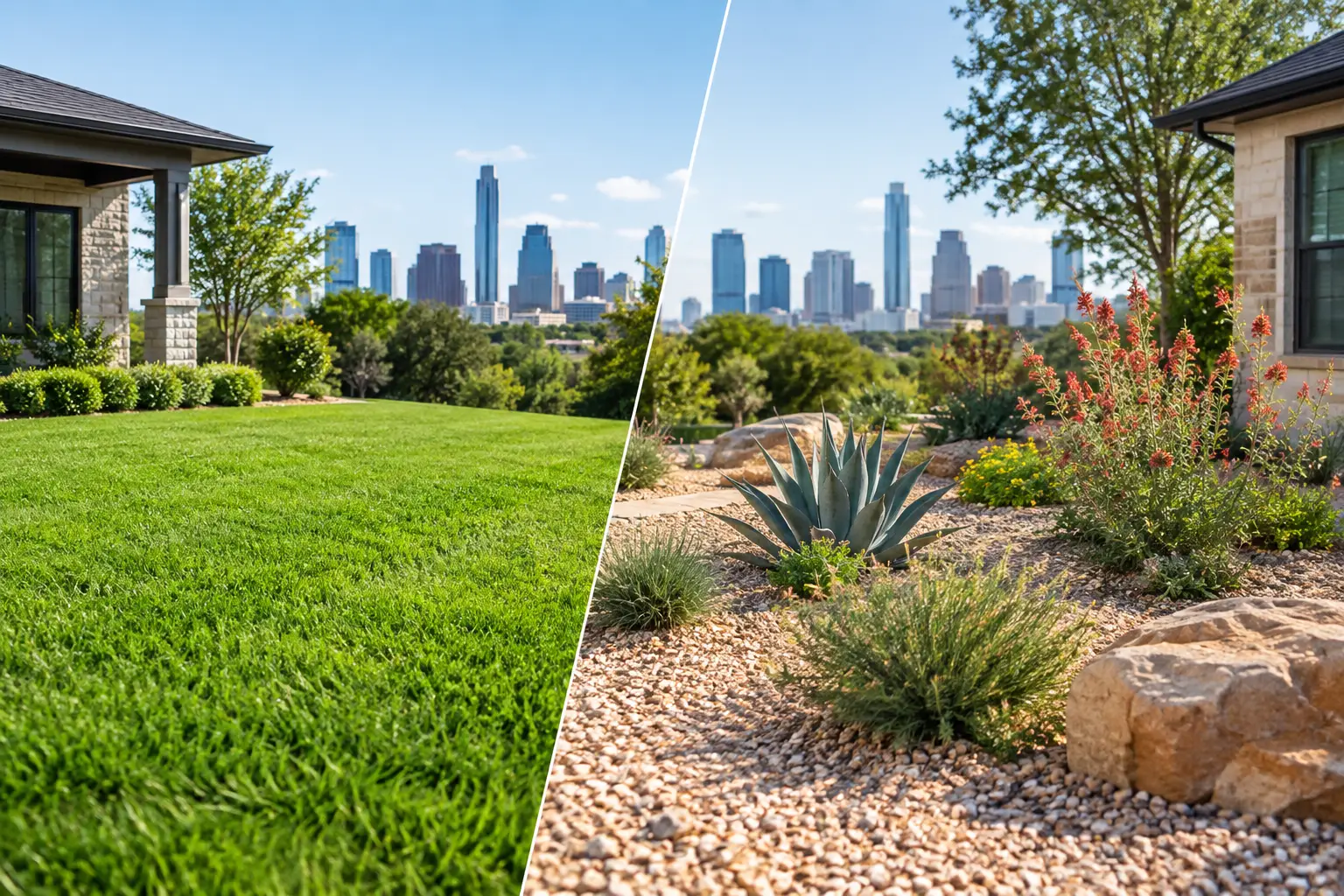
A sod or xeriscape yard decision affects far more than curb appeal in Austin. It determines how much water your property needs during a dry summer, how often you spend weekends on maintenance, and how well the landscape holds up through heat, rocky soil, and sudden downpours. The better choice is the one that fits how you use the property, not simply the one that looks best in a photo.
For many Central Texas homes, the strongest answer is not all turf or all xeriscape. A planned mix of usable sod, durable hardscape, and low-water planting beds often gives homeowners the best return: room to live outside without building a landscape that constantly fights the climate.
Sod or Xeriscape Yard: Start With How You Use It
Sod makes sense where people need a soft, open surface. A backyard play area, a dog run, space around a pool, or a front lawn where a clean green look matters can all justify turf. Grass also helps cool the area around a home and gives children and pets a forgiving place to move around.
The trade-off is ongoing work. Even drought-tolerant turf needs water to establish, and it needs regular mowing, edging, fertilizing, and occasional weed control. During Austin heat and watering restrictions, a large lawn can become an expensive commitment. Thin turf, exposed soil, and persistent weeds are common when the lawn was installed without a realistic irrigation plan.
Xeriscape is built around water-wise design rather than the idea of a yard with no plants. It typically uses native or adapted plants, mulch, gravel, efficient irrigation, and plant groupings with similar water needs. Once established, it generally requires less irrigation and mowing than a full sod yard.
That does not mean xeriscape is maintenance-free. Beds still need weeding, mulch needs replenishing, plants need pruning, and irrigation must be checked. A poorly installed xeriscape can look sparse, collect weeds, or create drainage problems just as quickly as a neglected lawn. The material selection and installation work matter.
When Sod Is the Better Choice
Choose sod when the outdoor area needs to function as active living space. If your household regularly uses the yard for games, pets, gatherings, or children, a dedicated lawn zone is practical. Sod also gives an immediate finished appearance, which can be useful for a home sale, rental turnover, or a front-yard refresh.
In Austin, grass selection should match the site instead of following a one-size-fits-all recommendation. Bermuda performs well in full sun and handles traffic, but it needs sunlight and can spread aggressively into planting beds. Zoysia offers a denser, refined appearance and can tolerate some shade, though it may establish more slowly and costs more upfront. St. Augustine works in shadier settings but generally needs more water and can struggle in intense sun and drought conditions.
Before laying sod, address the ground underneath it. Central Texas properties often have compacted soil, caliche, limestone, slopes, and uneven drainage. Sod placed directly over poor preparation may green up briefly, then develop shallow roots and dry patches. Proper grading, soil preparation, irrigation coverage, and edging give the lawn a fair chance to last.
Sod is usually a better fit for a limited area than an entire lot. A well-built lawn near a patio can provide more value than thousands of square feet of turf that no one uses.
When Xeriscape Makes More Sense
A xeriscape yard is a strong option for homeowners who want to lower water demand and reduce weekly yard chores without accepting a bare, gravel-only landscape. It works especially well in front yards, side yards, sloped areas, parking strips, and other spaces that do not need to support regular foot traffic.
The best Austin xeriscapes use layers and contrast. Native grasses can soften a fence line. Shrubs and small trees create structure. Perennials add seasonal color, while rock or mulch gives the beds a clean finish and helps retain soil moisture. Plants such as Texas sage, lantana, olive trees, agave, yucca, salvia, and certain ornamental grasses can perform well when selected for the specific light and soil conditions.
Drainage should be part of the plan from day one. Austin storms can drop a heavy amount of water in a short period. A xeriscape should direct runoff away from the foundation while allowing appropriate areas to absorb water. Grading, dry creek features, drainage rock, and strategically placed plant beds can help manage water rather than letting it cut channels through loose mulch or wash gravel onto a driveway.
Avoid covering every open area with decorative rock. Rock can hold heat, make the yard feel harsh in summer, and complicate future changes. It is best used deliberately, with adequate fabric or base preparation where needed, solid edging, and enough planting to keep the landscape from looking unfinished.
Compare Water, Upkeep, and Long-Term Cost
The upfront price of sod versus xeriscape depends on the scope. A simple sod installation may cost less initially than a detailed landscape design with stone, shrubs, drip irrigation, edging, and drainage work. But initial installation is only part of the cost.
Turf carries recurring expenses: irrigation, mowing equipment or lawn service, fertilizer, weed treatments, and repairs after drought, pests, or heavy traffic. Xeriscape commonly costs more to install when it includes quality plant material and hardscape details, but its long-term water use and routine labor can be lower.
There is no universal winner on cost. A small, well-irrigated lawn can be affordable to maintain. A large, elaborate xeriscape with extensive boulders, premium plants, and custom stonework may cost significantly more than sod. The right comparison is between two complete plans for your actual property, including site preparation and drainage, not just the price per square foot of grass or gravel.
A Hybrid Yard Often Works Best
For most Austin homeowners, a hybrid layout is the practical middle ground. Keep sod where it earns its place, such as near a patio or in a defined play area. Use xeriscape beds around the perimeter, along side yards, on difficult slopes, and in highly visible front-yard zones. Add concrete walkways, patios, or seating areas where people naturally gather so the yard serves a purpose year-round.
This approach reduces the size of the irrigated lawn without giving up a comfortable outdoor space. It also creates cleaner boundaries for maintenance. Sod stays contained with edging, planting beds get drip irrigation, and hardscape provides durable paths that do not turn muddy after rain.
A thoughtful layout can also improve property function. For example, replacing an unused strip of struggling turf with a concrete path and low-water planting bed may improve access, control erosion, and reduce mowing all at once. Those are practical upgrades that show up in daily use, not just listing photos.
Questions to Settle Before Installation
Look at the property honestly before choosing a direction. How many hours of direct sun does the yard get? Where does water flow after a heavy rain? Is there an existing irrigation system, and does it cover the area evenly? Will dogs, children, or frequent guests use the space? Are you willing to mow every week during the growing season?
Also consider the neighborhood and the home itself. A traditional house may benefit from a crisp turf front yard with structured planting beds, while a modern property may look right with native grasses, stone, and a more natural planting design. Either can work in Austin when the materials are installed for the site.
Texan Strong Builds can help homeowners plan sod, xeriscape, concrete, grading, and landscape features as one coordinated outdoor project. That prevents a new patio, drainage route, or planting bed from becoming an afterthought after the lawn is already in place.
The goal is not to choose the trendiest yard. Build the yard you will actually use, can reasonably maintain, and can count on to stand up to Central Texas weather.