
Residential Concrete Project Guide for Austin Homes
Use this residential concrete project guide to plan patios, driveways, walkways, and slabs built for Austin soil, heat, drainage, and daily use with care.
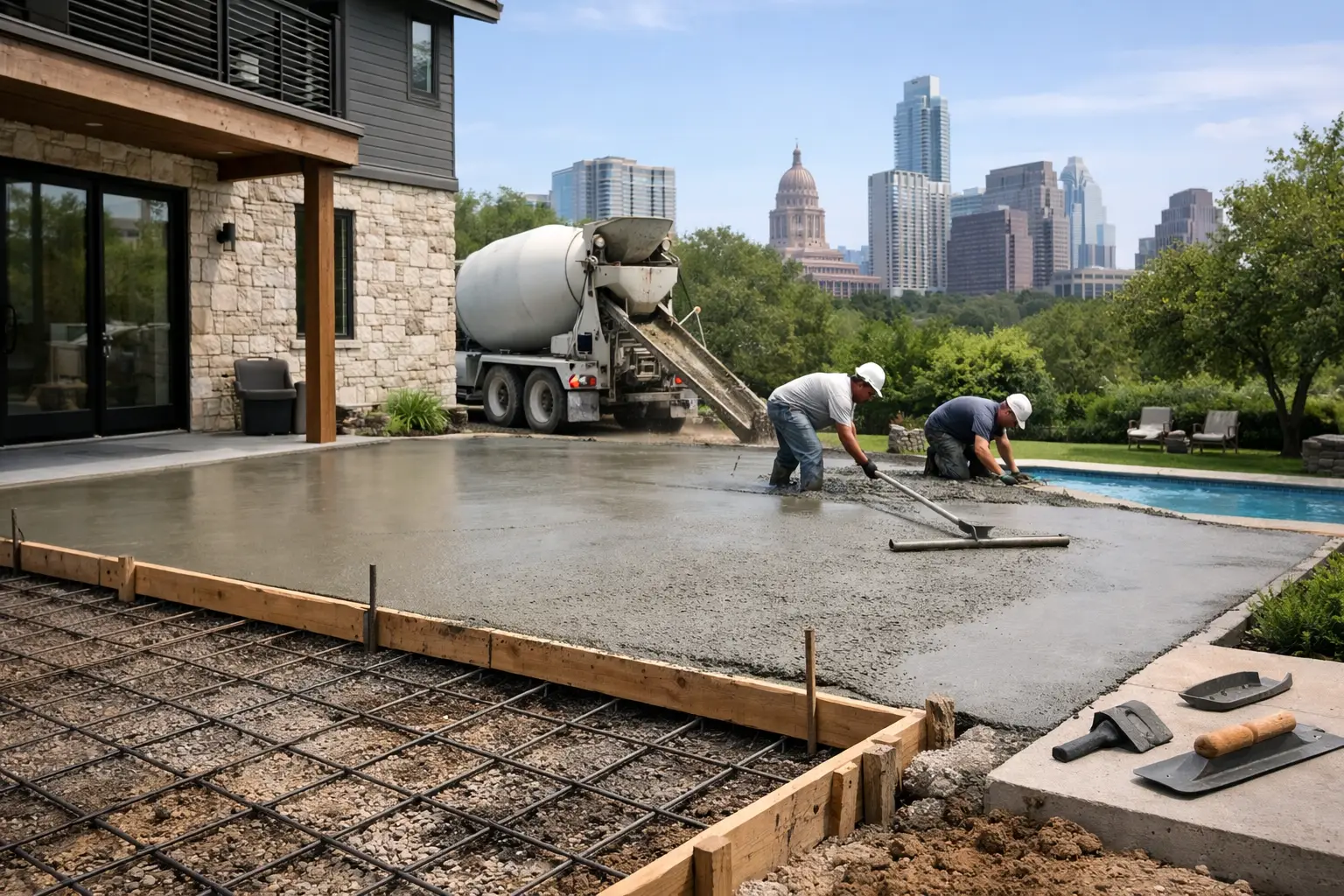
A concrete project can make an Austin property easier to use, easier to maintain, and more attractive from the street. But the best result does not start when the truck arrives. This residential concrete project guide helps homeowners, investors, and property managers plan the work around real local conditions: expansive soils, sudden heavy rain, long heat cycles, drainage concerns, and the way the space will actually be used.
Concrete is permanent compared with many exterior upgrades. A patio, driveway, walkway, or equipment pad should be planned as part of the property, not treated as a quick surface change. Getting the grade, base, layout, reinforcement, joints, and finish right protects the investment long after the project is complete.
Start With the Job the Concrete Must Do
Every concrete surface needs a clear purpose. A front walk needs safe, direct access and a clean connection between the driveway, porch, and landscape. A patio needs usable dimensions for furniture, cooking, circulation, and shade. A driveway must carry vehicle weight without creating drainage problems at the garage or street.
Before choosing a shape or finish, ask how the area will function on an ordinary day. Will it hold two vehicles? Does it need room for a grill and dining table? Is a trash-bin pad needed beside the gate? Are you creating access for a mower, a shed, or an HVAC unit? These answers determine thickness, placement, slope, and the amount of site preparation required.
It also helps to think ahead. A narrow patio may look adequate when it is empty, then feel crowded once furniture is in place. A driveway extension can solve parking issues, but only if it respects property boundaries, drainage routes, and local requirements. Good planning avoids tearing out new work to solve a predictable problem later.
Assess Austin Soil, Grade, and Drainage First
Central Texas ground conditions deserve attention before any forming begins. Many Austin-area properties sit on expansive clay soils that move as moisture levels change. Other lots have shallow rock, uneven grades, or compacted areas left behind by previous construction. Concrete can handle demanding conditions when the subgrade and base are prepared correctly. It cannot make poor site conditions disappear.
The first priority is water management. Concrete should drain away from the home and direct water toward an appropriate outlet without pushing runoff into a neighbor's yard. Even a well-finished slab can become a problem if water ponds along its edge, runs toward the foundation, or washes soil out from beneath it.
A contractor should evaluate existing slopes, downspout discharge, nearby beds, irrigation, gates, and hardscape transitions. Sometimes the right solution is a simple slope adjustment. Other times, the project needs drainage improvements, a gravel border, a swale, or changes to the surrounding landscape. This is one reason concrete and landscaping should be planned together rather than as unrelated jobs.
Rock excavation can also affect the schedule and budget. On a rocky lot, achieving the proper depth may require more labor and equipment than it would on softer ground. On clay-heavy soil, careful grading and compaction matter even more. There is no one-size-fits-all prep method for every Austin yard.
Choose the Right Concrete Application
Residential concrete is not limited to a standard gray slab. The right application depends on traffic, maintenance expectations, architecture, and budget.
Patios and Outdoor Living Areas
Patios are usually designed around how people gather. A simple broom-finished patio is practical, slip-resistant, and cost-effective. Decorative options such as stamped patterns, exposed aggregate, borders, or integral color can add visual interest, but they require a larger budget and should fit the home rather than compete with it.
When planning a patio, leave enough space for doors to swing, chairs to pull out, and people to move around seating. Consider where rainwater will go and whether a future pergola, outdoor kitchen, fire feature, or landscape lighting may be added. Those features can affect footing locations, utility planning, and the final layout.
Driveways and Parking Extensions
Driveways take more abuse than patios. Vehicle loads, turning tires, heat, and repeated use all put stress on the surface. Thickness, base preparation, reinforcement, and joint placement should reflect the intended use. A passenger-car driveway is different from an area that will regularly support trucks, trailers, or service vehicles.
Driveway additions should also be reviewed for access, curb transitions, setbacks, and drainage. A larger paved area can change how water moves across the property. It may also remove soil or planting space that previously absorbed rainfall. The goal is extra parking without creating a foundation or runoff issue.
Walkways, Steps, and Utility Pads
Walkways improve safety and reduce mud tracked into the house. They work especially well between driveways, side gates, patios, sheds, and backyard features. Width matters: a path used for a wheelbarrow, bins, or side-by-side walking needs more room than a simple stepping route.
Steps need consistent riser heights, solid support, and a layout that feels natural from one level to the next. Utility pads for condensers, generators, or storage sheds need stable, level support without trapping water against the structure. Small concrete jobs still require proper site preparation because settlement is just as frustrating on a narrow path as it is on a large slab.
Build the Base Before You Pour
The visible concrete is only part of the system. Long-term performance depends on what sits below it. The work typically includes clearing the area, establishing the grade, excavating to the required depth, preparing and compacting the subgrade, installing base material where needed, and setting forms to the correct elevation and slope.
Reinforcement can help manage cracking and improve slab performance, but it is not a substitute for a stable base or proper joints. Concrete naturally shrinks as it cures, and small cracks can occur even in quality work. Control joints give that movement a planned place to occur. Their spacing and placement should follow the slab layout, including corners, inside angles, and changes in width.
Thickness should match the application. A light-use walkway does not need the same build as a driveway, and a pad carrying heavy equipment may need a different approach again. Ask the contractor to explain the planned excavation depth, base preparation, slab thickness, reinforcement, drainage slope, and joint layout in plain language before work begins.
Select a Finish That Fits Texas Use
The finish affects both appearance and daily use. A broom finish is a common choice for driveways, walks, and patios because it adds traction, especially when surfaces are wet. A smooth finish can look clean but may be slippery in areas exposed to rain or pool water. Decorative finishes can make an outdoor space feel more custom, though they may need additional sealing and periodic maintenance.
Color is another decision that should be made with the Texas sun in mind. Lighter tones can feel less heat-intensive underfoot than dark surfaces. Color also changes over time due to weather, use, and cleaning. If you want a decorative look, review realistic samples and discuss where saw cuts, joints, and color variation will appear.
Avoid choosing a finish solely from a photo. The right choice has to perform on your property, under your shade conditions, with your landscaping, and for the way your household uses the space.
Know What Affects Cost and Schedule
Concrete pricing is not based only on square footage. Access is a major factor. A backyard with a narrow side gate may require wheelbarrow work or specialized placement methods. Demolition of old concrete, rock removal, tree roots, grading corrections, drainage work, decorative finishes, and difficult forms can all change the scope.
Weather matters as well. Austin heat can speed up finishing and curing conditions, while rain can delay preparation or placement. A dependable contractor plans around the forecast but will not force a pour when site conditions could compromise the work.
The cure period also deserves respect. Concrete may look finished quickly, but it continues gaining strength over time. Your contractor should provide clear instructions on when to walk on it, move furniture onto it, drive on it, seal it, or begin surrounding landscape work. Rushing heavy use is an avoidable mistake.
Work With a Contractor Who Plans the Whole Site
A useful estimate should describe more than a final price. It should identify the project area, demolition or excavation needs, thickness, reinforcement approach, finish, drainage considerations, and any exclusions that could affect the budget. If landscaping is part of the plan, coordinate it before the concrete is placed. That includes bed edges, irrigation routes, tree protection, gravel zones, and access paths.
Texan Strong Builds approaches concrete and landscape work as connected parts of one exterior project. That matters when a patio needs planting beds around it, when a walkway must tie into a gate and drainage plan, or when a driveway extension needs a finished edge that still looks right with the property.
A well-planned concrete surface should feel like it has always belonged there: graded correctly, built for the load, easy to use, and tied cleanly into the rest of the yard. Start with the conditions on your property, make decisions based on function, and give the preparation work the same attention as the finish.