
Outdoor Living Design Trends for Austin Homes
Outdoor living design trends for Austin homes: durable patios, smart shade, drainage planning, and low-water landscaping built for Texas heat year-round.
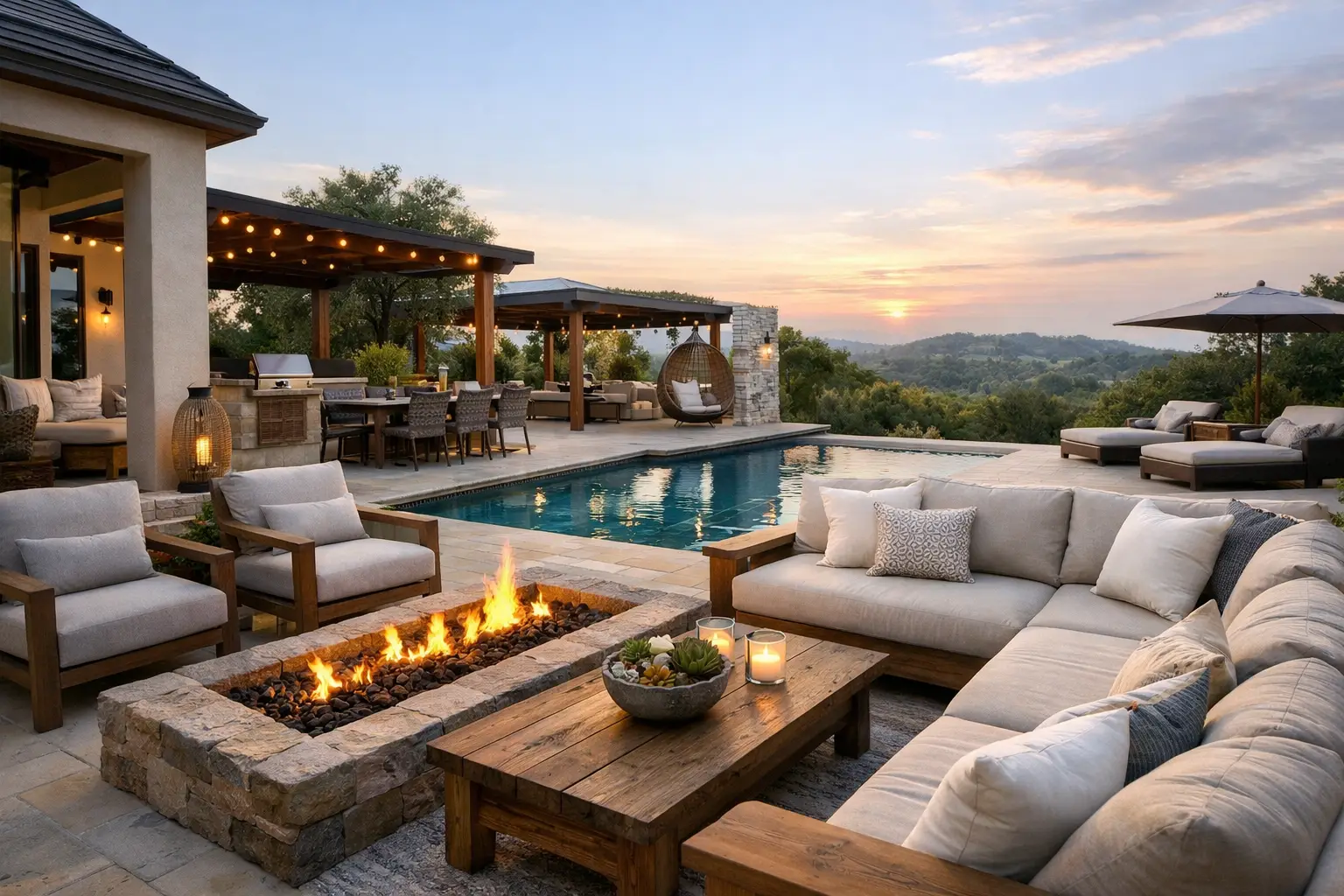
A backyard in Austin has to handle more than a few weekend cookouts. It needs to stand up to hard sun, sudden downpours, dry stretches, heavy foot traffic, and the day-to-day use that makes a property feel like home. The best outdoor living design trends are not about copying a magazine photo. They are about building outdoor spaces that work in Central Texas and continue to look good after several summers.
For homeowners, investors, and property managers, the strongest trend is simple: outdoor improvements are becoming more purposeful. Patios, walkways, planting beds, shade structures, and drainage are being planned together instead of treated as separate projects. That approach produces a cleaner result and helps avoid expensive rework later.
Outdoor Living Design Trends Built for Real Use
The most useful outdoor spaces now function as extensions of the house. A concrete patio is no longer just a slab outside the back door. It may include a dining area, a grilling zone, a fire feature, space for lounge furniture, and a clear route to the yard. The layout matters as much as the finish.
Homeowners are also choosing defined zones over one oversized open area. A compact sitting space near the house, a separate cooking area, and a pathway to a garden or play space can make a backyard feel organized without making it feel crowded. This works especially well on typical Austin lots where every usable square foot matters.
The trade-off is that more zones require better planning. Each area needs the right base, slope, drainage path, and access point. Adding a grill station or pergola after a patio is poured can be done, but it is usually more efficient to account for those elements before concrete work begins.
Larger Patios With Cleaner Lines
Large-format concrete patios remain a practical choice because they provide a durable, low-maintenance foundation for outdoor living. Clean edges, simple geometry, and wider usable surfaces fit the current preference for modern but livable yards. A rectangular patio can work well, but slight changes in elevation, integrated steps, or a curved edge may help it fit the home and landscape better.
Broom-finished concrete is still one of the smartest options for traction and everyday durability. Decorative finishes, integral color, exposed aggregate, and stamped concrete can add character, but they should match the property and maintenance expectations. A highly detailed finish can look great, yet it may not be the best fit for every rental property or high-traffic area.
In Austin, proper installation matters more than chasing a specific look. The subgrade, reinforcement, joint placement, and slope all affect how concrete performs over time. Central Texas soils can move, and water has a way of finding weak points. A patio should direct runoff away from the home while staying comfortable and usable.
Shade Is a Core Part of Outdoor Living Design
Shade has moved from a nice extra to a basic requirement. An uncovered patio may look good in spring, but it can become difficult to use during a hot Texas afternoon. Current outdoor living design trends favor shade solutions that are planned around how the space will actually be used.
Pergolas, covered patio extensions, shade sails, and well-placed trees all have a role. The right option depends on the yard, the home’s orientation, available budget, and desired level of weather protection. A pergola provides structure and visual definition while still allowing airflow. A solid cover offers more relief from sun and rain but may require greater investment and coordination with existing rooflines.
Landscaping can support the shade plan as well. Trees positioned to provide afternoon relief can improve comfort and add long-term value, though they need room to mature and should not interfere with foundations, utilities, or hardscape. For immediate use, a built shade feature usually carries more weight. For the long term, combining structure and plant material often gives the best result.
Outdoor Kitchens With a Practical Footprint
Outdoor kitchens continue to be popular, but the best versions are not always the largest ones. A well-built grill surround, prep counter, and durable surface can provide more value than a full kitchen packed with appliances that rarely get used. Homeowners are prioritizing convenient placement near the house, enough counter room for serving, and a layout that does not block circulation across the patio.
Concrete, masonry, and weather-resistant surfaces are natural choices for these areas. Materials need to handle heat, grease, moisture, and seasonal temperature changes. If plumbing, gas, or electrical work is part of the plan, those details should be coordinated before surrounding hardscape and landscaping are finalized.
For a rental or investment property, a simple grilling pad or defined entertainment area may be the more sensible upgrade. It improves usability without adding maintenance responsibilities that may not suit every tenant or buyer.
Low-Water Landscaping With More Structure
Austin homeowners are moving away from landscaping that depends on constant watering and frequent replacement. The trend is toward structured planting plans with native and adapted species, mulch, stone, and defined bed lines. The goal is not a bare, rock-heavy yard. It is a landscape that has color, texture, and seasonal interest without demanding excessive water.
Ornamental grasses, hardy shrubs, drought-tolerant perennials, and shade-appropriate plantings can create a fuller look when they are installed in the right locations. Sun exposure is a major factor. A plant that performs well on the north side of a house may struggle in an exposed west-facing bed with afternoon heat.
Mulch remains useful for protecting soil moisture and reducing weeds, while rock can be effective in selected areas for drainage and visual contrast. Too much rock around a home can hold heat and make the yard feel harsher in summer. A balanced plan uses hardscape where it is needed, plant material where it adds comfort, and open areas where people or pets need room to move.
Defined Edges and Functional Walkways
Crisp edging is showing up more often because it makes a landscape look maintained and keeps materials in place. Concrete curbing, stone borders, and clean transitions between lawn, beds, and patios create order without adding unnecessary decoration.
Walkways are receiving more attention too. A path from the driveway to a side gate, trash area, backyard, or detached structure can solve a real access problem while improving the property’s appearance. Concrete walkways are durable and easy to maintain, especially where foot traffic would otherwise wear down grass or create muddy routes.
The best path is not always perfectly straight. It should follow how people naturally move through the property. At the same time, complicated curves and tight turns can add cost without improving function. Good design balances appearance with practical use.
Drainage Is No Longer an Afterthought
A well-designed outdoor space needs a plan for water. Austin can go weeks with little rain and then receive a heavy storm that tests every low spot in the yard. That is why drainage improvements are becoming part of larger patio and landscaping projects rather than a separate repair after problems appear.
Concrete should be sloped correctly, planting beds should not trap water against the foundation, and downspout discharge should be considered early. In some yards, grading adjustments, drainage swales, gravel areas, or collection systems may be needed. The right solution depends on the property’s elevation, soil conditions, existing hardscape, and where runoff currently travels.
Ignoring drainage can damage more than landscaping. It can lead to standing water, soil erosion, muddy walkways, shifting hardscape, and moisture concerns around the home. A contractor should look at the whole site before recommending a patio size, walkway location, or planting layout.
Warm Lighting and Simple Finishing Details
Outdoor lighting is becoming more intentional, especially around patios, paths, entrances, and garden edges. The goal is useful light that supports safety and evening use without making the yard feel overlit. Warm-toned fixtures generally create a more comfortable atmosphere than harsh, bright lighting.
Low-voltage path lighting, step lights, and subtle uplighting can highlight a finished project after dark. Placement matters. Lights should help people see changes in elevation and travel routes, not shine directly into windows or neighboring yards.
Finishing details such as seating walls, fire pits, raised planters, and privacy screens can make an outdoor space feel complete. These features are worth considering when they serve a clear purpose. A seat wall can define a patio edge and provide extra seating. A raised planter can separate spaces and make maintenance easier. Adding features simply because they are popular can make a yard feel crowded and drive up the budget.
A strong outdoor project starts with how you want to use the space, then builds the concrete, drainage, shade, and landscape plan around that goal. For Austin property owners, working with a contractor who understands both hardscape and landscaping can keep the job coordinated from the ground preparation through the final planting. Build for the heat, plan for the rain, and choose materials that will still earn their place years from now.