
How to Choose Driveway Finish for Austin Homes
Learn how to choose driveway finish for Austin homes, comparing broomed, exposed aggregate, stamped, and smooth concrete for heat, traction, and upkeep.
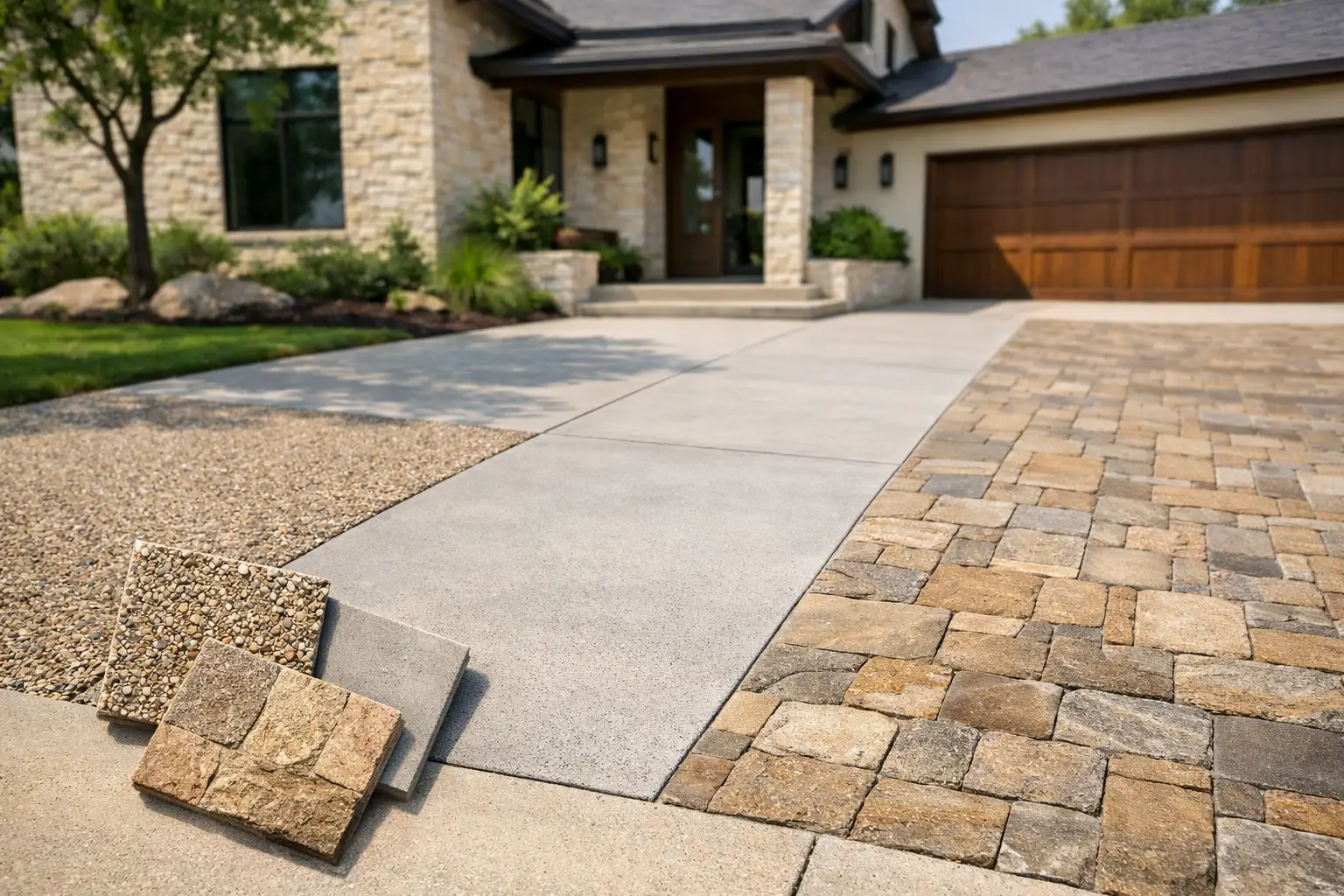
A driveway has to handle more than parked vehicles in Central Texas. It takes summer heat, sudden downpours, tire traffic, oil drips, and the daily view from the street. Knowing how to choose driveway finish means looking beyond color samples. The right finish needs to fit the home, provide safe footing, and hold up under Austin conditions without creating unnecessary maintenance.
Start With What the Driveway Must Do
A finish is the texture and appearance at the top of the concrete slab. It affects traction, how visible stains become, how the driveway reflects sunlight, and the overall curb appeal. It does not replace proper site preparation, reinforcement, drainage, joint layout, or concrete placement. Those construction details are what protect the slab from movement and cracking.
For most Austin homeowners, a standard residential driveway needs a finish that is durable, easy to clean, and not slippery when wet. A property with a steep approach, frequent foot traffic, or a path from the driveway to the front door needs even more attention to traction. A high-visibility front driveway may justify a more decorative option, but that choice should be made with its maintenance requirements in mind.
Before selecting a finish, consider how many vehicles use the drive, whether trucks or trailers will park there, how much direct sun it receives, and where water flows during a hard rain. If landscaping borders the driveway, the finish should also work with the stone, planting beds, and walkways planned around it.
How to Choose Driveway Finish by Performance
The best-looking finish is not always the best choice for the job. In Austin, surface texture matters because rain can arrive fast after long dry stretches, leaving dust, pollen, and vehicle residue on the slab. A driveway that feels slick under wet shoes is not a good trade for a polished appearance.
Broom finish: practical and dependable
A broom finish is created by pulling a specialized broom across freshly placed concrete. It leaves fine, consistent grooves that provide traction while keeping the surface clean and straightforward. This is the standard choice for many residential driveways because it performs well, costs less than decorative finishes, and works with nearly any home style.
The direction and depth of the broom texture should be controlled. A finish that is too aggressive can hold dirt and make sweeping more difficult. Too light, and it may not provide enough grip on a slope. For most driveways, a properly applied medium broom finish offers the right balance.
Broom-finished concrete can be left natural gray or colored. Integral color is mixed into the concrete rather than applied only on top, which gives a more consistent appearance if the surface experiences normal wear. Natural gray remains the lowest-maintenance option and often suits modern, ranch, and traditional Austin homes.
Exposed aggregate: texture with a more decorative look
Exposed aggregate reveals small stones in the concrete surface after the top cement paste is removed. It gives the driveway a textured, higher-end appearance and naturally provides good traction. The mix of stone colors can complement limestone, brick, native landscaping, and other common Texas exterior materials.
This finish is more labor-intensive than broomed concrete, so it generally costs more. It also requires careful timing during installation. When it is done well, exposed aggregate is durable and visually distinct. When it is rushed or unevenly exposed, the result can look patchy and be harder to repair without showing a difference.
Choose exposed aggregate when curb appeal is a priority and you are willing to maintain it with periodic cleaning and sealing. It is especially effective on a driveway that is visible from the street but does not need to match a highly formal architectural style.
Stamped concrete: strong visual impact, more upkeep
Stamped concrete uses patterned mats to create the look of stone, slate, tile, or other materials. It can give a broad front drive or circular driveway a more custom appearance without installing individual pavers. Color hardeners, release colors, and saw-cut joints can add depth to the design.
Stamped concrete comes with trade-offs. The texture may be less slip-resistant than a broom or exposed aggregate finish, particularly when a glossy sealer is used. Color can also fade in direct Texas sun, and resealing is part of the long-term maintenance plan. A stamped pattern can be a good fit for a covered entry area, decorative border, or lower-traffic section, but a full stamped driveway should be selected with realistic expectations about maintenance.
If stamped concrete is the goal, request a sample that shows the final texture and sealer sheen. Avoid choosing from a photo alone. A lower-sheen sealer and a traction additive can help reduce slickness without giving up the finished look.
Smooth or troweled finishes: use with caution
A smooth, hard-troweled surface has a clean, contemporary appearance. It may suit a protected patio or interior slab, but it is usually not the first choice for an exterior driveway. When wet, smooth concrete can become slick, especially on sloped areas or near garage entrances where tires bring in water and oil.
A light trowel finish with a separate traction treatment may work in a specific design, but homeowners should not assume smooth means better. On a driveway, safe footing and tire grip generally matter more than a polished look.
Match the Finish to Your Home and Lot
The driveway should support the property rather than compete with it. For a simple, functional home exterior, a natural gray broom finish is often the strongest choice. It looks clean, does its job, and lets landscaping, exterior paint, or stonework take the visual lead.
Exposed aggregate works well when the home uses natural stone, warm neutral colors, or a more textured landscape design. Stamped finishes are better suited to homeowners who want a deliberate decorative statement and are prepared to keep the color and sealer in good condition.
Lot conditions matter just as much as style. A steep driveway calls for reliable texture. A wide driveway facing west may benefit from a lighter color that does not absorb as much heat. A shaded, tree-covered drive may need a finish that is easy to wash because leaves, organic debris, and mildew can collect in low-sun areas.
Also look at transitions. The driveway, front walk, garage threshold, drainage channels, and landscape edging should read as one coordinated project. Choosing the finish before planning those details can leave the completed work looking pieced together.
Do Not Let Finish Decisions Ignore Drainage and Slab Design
Concrete appearance will not solve water problems. Driveways need proper slope to move water away from the garage, home, and low points on the lot. In Austin, heavy rain can expose poor grading quickly. Standing water can stain the surface, create slick areas, and direct runoff toward the foundation.
The slab also needs correctly placed control joints. Concrete naturally shrinks as it cures, and joints create planned locations for that movement. A decorative finish should work with the joint pattern, not hide or eliminate it. Anyone promising a crack-free driveway is overselling the work. The goal is a well-built slab with thoughtful joint placement and manageable, expected movement.
Soil conditions deserve the same attention. Many Central Texas properties have expansive clay soils that move with changes in moisture. Proper base preparation, compaction, thickness, reinforcement where appropriate, and drainage are the foundation of a durable driveway. Finish selection comes after those decisions, not before them.
Plan for Cleaning and Sealing
Every driveway finish benefits from regular care. Sweep away leaves and loose soil, rinse off pollen and mud, and clean oil spots as soon as possible. Pressure washing can help, but excessive pressure held too close to the surface can damage concrete or strip sealer from decorative work.
Plain broom-finished concrete usually needs the least attention. Exposed aggregate and stamped concrete often benefit from periodic resealing to maintain color, protect the surface, and make cleaning easier. The timing depends on sun exposure, traffic, the product used, and the condition of the surface. A driveway that receives full afternoon sun may need attention sooner than one with partial shade.
Be careful with glossy sealers. They can deepen color and make stamped concrete look sharp, but they can also highlight tire marks and reduce traction if applied too heavily. A contractor should recommend a sealer suited for exterior concrete and the specific finish being installed.
Get the Finish Approved Before the Pour
Concrete work moves quickly once the truck arrives. Confirm the finish, color, border details, joint layout, drainage direction, and any decorative areas before placement starts. If color or exposed aggregate is involved, review a physical sample or a completed local example whenever possible. Lighting changes how concrete looks, and wet concrete often appears darker than its final cured color.
Texan Strong Builds approaches driveway work as both a concrete and exterior-planning project, because a clean slab should also fit the grade, landscape, and day-to-day use of the property. The best finish is the one that still looks right after years of heat, rain, tires, and regular use - not just on the day it is poured.
Choose a finish you will be comfortable maintaining, then put equal focus on the work underneath it. A properly prepared, well-drained driveway with a practical surface will serve your property far longer than a decorative finish installed over poor groundwork.