
Driveway Replacement Before and After Results
See what driveway replacement before and after can change, from drainage and safety to curb appeal, concrete options, and planning for Austin homes today.
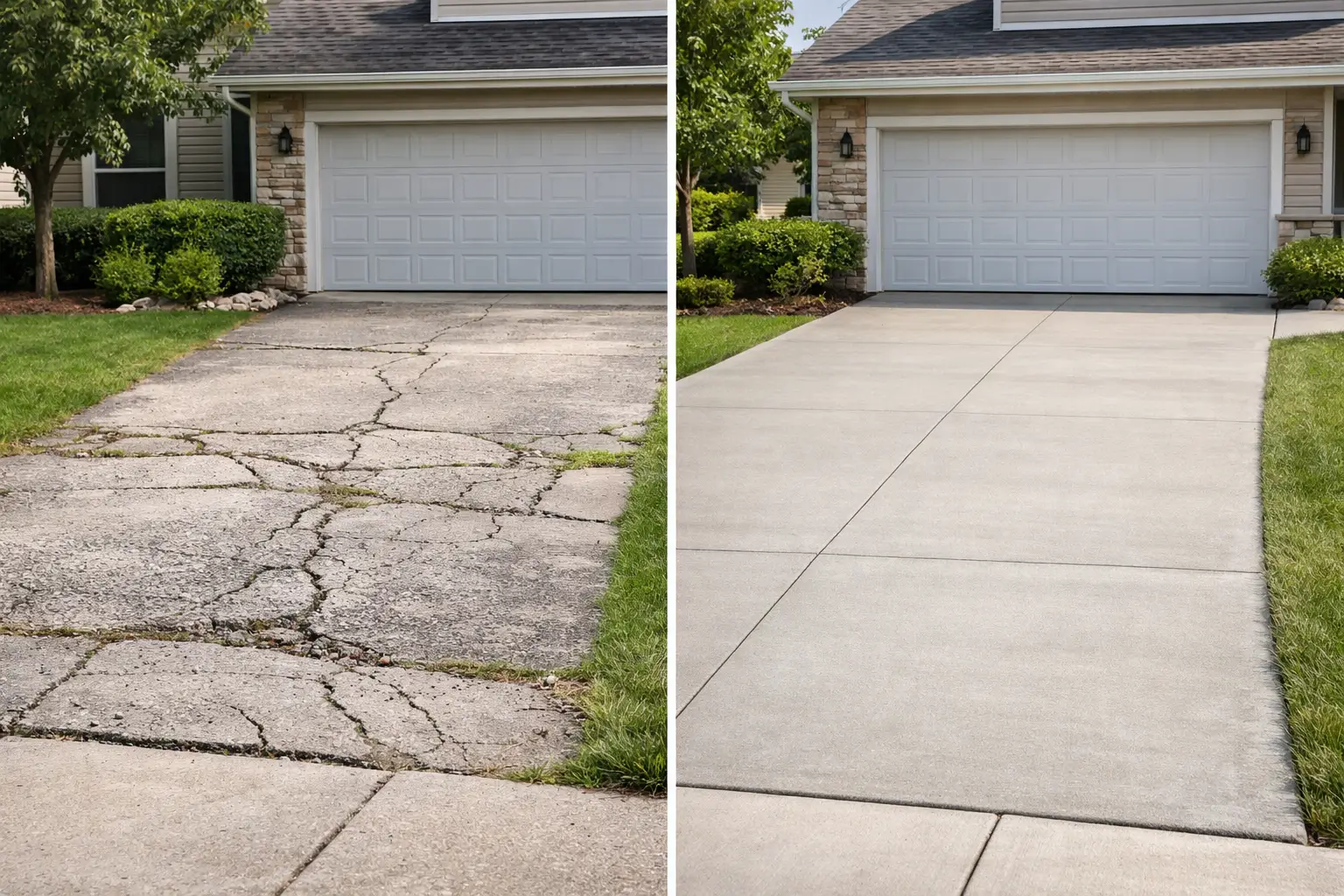
A driveway replacement before and after is not just a cosmetic change. The old surface may have cracked slabs, standing water, broken edges, trip hazards, or a layout that no longer works for the vehicles using it. The finished driveway should solve those problems while giving the front of the property a clean, solid appearance.
For Austin homeowners, property managers, and investors, replacing a driveway is often a practical decision first. Texas heat, expansive clay soils, tree roots, heavy vehicles, and sudden rain can all take a toll on concrete. A properly planned replacement gives the property a stronger surface, better water control, and curb appeal that holds up over time.
What Changes in a Driveway Replacement Before and After
The most obvious before-and-after difference is visual. A worn driveway can make an otherwise well-kept home look neglected. Stains, surface scaling, patchwork repairs, and uneven color pull attention away from the house and landscaping. New concrete creates a uniform approach to the garage, front entry, or parking area.
The more valuable changes are often below the surface. A driveway that has settled or cracked may be dealing with poor base preparation, drainage issues, or soil movement. Simply pouring new concrete over the same weak conditions can lead to the same result a few years down the road. Replacement gives the contractor a chance to remove the failed material, inspect the subgrade, rebuild the base, and establish proper slope before new concrete is placed.
Function can change as well. Many older driveways are too narrow for modern vehicles, have awkward turn-in areas, or lack enough space for guests and additional household cars. Depending on site conditions and local requirements, a replacement project may include widening the drive, extending a parking pad, improving the connection to a walkway, or adjusting the approach near the street.
Signs Replacement Makes More Sense Than Repair
Not every crack requires a full replacement. Small, stable cracks and isolated surface blemishes may be good candidates for repair, especially when the slab is otherwise level and sound. But repairs have limits. If the driveway has widespread damage, repeated patching can become a short-term expense that does not improve the underlying problem.
Replacement is usually worth considering when there are multiple areas of settlement, deep or widening cracks, crumbling slab edges, exposed aggregate from surface deterioration, or sections that hold water after rain. A driveway with major elevation differences can also become a safety concern for people walking across it and can create clearance problems for vehicles.
The age of the driveway matters, but condition matters more. Some older concrete remains structurally sound, while a newer slab can fail early if its base was not prepared correctly or water has been allowed to work underneath it. An on-site evaluation should look beyond the visible crack pattern and identify why the concrete failed.
The Work That Creates a Durable After
A quality driveway is built from the ground up. Demolition is the first visible step, but it is not the whole job. The existing concrete must be broken out and removed so the crew can evaluate the soil and prepare the area for the new slab.
Subgrade and Base Preparation
Central Texas soils can expand when wet and contract during dry periods. That movement puts stress on rigid concrete. The goal is not to pretend soil movement does not exist. The goal is to create consistent support beneath the driveway and prevent weak, soft, or poorly compacted areas from causing uneven settlement.
After excavation and grading, the base material is placed and compacted as needed for the project. Proper preparation supports the slab and helps establish the elevation needed for drainage. This stage is not the flashy part of the before-and-after photos, but it has a major effect on the life of the driveway.
Drainage and Slope
Water should move away from the garage, home foundation, and areas where it can undermine the driveway. A new slab needs intentional slope, not a guess. The right drainage approach depends on the lot, street elevation, existing gutters, landscape beds, and nearby hardscape.
In some cases, the solution is as simple as correcting the pitch of the new concrete. In other cases, downspout discharge, drainage channels, or surrounding grades may need attention too. A driveway replacement is a good time to look at how the entire front yard handles runoff. Concrete and landscaping should work together rather than sending water toward the house or into a low spot beside the slab.
Reinforcement, Joints, and Concrete Placement
Concrete naturally shrinks as it cures, so control joints are planned to guide cracking in less noticeable lines. Reinforcement can add support, but it does not replace good base preparation, correct thickness, or proper joint layout. Each part has a job.
The crew then forms the driveway to the planned shape and elevation, places the concrete, finishes the surface, and cuts or installs joints at the correct time. A broom finish is a practical choice for most driveways because it provides traction without being difficult to maintain. Decorative finishes may fit some homes, but they should be chosen with long-term use in mind. A driveway sees tire traffic, oil drips, heat, and regular washing, so durability should lead the decision.
Design Decisions That Improve the Finished Property
A new driveway does not have to copy the old one. This is the time to correct a layout that has been frustrating for years. Widening near the garage can make parking easier. Adding a defined turn-out or parking area may help a busy household or rental property. Clean transitions to sidewalks and entry paths make the front yard feel more intentional.
Edges matter too. Straight, crisp lines can suit a modern home, while curved connections may work better with existing walkways or landscaping. The right choice depends on the property’s architecture, usable space, and drainage plan. More concrete is not automatically better if it removes needed planting space or pushes water toward the wrong area.
Landscape work can complete the transformation after concrete replacement. Fresh grading, gravel borders, mulch beds, low-water plantings, and repaired irrigation lines can soften the hardscape and help manage runoff. Coordinating these pieces under one project plan prevents a new driveway from being damaged by later landscape work or left with unfinished edges.
What to Expect During the Project
Most residential driveway replacements follow a straightforward sequence: planning and measurements, demolition, base work, forms, concrete placement, finishing, and curing. The time on site varies with driveway size, access, weather, drainage corrections, and whether additional concrete or landscaping is included.
Homeowners should plan for temporary limits on garage access and parking. Fresh concrete needs time to gain strength before vehicles return to the surface. The exact waiting period depends on the mix, weather, slab design, and contractor guidance. Rushing heavy vehicle traffic onto new concrete can damage an otherwise well-built driveway.
Texas weather also affects scheduling. Rain can delay excavation, base preparation, and the pour itself. High temperatures require careful concrete placement and curing practices. A dependable contractor builds weather considerations into the schedule instead of treating them as an afterthought.
Questions Worth Asking Before You Approve the Work
Before choosing a contractor, ask what is causing the existing driveway damage and how the replacement plan addresses it. Ask about demolition and disposal, base preparation, slab thickness, reinforcement, joint placement, drainage slope, and curing instructions. These questions keep the discussion focused on workmanship rather than just the lowest number on an estimate.
It also helps to confirm the full project boundary. Will damaged adjacent walkways be addressed? Does the scope include restoring landscape edges affected by demolition? Are permits or neighborhood requirements relevant to the property? A clear scope protects both the owner and the contractor from surprises once work begins.
For investment properties and managed homes, consider vehicle use. A driveway used by standard passenger vehicles has different demands than one carrying work trucks, trailers, or frequent deliveries. The slab design should match how the property is actually used.
A Better First Impression Starts Underfoot
The strongest before-and-after driveway projects do more than cover up old cracks. They correct drainage, restore safe access, improve parking function, and give the property a finished look from the street. When concrete work and surrounding landscape details are planned together, the result feels built for the home instead of added as an afterthought.
If your Austin-area driveway is failing, start with an honest assessment of the slab, soil, and water flow. Texan Strong Builds can help turn that assessment into a practical replacement plan that is built to handle real Texas conditions.