
How Concrete Patio Contractors Build for Austin
Concrete patio contractors in Austin explain how planning, drainage, reinforcement, and finishes create durable, usable living space for Texas homes.
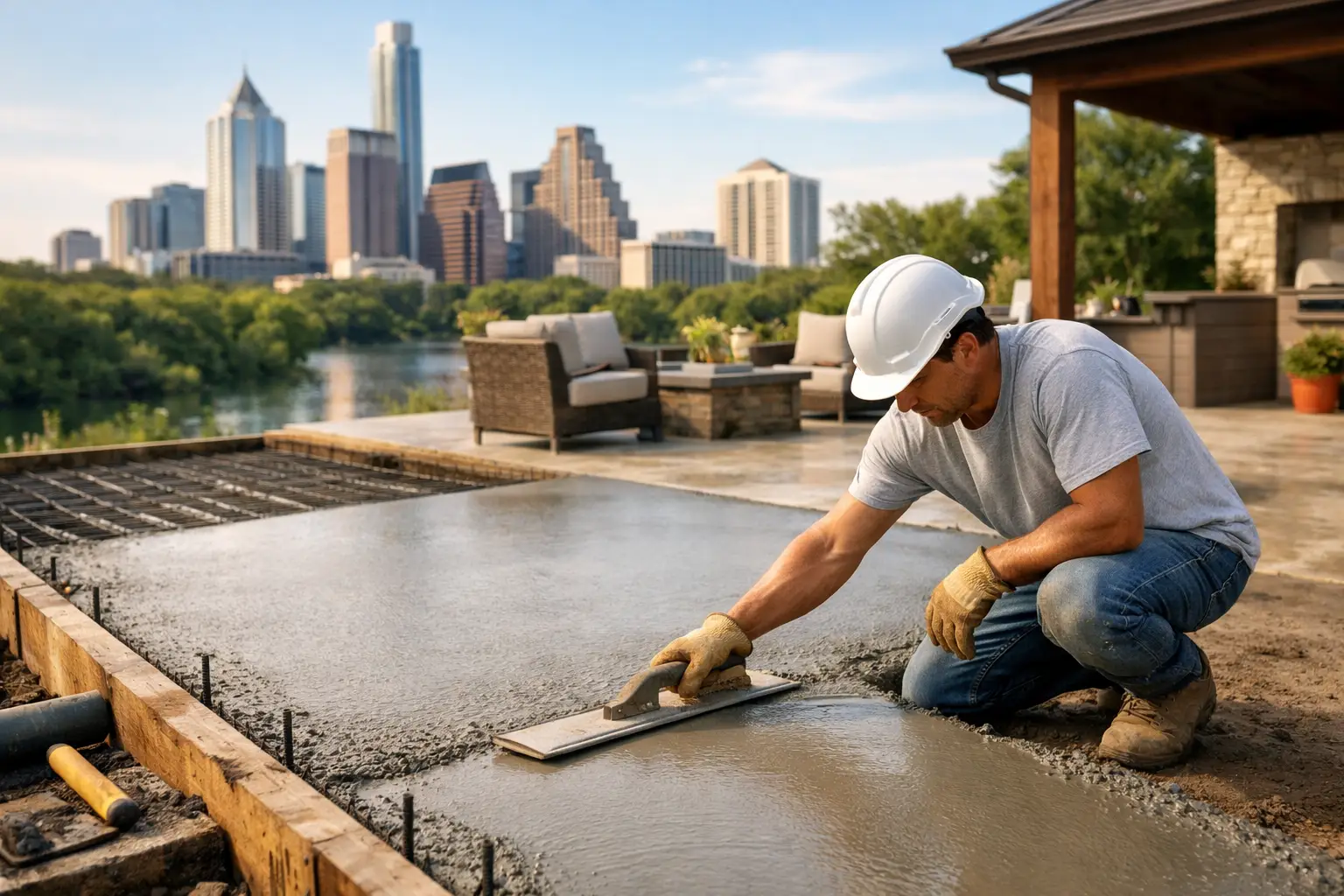
A patio that looks good on the day it is poured can still become a problem a year later. In Austin, hard summer heat, sudden downpours, shifting soil, and drainage challenges put real demands on exterior concrete. The right concrete patio contractors do more than place a slab. They plan the grade, prepare the base, reinforce the concrete where needed, and build a patio that works with the rest of the property.
For homeowners, investors, and property managers, the goal is not simply adding more concrete. It is creating usable outdoor space that holds up, drains correctly, and fits the way the property is used.
What Concrete Patio Contractors Should Assess First
A proper patio project starts before measurements are taken. The contractor should look at the existing yard grade, nearby structures, roof drainage, access to the work area, and the condition of the soil. These details determine where water will go after a heavy rain and whether the patio needs additional site work before installation.
Austin-area properties often have clay-heavy soil that expands when wet and contracts during dry periods. That movement does not mean a patio cannot perform well, but it does mean site preparation matters. A slab placed directly over poorly prepared ground is more likely to settle unevenly, crack excessively, or create water issues near the home.
The location also affects how the patio will be used. A small seating area outside a back door has different requirements than a larger entertaining space with a grill, fire feature, outdoor kitchen, or pergola. Good planning accounts for furniture clearance, walking paths, gate access, and transitions to landscaping.
Grade and drainage are not optional
Water should move away from the house, not collect against the foundation or stand in the middle of the patio. A contractor needs to establish enough slope for drainage while keeping the finished surface comfortable for tables, chairs, and foot traffic.
The right solution depends on the yard. Some properties need minor grading before the pour. Others may benefit from a drain, a swale, gutter extensions, or a revised landscape plan to manage runoff. This is one reason a contractor with both concrete and landscaping experience can be useful. The patio, planting beds, edging, and drainage should work as one exterior system rather than competing with each other.
The Work Behind a Durable Concrete Patio
A concrete patio is only as reliable as what sits underneath it. The visible finish gets attention, but the base, forms, reinforcement, joints, and curing process have more influence on long-term performance.
The crew should remove unstable material, establish the planned elevation, and compact the subgrade. Depending on the site, a compacted base material may be used to create a more stable platform and help maintain the intended grade. Forms then set the patio shape and finished edges.
Reinforcement should match the patio design and expected use. Standard residential patios may use wire mesh or rebar, while larger slabs, thicker sections, or areas supporting heavier features may call for a more specific reinforcement plan. A grill station, masonry feature, hot tub, or outdoor kitchen can change the structural needs of the project.
Concrete also needs control joints. These planned joints encourage cracking to occur in organized lines as the slab cures and naturally moves. Concrete can crack over time, especially in Texas conditions. The purpose is not to promise a slab will never crack. It is to use sound preparation, joint placement, and installation practices to reduce uncontrolled cracking and keep the patio looking clean.
Thickness should fit the use
For a typical residential patio used for seating and foot traffic, a standard slab thickness may be appropriate. If the space will carry heavier loads or connect to a driveway-style access area, the installation may need more thickness and a stronger base.
This is where low prices can become expensive later. A bid that leaves out excavation, base preparation, reinforcement, demolition, hauling, or proper drainage may look attractive at first. It may also leave the homeowner with a patio that was not built for the site. Compare proposals by scope, not just by the final number.
Choosing the Right Patio Finish
Concrete does not have to look plain, but the finish should match the property and the level of maintenance the owner wants to take on. A broom finish remains a practical choice for many Austin homes because it provides traction, handles everyday use well, and suits a wide range of outdoor styles.
A smooth troweled finish can look clean and modern, though it may become slick when wet if it is not designed with traction in mind. Exposed aggregate adds texture and visual depth, but it requires careful placement and finishing. Stamped concrete can create the look of stone, tile, or wood, yet it involves more labor and ongoing attention to sealing and color maintenance.
Color can be added through integral pigments, stains, or topical systems. The trade-off is straightforward: decorative finishes can make a patio more distinctive, but they often cost more and require better maintenance habits than a basic broom-finished slab. For rental properties and high-use outdoor areas, simple and durable is frequently the better decision.
Questions to Ask Before Hiring Concrete Patio Contractors
A contractor should be able to explain the work in plain language. You do not need a technical lecture, but you should understand what is being installed, why it is being installed that way, and what is included in the price.
Ask how the contractor plans to handle drainage, what preparation is included below the slab, how the patio will be reinforced, where control joints will go, and how nearby landscaping or irrigation will be protected. It is also reasonable to ask about the expected timeline, access requirements, cleanup, and what needs to happen before the crew arrives.
For an existing yard, ask whether roots, old concrete, fencing, utility lines, or grading problems could affect the project. A direct contractor will identify likely issues early instead of treating them as a surprise after demolition begins.
You should also review the full scope of work. It should clarify dimensions, thickness, finish type, demolition if needed, base preparation, reinforcement, drainage work, and cleanup. If a project includes landscaping after the patio is complete, confirm how soil, mulch, sod, edging, and planting areas will meet the new concrete elevation.
Planning a Patio That Adds Real Value
The most useful patios are planned around daily use. Think about where shade falls in the afternoon, how guests move from the house to the yard, and whether the patio needs space for a dining table, sectional seating, a smoker, or children at play. Leaving room for landscaping around the slab can soften the hardscape and help the finished yard feel intentional.
A patio does not have to cover the entire backyard to make a difference. A well-placed, properly sized slab can improve function while preserving green space and avoiding unnecessary drainage changes. On the other hand, a larger patio may be the right call for a property used for frequent gatherings or outdoor cooking. It depends on the layout, budget, and how the space will actually be used.
For Austin properties, it also makes sense to plan for heat. Shade structures, trees placed at a safe distance, pergolas, and surrounding landscape features can make a concrete patio more comfortable during long summer afternoons. These elements are easier to coordinate before construction than after the slab is in place.
A Straightforward Approach to Patio Work
The best patio projects are built around clear site conditions, a defined scope, and work that respects the property. That means no guessing about drainage, no vague pricing, and no treating the concrete pour as the only part that matters.
Texan Strong Builds approaches concrete and landscape work with that practical mindset. A patio should be level where it needs to be, sloped where it needs to drain, finished for the way it will be used, and integrated with the rest of the yard. Start by defining how you want to use the space, then choose a contractor prepared to build for the conditions already on your property.